Digital governance is structured into four primary models to serve different…
Digital governance is structured into four primary models to serve different stakeholders. Identify these four types of E-Governance and evaluate the strategic advantages and structural disadvantages that public authorities face when implementing such a systematic portfolio of services
Attempted by 10 students.
Show answer & explanation
1. The Four Types of E-Governance
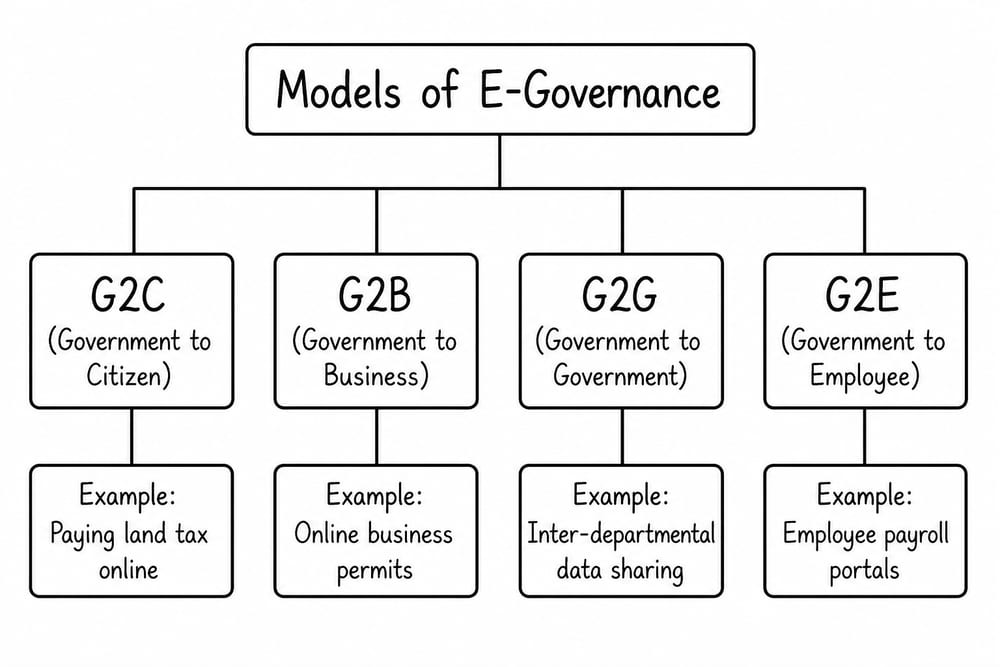
E-governance is categorized based on the parties involved in the digital interaction:
Government-to-Citizen (G2C): Focuses on providing government services to the public, allowing citizens to conduct transactions anytime from anywhere, effectively overcoming geographic and time barriers.
Government-to-Business (G2B): Facilitates the exchange of services and business information between the government and commercial firms, playing a vital role in business development and project transparency.
Government-to-Government (G2G): Involves the internal interaction between different government departments and agencies to increase efficiency through shared databases and online communication.
Government-to-Employee (G2E): An internal part of the G2G section that aims to improve knowledge sharing, manage salary records, and provide online facilities for government staff.
2. Strategic Advantages
Implementing a systematic e-government framework offers several key benefits:
Enhanced Efficiency: It automates administrative tasks, streamlining the current system.
Transparency & Accountability: It increases transparency in administration, ensuring the public is well-informed about government policies and implementation.
Economic Growth: It reduces operational costs for the government while simultaneously increasing revenue growth.
Improved Relationships: It fosters better communication and trust between civic authorities and the public.
3. Structural Disadvantages & Barriers
Despite the benefits, there are significant hurdles to universal adoption:
The Digital Divide: A primary disadvantage is the lack of fairness in internet access, meaning not all citizens can benefit equally from these digital services.
Public Trust Issues: The presence of untrustworthy information or "disguised agendas" by certain government groups on the web can negatively bias public opinion.