

Coding & Skills
391 articles in this topic

HTML Interview Questions for Freshers: Semantic Tags, Forms and the Attributes That Get Tested
Learn the HTML details interviews actually probe, from semantic landmarks and form submission to script loading, labels, and accessibility.
Updated 20 Jul 20265 min readWeb Development

Classic Programs in C, Java and Python
Learn six placement-programming methods through one clean implementation each. The focus is logic, edge cases, complexity and porting, not memorised code.
Updated 20 Jul 20266 min readJava
Python Output-Based Questions: 13 Solved Snippets
Trace 13 compact Python snippets on references, slices and mutation. Each example gives the output first and then explains the object-level reason.
Updated 20 Jul 20265 min read165 viewsPython
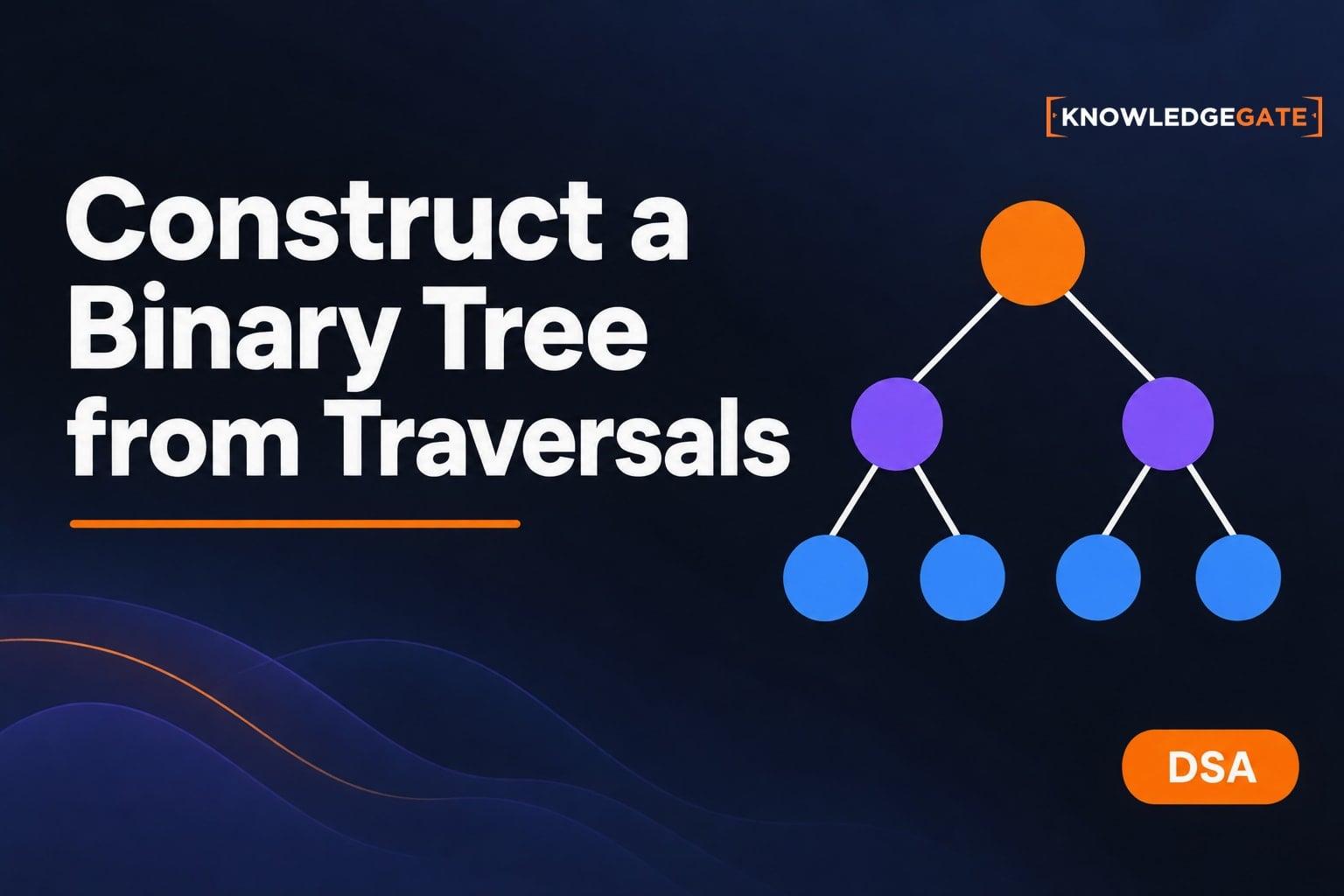
Construct a Binary Tree from Traversals
Use inorder splits and preorder roots to rebuild a binary tree, then learn the BST shortcut and the cases where traversal data is not unique.
Updated 20 Jul 20265 min readDSA & Algorithms
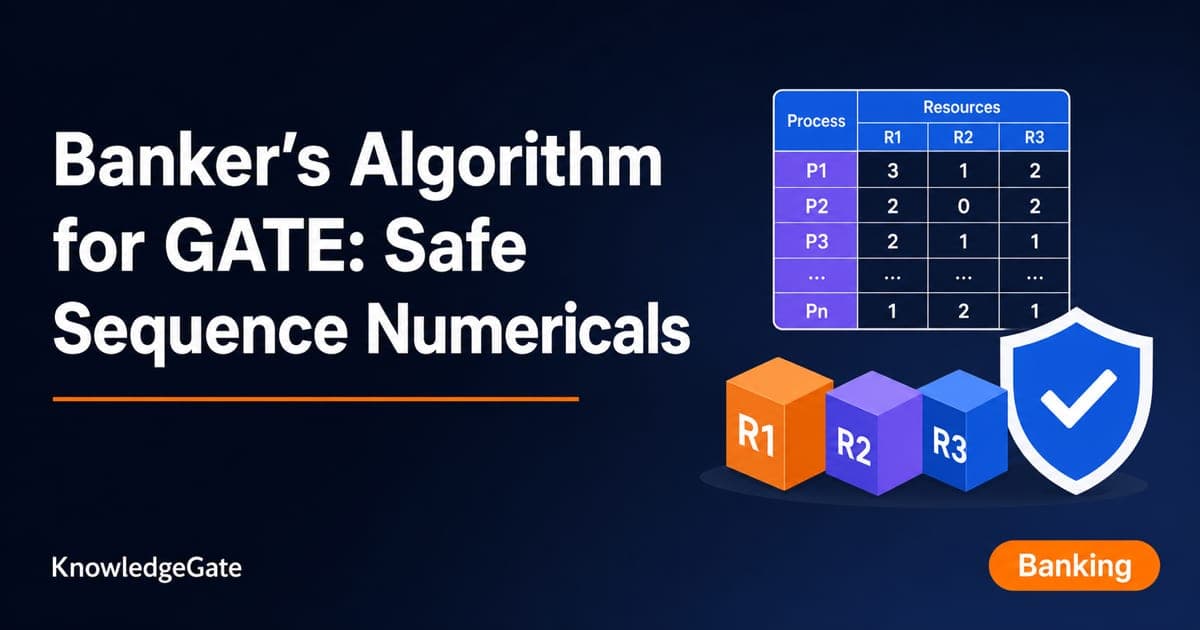
Banker's Algorithm for GATE: Safe Sequence Numericals with Full Allocation-Max-Need Matrices
Learn the safety algorithm through a five-process matrix, count every safe sequence, and repair an unsafe state with the smallest possible resource addition.
Updated 19 Jul 20266 min read64 viewsDSA & Algorithms

String Handling in Java: String Pool, Immutability and Fresher-Test Questions
Where Java strings actually live, why they never change, and how == vs equals() decides service-company output questions. A String pool and heap diagram, a step-by-step worked trace, StringBuilder performance, and four fresher-test output questions with worked answers.
Updated 19 Jul 20266 min readJava

Page Replacement Algorithms for GATE: FIFO, LRU and Optimal with Belady's Anomaly Explained
One shared reference string traced fault by fault through FIFO, LRU and Optimal page replacement with 3 frames, then re-run under FIFO with 4 frames to demonstrate Belady's anomaly. Includes the counting rules GATE expects, why LRU beating FIFO is a tendency and not a theorem, and the stack-algorithm property that makes LRU and Optimal immune to the anomaly.
Updated 19 Jul 20268 min readDSA & Algorithms
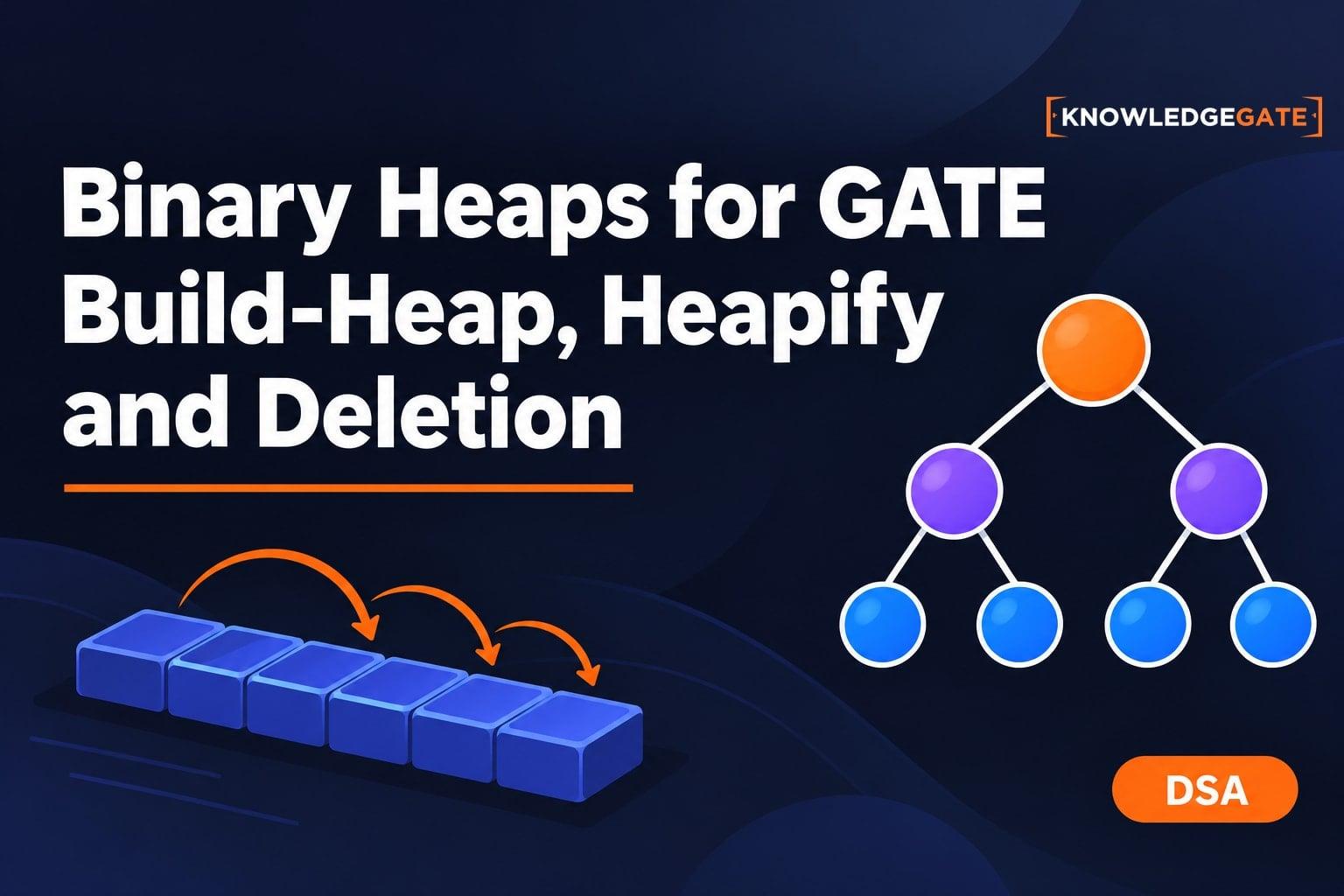
Binary Heaps for GATE: Build-Heap, Heapify and Deletion Numericals Solved
Heapify, build-heap and deletion are the three heap procedures GATE CS tests as numericals. The O(n) build-heap bound comes from a height-weighted sum, a seven-element build takes exactly four swaps, and heap questions keep landing in five recognisable shapes.
Updated 18 Jul 20266 min readDSA & Algorithms
IBPS SO IT Officer Data Structures and programming: professional knowledge topics
IBPS SO IT Officer Data Structures and programming: arrays, linked lists, stacks, trees, hashing, sorting, complexity and C basics for the Mains PK paper.
Updated 18 Jul 20266 min read342 viewsDSA & Algorithms
DSA interview questions for placements: the patterns freshers must know
Most DSA interview questions are not new. They are variations on a small set of recurring patterns, and once you can recognise the pattern behind a question, the solution follows almost mechanically. Freshers who memorise fifty specific problems stall on the fifty-first. Freshers who learn the seven or eight underlying patterns can attack a problem they have never seen.
Updated 17 Jul 20266 min read117 viewsDSA & Algorithms

Time complexity and asymptotic notation: Big-O, Theta and Omega explained
Time complexity and asymptotic notation explained: Big-O, Theta and Omega, growth-rate ordering, analysing loops and recursion, and the Master Theorem.
Updated 16 Jul 20266 min read67 viewsDSA & Algorithms
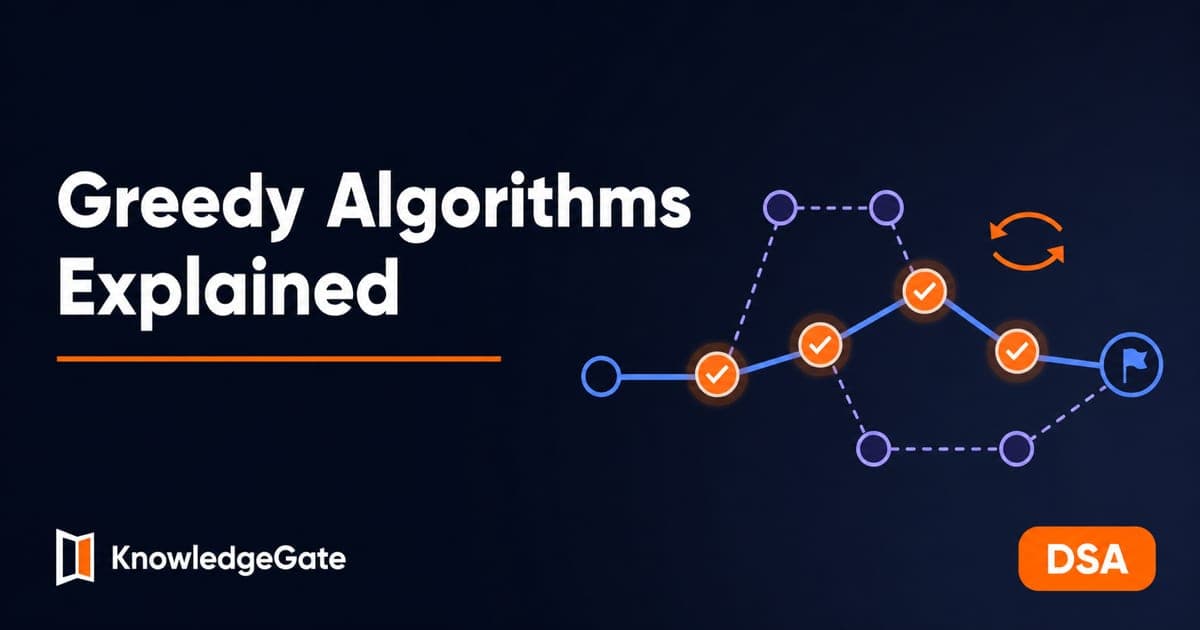
Greedy algorithms: strategy, exchange arguments and classic problems
Greedy algorithms explained: greedy-choice property, activity selection, a traced Huffman tree, fractional knapsack, and where greedy fails on 0/1 knapsack.
Updated 29 Jul 20266 min readDSA & Algorithms