Aptitude & Reasoning
63 articles in this topic
Logarithms for Competitive Exams: Rules, Shortcuts and Solved Examples
Build logarithms from exponentiation, then apply the laws safely. These worked examples cover equations, common logs, exact cancellation and decreasing-base inequalities.
Updated 19 Sep 20266 min readAptitude & Reasoning
HCF and LCM for Competitive Exams: Concepts, Shortcuts and Solved Examples
Learn when to use HCF or LCM, how the main methods work, and how to check grouping, cycle, missing-number and remainder problems step by step.
Updated 18 Sep 20266 min read69 viewsAptitude & Reasoning
Divisibility Rules for Competitive Exams: Shortcuts and Solved Examples
Learn why divisibility rules work, then apply them to common divisors, composite numbers, missing digits, remainders, and quick exam decisions.
Updated 17 Sep 20266 min readAptitude & Reasoning
Table Charts for Data Interpretation: Fast Percentage, Ratio and Comparison Methods
Use one practice table to master lookups, comparison bases, percentage change, ratios, shares, totals, averages, estimation and common error checks.
Updated 15 Sep 20265 min read142 viewsAptitude & Reasoning
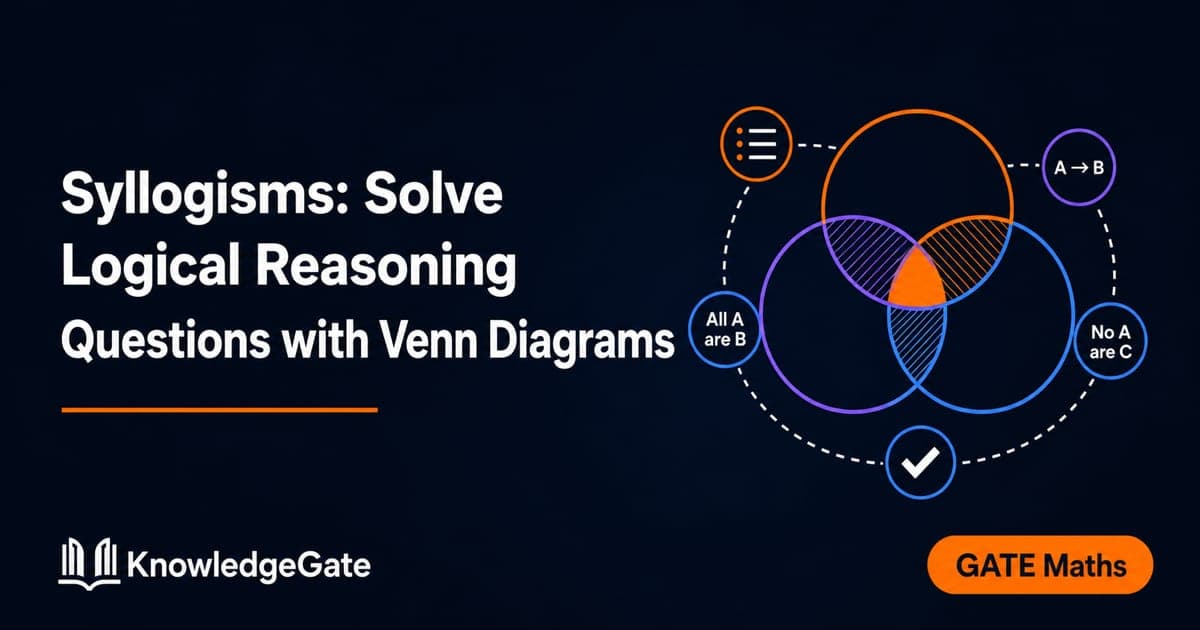
Syllogisms: Solve Logical Reasoning Questions with Venn Diagrams
Translate syllogism statements into sets, test what must follow, and build witness or counterexample models for conclusions that are only possible or not definite.
Updated 14 Sep 20265 min read87 viewsAptitude & Reasoning
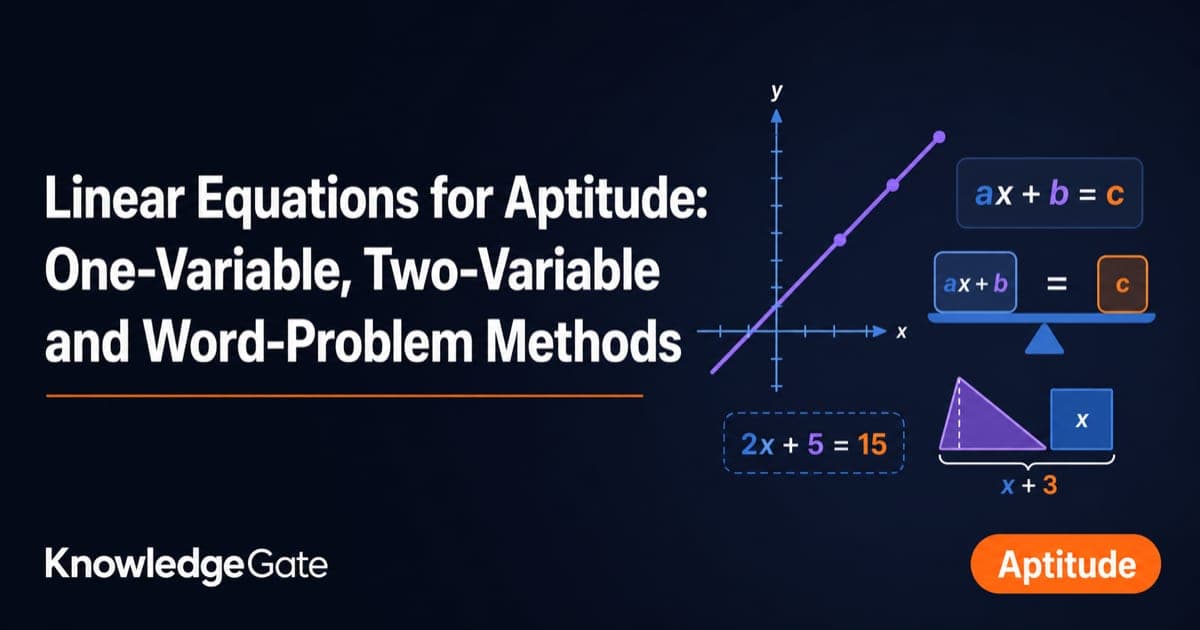
Linear Equations for Aptitude: One-Variable, Two-Variable and Word-Problem Methods
Learn a reliable method for one-variable equations, two-variable systems and word problems, then check every answer against the original condition.
Updated 12 Sep 20266 min read53 viewsAptitude & Reasoning
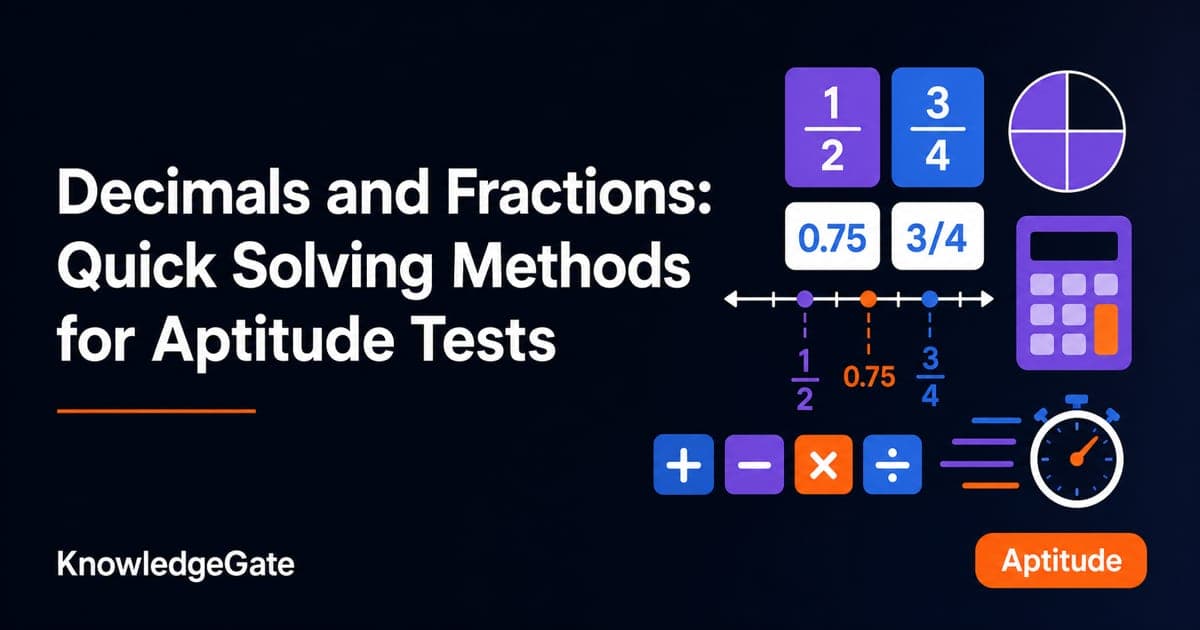
Decimals and Fractions: Quick Solving Methods for Aptitude Tests
Use a compact decision system to convert, compare and calculate fractions and decimals accurately. Worked examples show which representation saves time and how to check it.
Updated 11 Sep 20265 min readAptitude & Reasoning
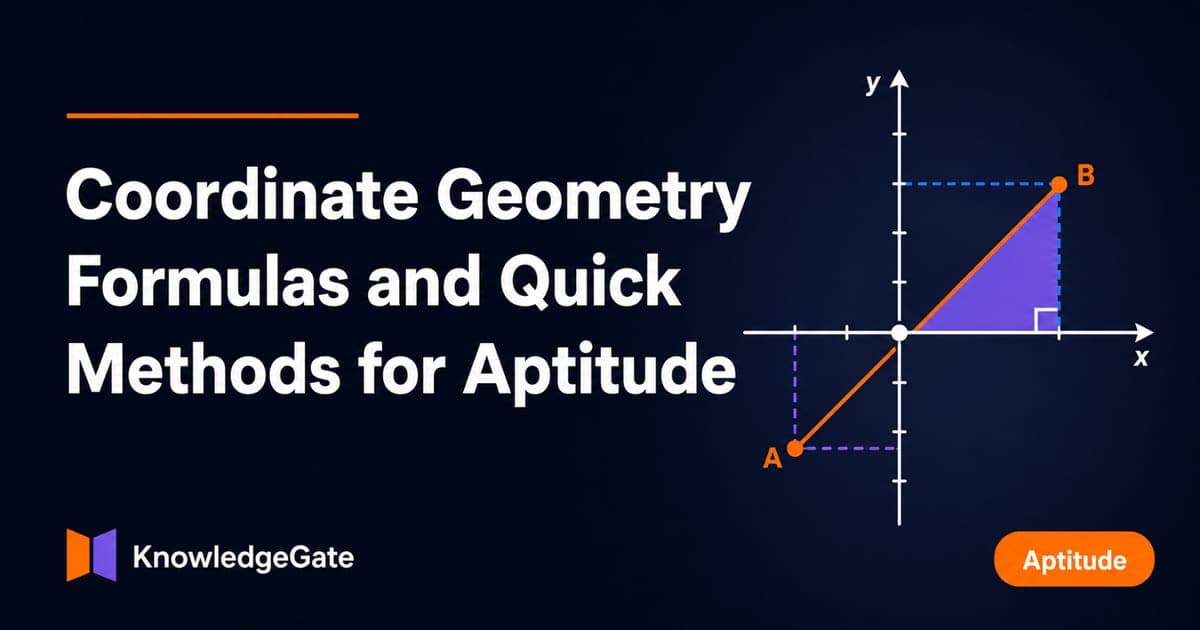
Coordinate Geometry Formulas and Quick Methods for Aptitude
Connect distance, midpoint, section, slope and line formulas through a few reliable coordinate changes. Worked examples show how to choose, calculate and verify each method.
Updated 9 Sep 20266 min readAptitude & Reasoning
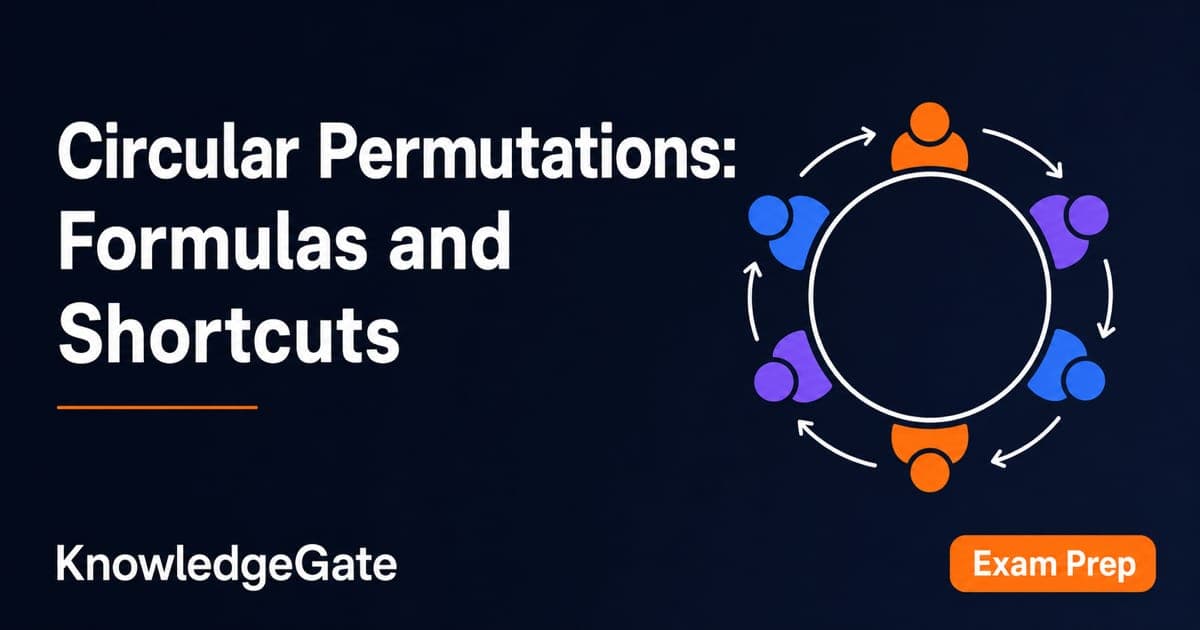
Circular Permutations: Formulas and Shortcuts for Seating Problems
Learn how to choose the right circular permutation model, derive each formula, and solve together, apart, alternating, opposite, and fixed-gap cases.
Updated 8 Sep 20265 min readAptitude & Reasoning
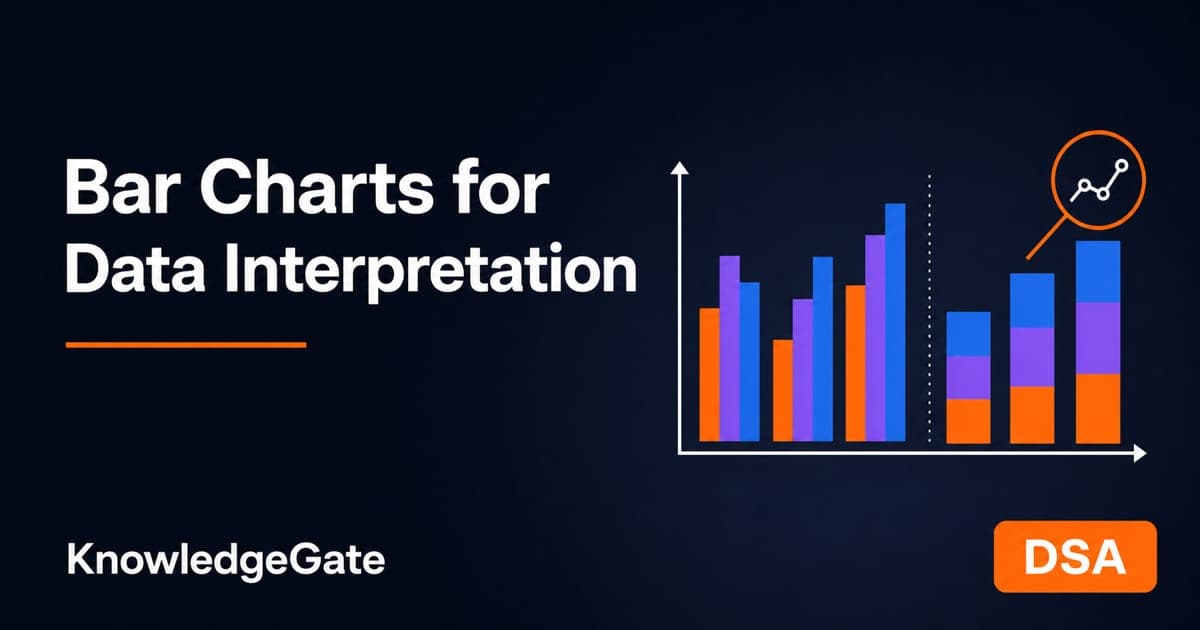
Bar Charts for Data Interpretation: Grouped and Stacked Questions Made Simple
Learn a reliable way to read grouped and stacked bar charts, choose the correct operation, and protect your answer from unit and percentage-base errors.
Updated 6 Sep 20266 min readAptitude & Reasoning
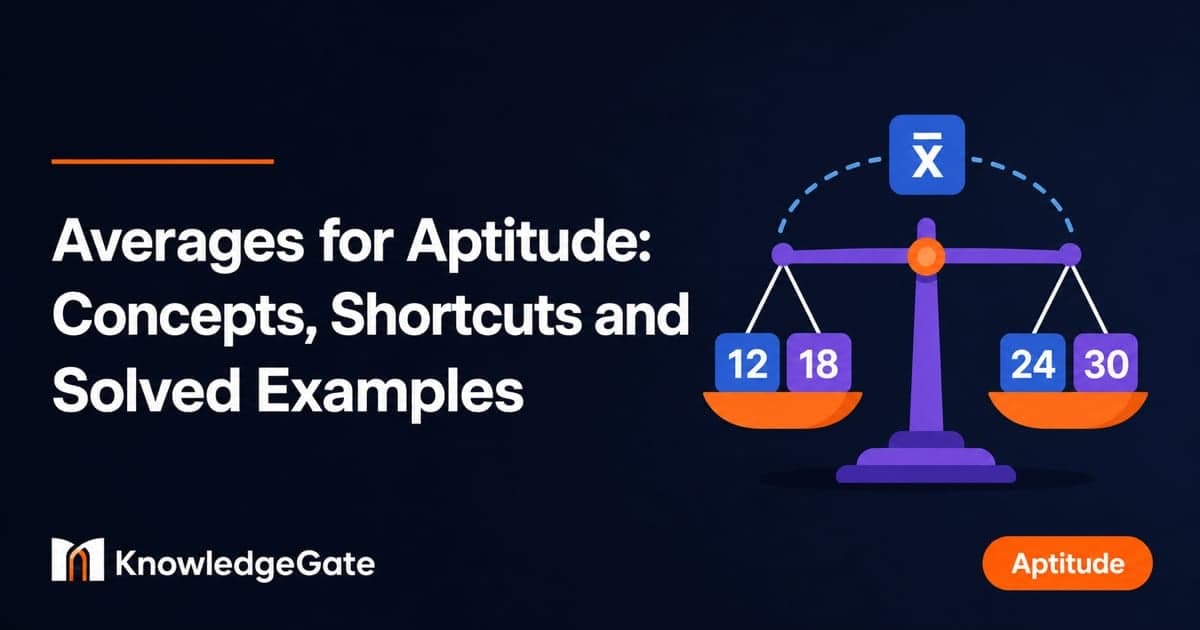
Averages for Aptitude: Concepts, Shortcuts and Solved Examples
Learn one reliable approach to average questions: recover the total first. Work through weighted groups, deviations, replacements, corrections and speed examples.
Updated 5 Sep 20266 min read50 viewsAptitude & Reasoning
Attention-to-Detail Questions: Tips for TCS-Style Placement Tests
Learn a controlled method for exact matches, record comparisons and visual anomalies, with worked examples and a practical accuracy-first routine.
Updated 3 Sep 20266 min readAptitude & Reasoning