C Programming & Data Structures
47 articles in this topic
Basic Recursion in C: Call Stack, Worked Traces and Exam Patterns
Learn how recursive C functions descend, stop and unwind. Trace factorial and printed output, count Fibonacci calls, and compare recursion with iteration.
Updated 18 Sep 20265 min readC Programming & Data Structures
Array Basics in C: Indexing, Memory Layout and Worked Exam Traces
C arrays become much easier once indices, addresses, loop bounds, and mutations are kept separate. Build that model with two complete traces and common-error checks.
Updated 16 Sep 20266 min readC Programming & Data Structures
C Programming Mixed-Concept Questions Explained: Arrays, Pointers, Functions and Output Tracing
Learn a four-pass method for tracing C programs that combine arrays, pointer aliases, function calls, static storage and side effects, with a complete worked output trace.
Updated 15 Sep 20266 min readC Programming & Data Structures
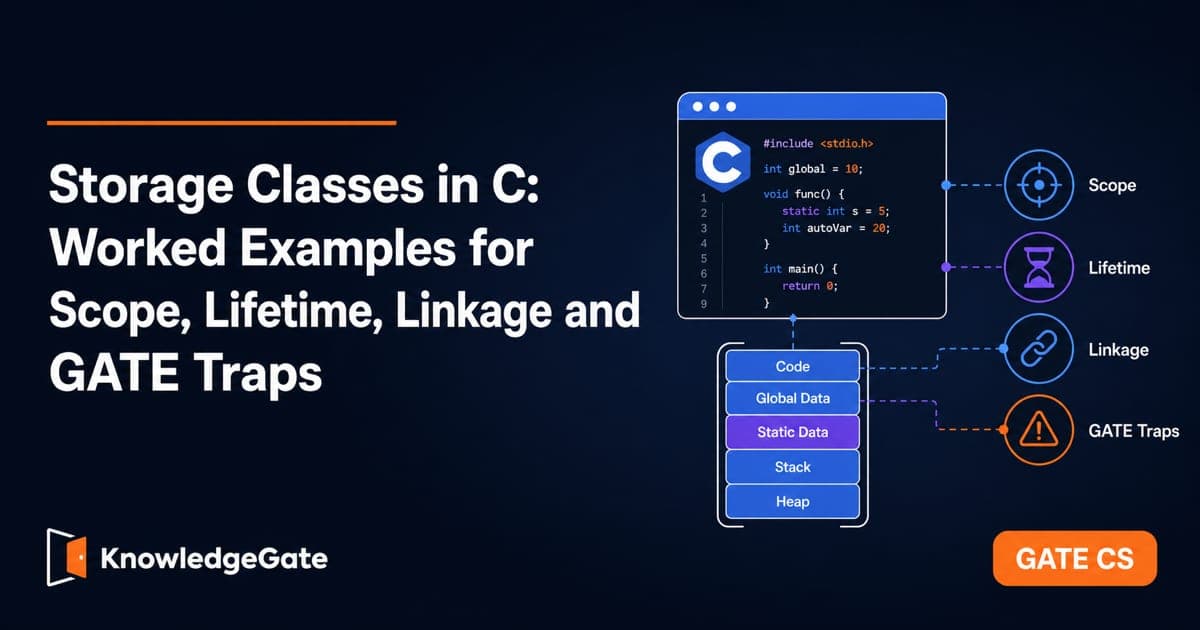
Storage Classes in C: Worked Examples for Scope, Lifetime, Linkage and GATE Traps
Learn what auto, register, static and extern actually control. Classification tables, two-file code and exact traces turn similar-looking declarations into predictable C behaviour.
Updated 14 Sep 20266 min readC Programming & Data Structures
Macros in C Explained: Expansion, Worked Output Traces and Exam Traps
Learn a reliable expand-first method for C macros. Follow exact traces for nested macros, unsafe SQUARE calls, repeated evaluation, token operators and header guards.
Updated 12 Sep 20266 min readC Programming & Data Structures
Enums in C Explained: Values, a Worked Output Trace and Exam Traps
Learn how C assigns enum values, how explicit resets and duplicate constants behave, and how to trace enum-based switch output without missing fall-through.
Updated 11 Sep 20266 min readC Programming & Data Structures
C Operators Explained: Precedence, Types and Worked Examples
Learn how C groups and evaluates operators, then trace arithmetic, masks, conditions, and a complete program that prints 4 5 21 1 39.
Updated 9 Sep 20266 min read80 viewsC Programming & Data Structures
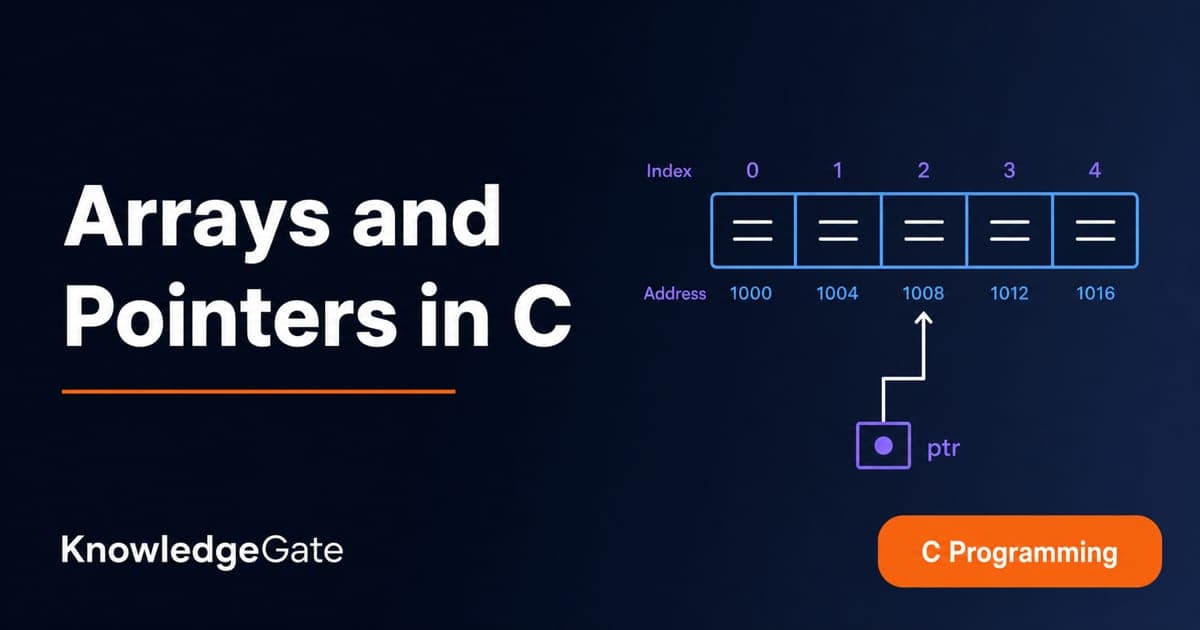
Relationship Between Arrays and Pointers in C: Decay, Address Arithmetic and a Worked Memory Trace
See why an array is not a pointer, even when their displayed addresses match. Trace decay, pointer movement, sizeof, function parameters and bounds through one C array.
Updated 8 Sep 20265 min read117 viewsC Programming & Data Structures
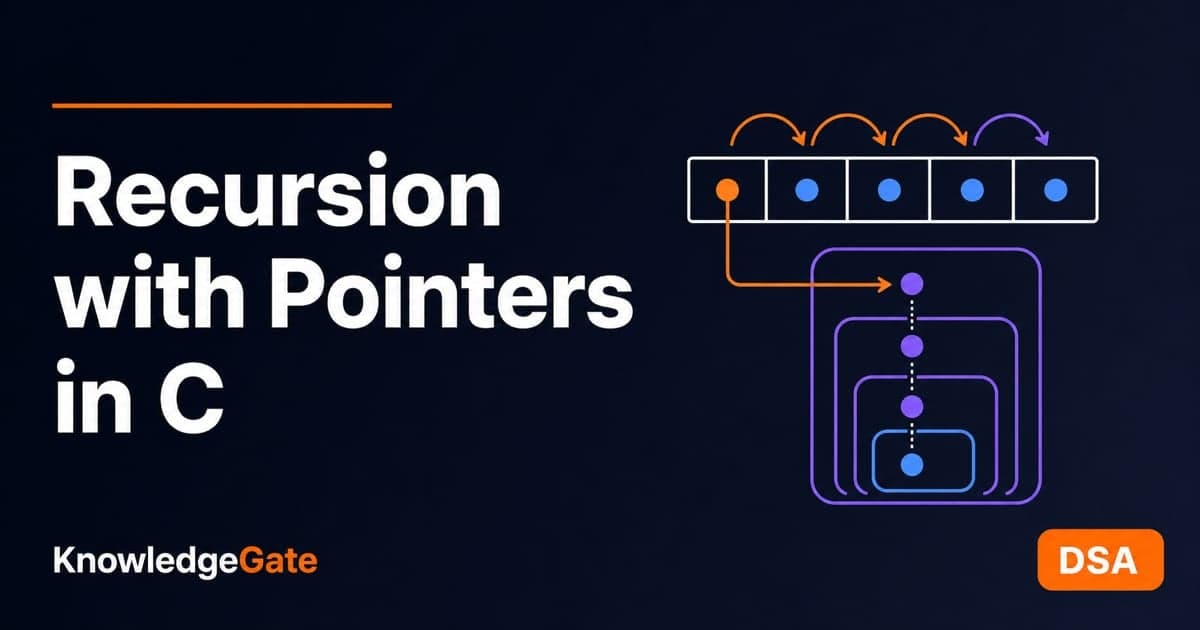
Recursion with Pointers in C: Concepts, Traces and Worked Examples
Learn how local pointer copies interact with shared array memory, then trace one mutating sum and one reverse-print function from descent to unwind.
Updated 6 Sep 20266 min readC Programming & Data Structures
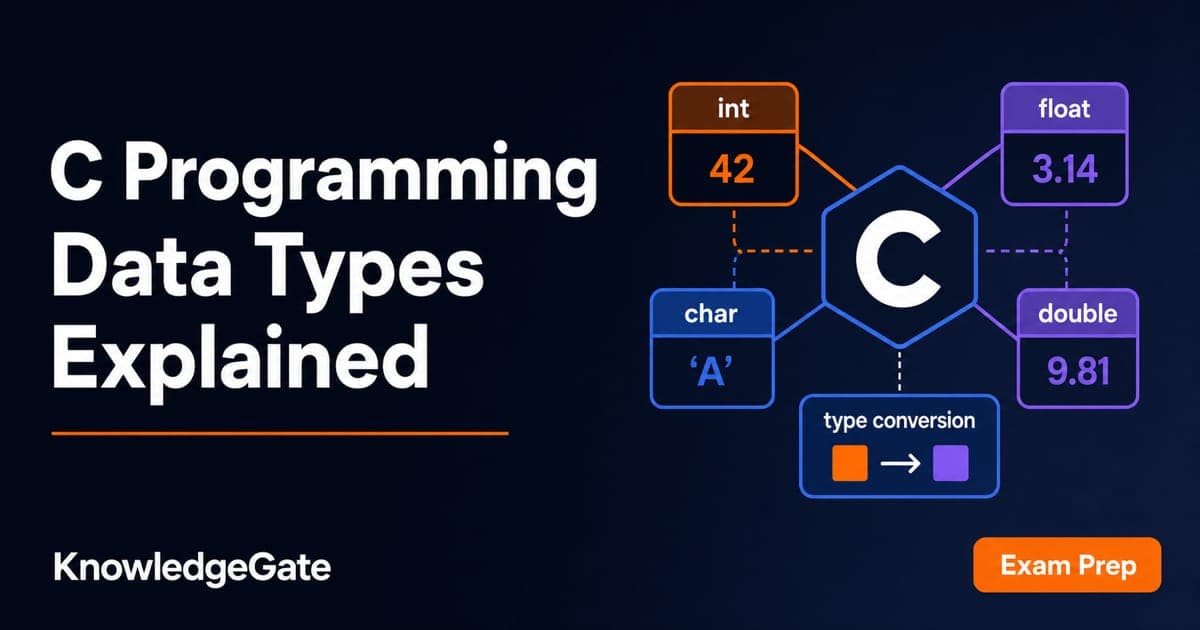
C Programming Data Types Explained: Concepts, Conversions and Worked Examples
Learn how C declarations, literal types, conversions, sizeof and format specifiers work. Follow one complete calculation and correct common objective-question traps.
Updated 5 Sep 20266 min readC Programming & Data Structures
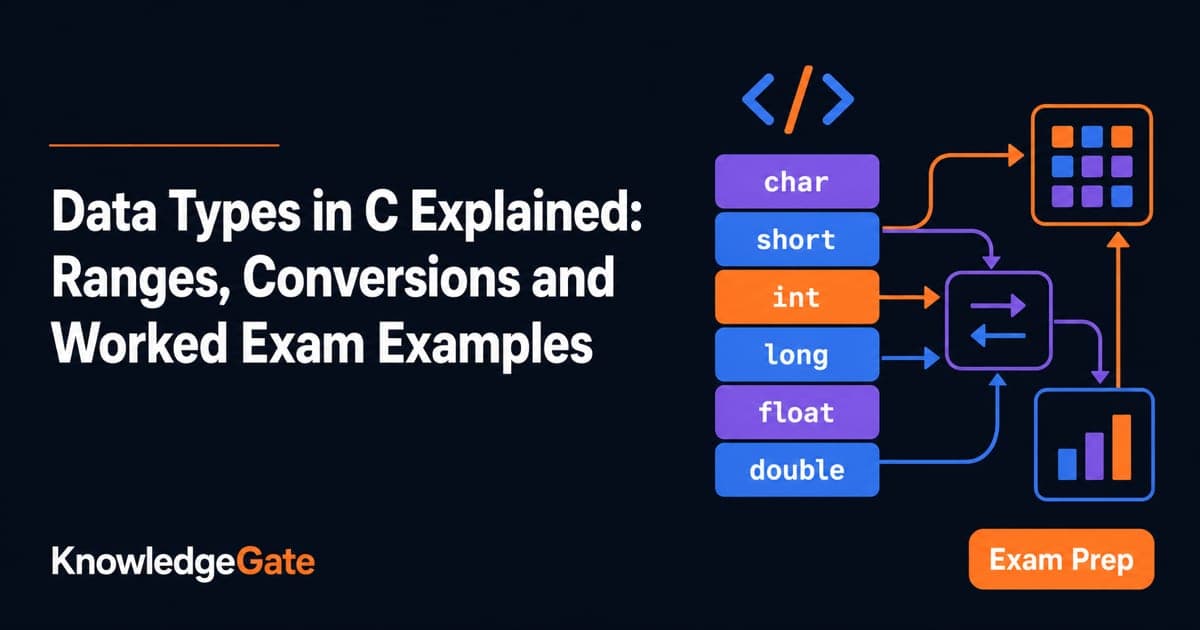
Data Types in C Explained: Ranges, Conversions and Worked Exam Examples
Learn how C types control ranges and conversions, then apply the rules to overflow, mixed arithmetic, sizeof and signed-unsigned exam questions.
Updated 3 Sep 20266 min readC Programming & Data Structures
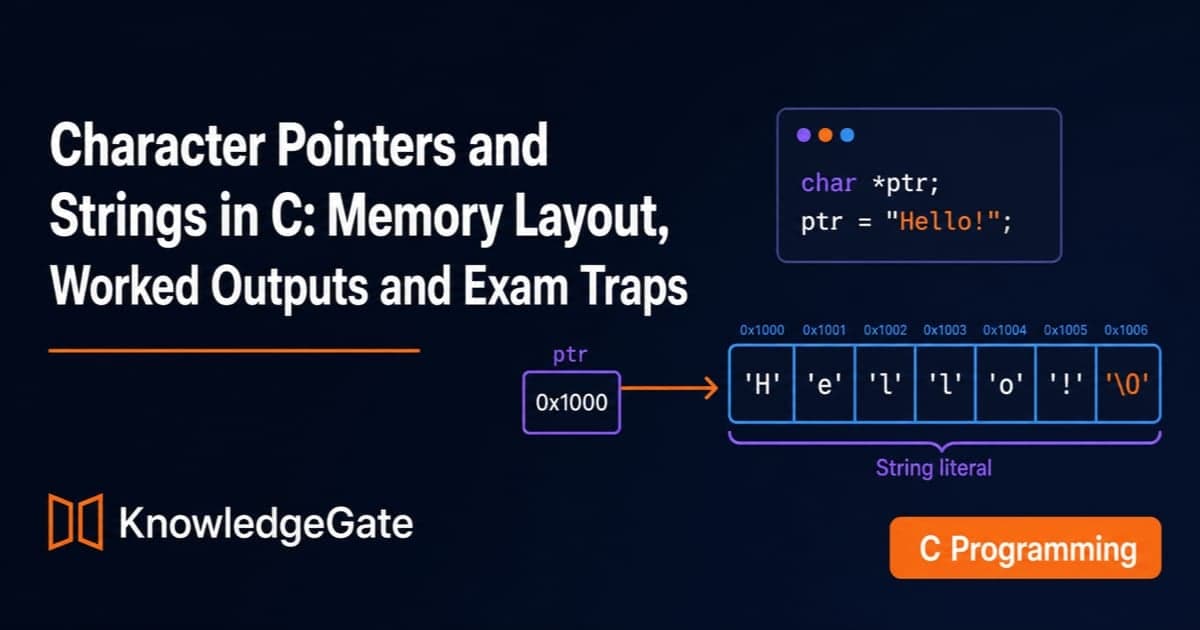
Character Pointers and Strings in C: Memory Layout, Worked Outputs and Exam Traps
Build a memory-first model for character pointers and C strings. Trace GATE to GITE and CAT to CBT, then check literals, bounds, terminators and capacity.
Updated 2 Sep 20266 min readC Programming & Data Structures