Digital Logic
47 articles in this topic
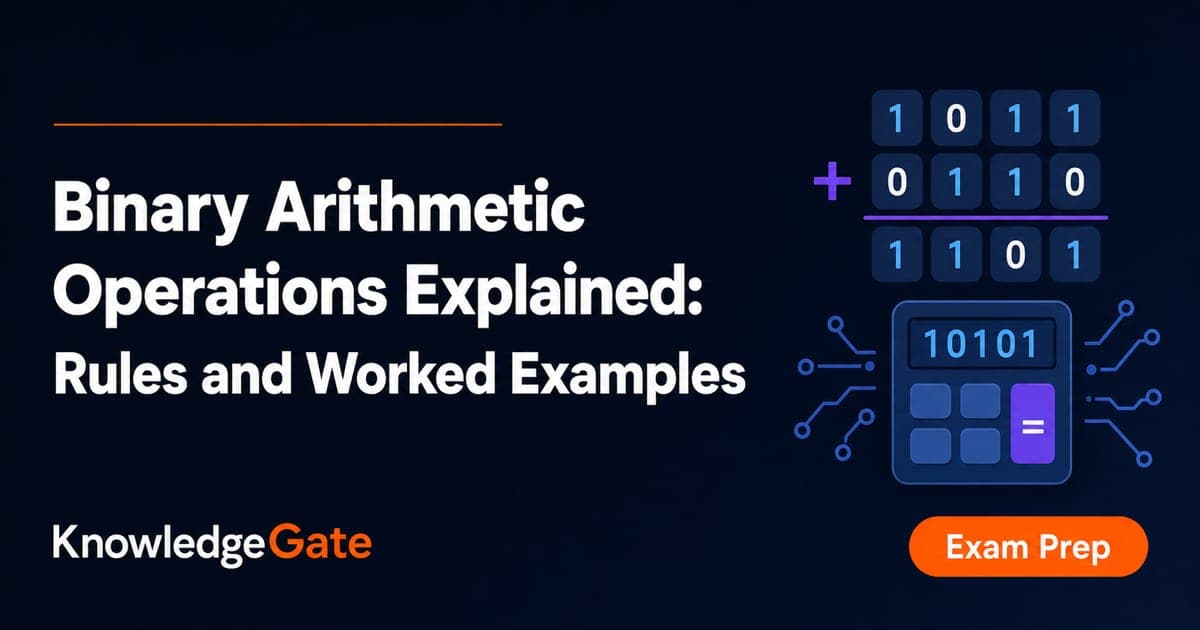
Binary Arithmetic Operations Explained: Rules and Worked Examples
Learn binary addition, subtraction, multiplication and division with aligned worked examples, then separate carry, borrow and two's-complement overflow.
Updated 19 Oct 20266 min readDigital Logic
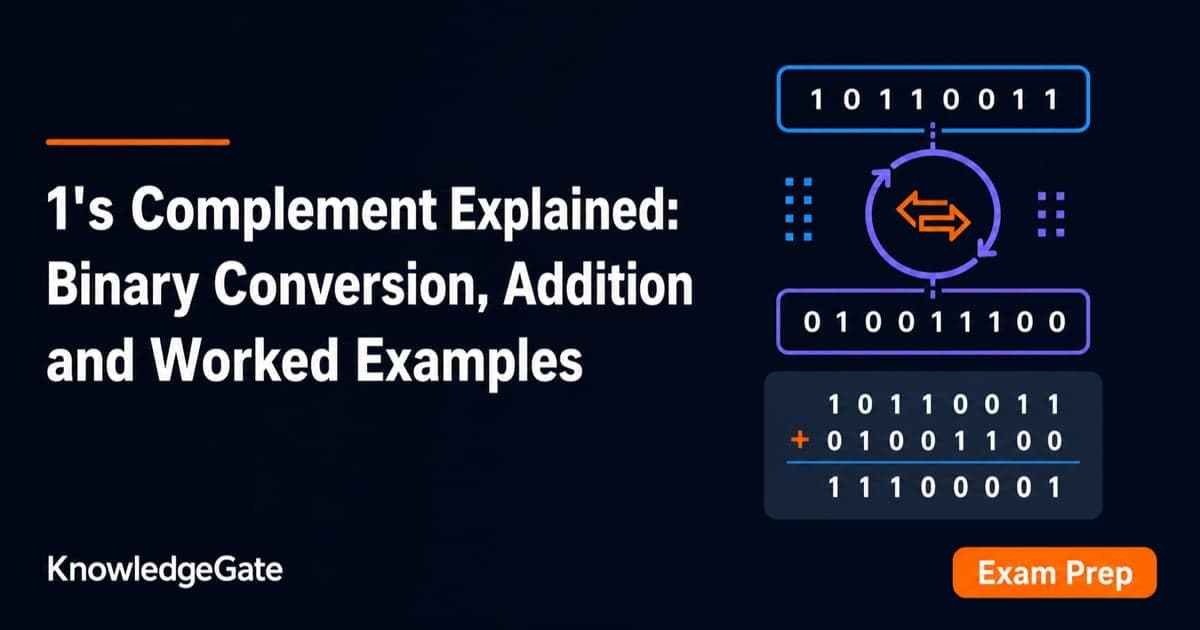
1's Complement Explained: Binary Conversion, Addition and Worked Examples
Learn how fixed-width 1's complement numbers represent negatives, why zero has two encodings, and how end-around carry works through exact examples.
Updated 15 Oct 20266 min readDigital Logic
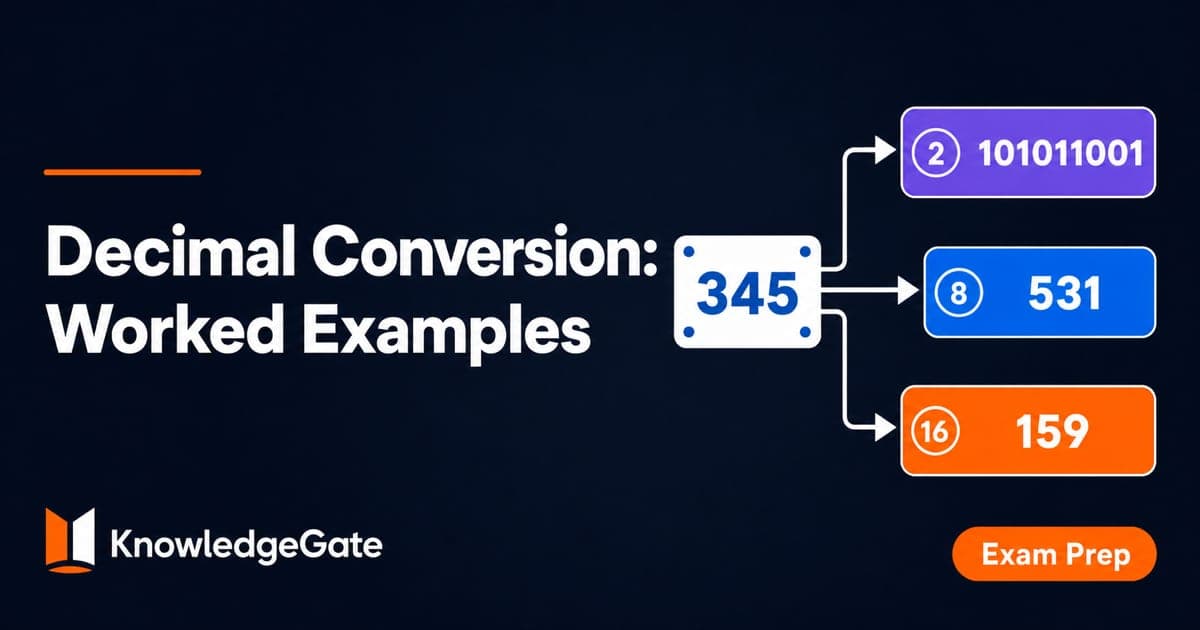
Decimal Conversion Explained: Binary, Octal and Hexadecimal Worked Examples
Learn one dependable method for converting values between decimal, binary, octal and hexadecimal, including fractions, shortcuts and checks.
Updated 11 Oct 20265 min readDigital Logic
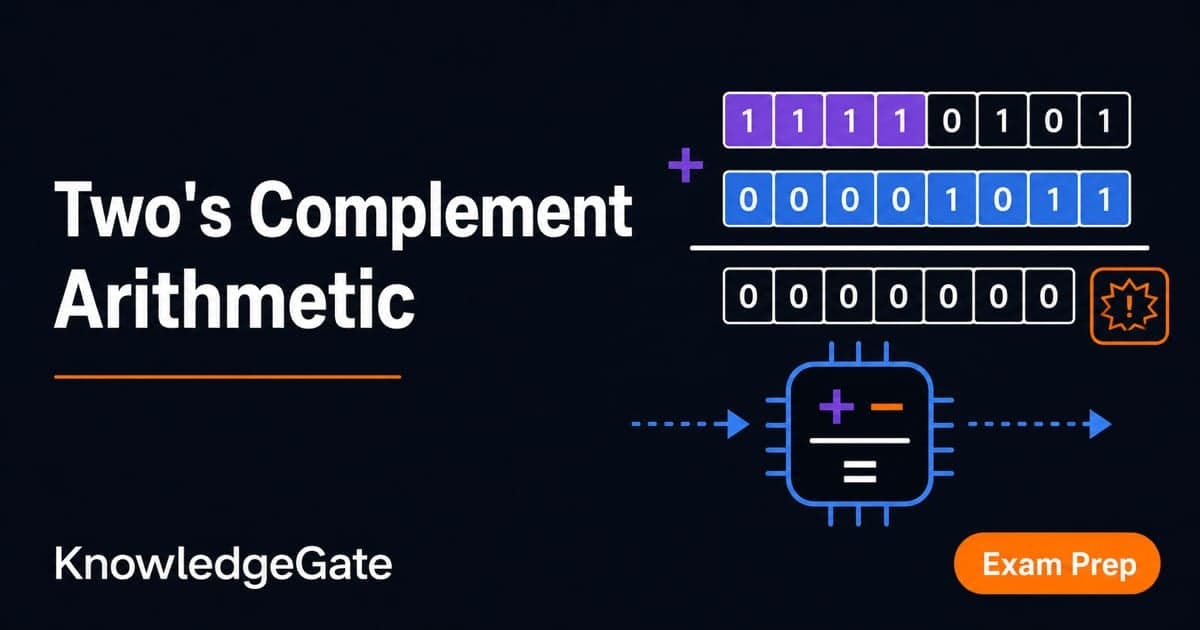
Two's Complement Arithmetic Explained: Signed Ranges, Subtraction, Overflow and Worked Examples
Build a reliable 8-bit method for encoding signed values, subtracting with complements, detecting overflow, extending signs and checking every result.
Updated 7 Oct 20266 min readDigital Logic
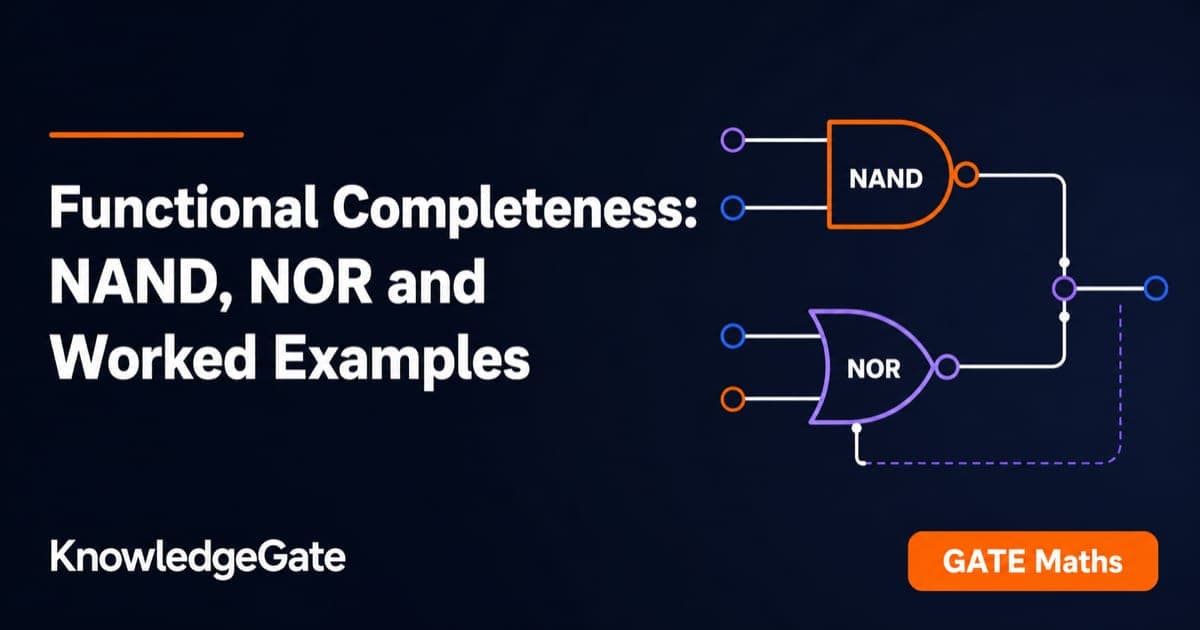
Functional Completeness in Digital Logic: NAND, NOR and Worked Examples
Learn what makes a Boolean operator set complete, how NAND and NOR recover a standard basis, and how to verify a four-gate NAND construction.
Updated 2 Oct 20266 min readDigital Logic
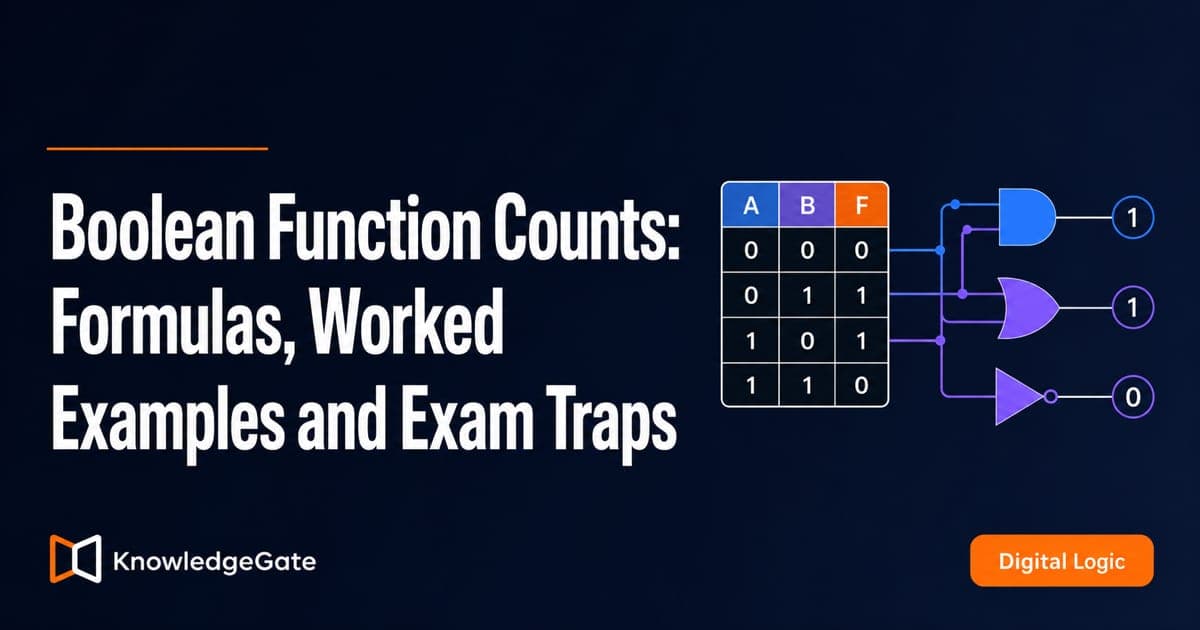
Boolean Function Counts: Formulas, Worked Examples and Exam Traps
Build the master Boolean-function formula from output choices, then learn how common restrictions change the count through combinations, pairing and inclusion-exclusion.
Updated 27 Sep 20266 min readDigital Logic
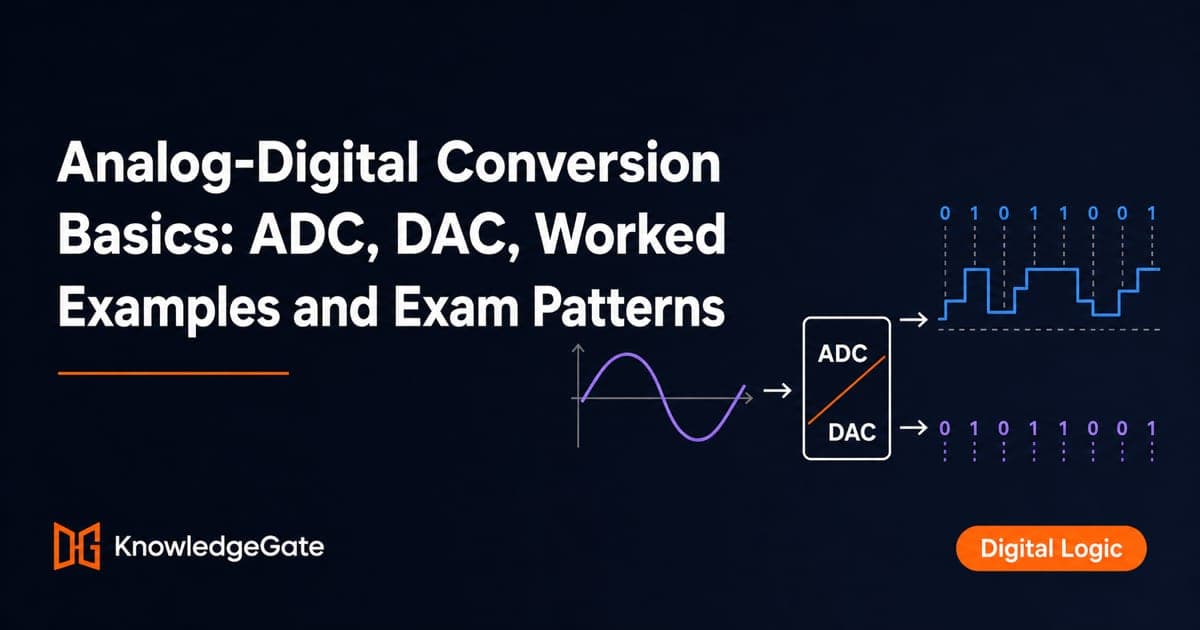
Analog-Digital Conversion Basics: ADC, DAC, Worked Examples and Exam Patterns
Build ADC and DAC basics from one consistent transfer model, then practise code selection, reconstruction error, flash and SAR conversion, and bit-depth calculations.
Updated 25 Sep 20266 min readDigital Logic

Universal Realization with NAND and NOR Gates: Concepts, Worked Example and Exam Patterns
Learn why NAND and NOR are universal, then implement one three-variable function using four NAND gates and four NOR gates with verified input traces.
Updated 23 Sep 20265 min readDigital Logic
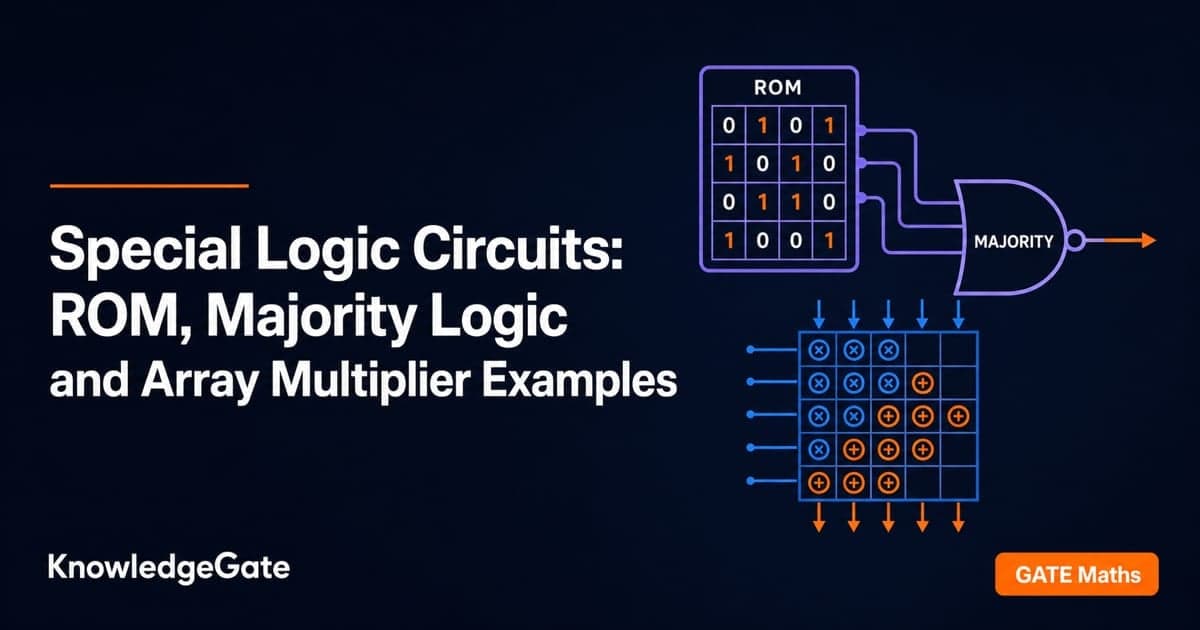
Special Logic Circuits: ROM, Majority Logic and Array Multiplier Examples
Learn one method for analysing special logic circuits, then apply it to majority logic, a BCD detector, programmable logic and two versions of a 4-bit multiplier.
Updated 22 Sep 20266 min readDigital Logic
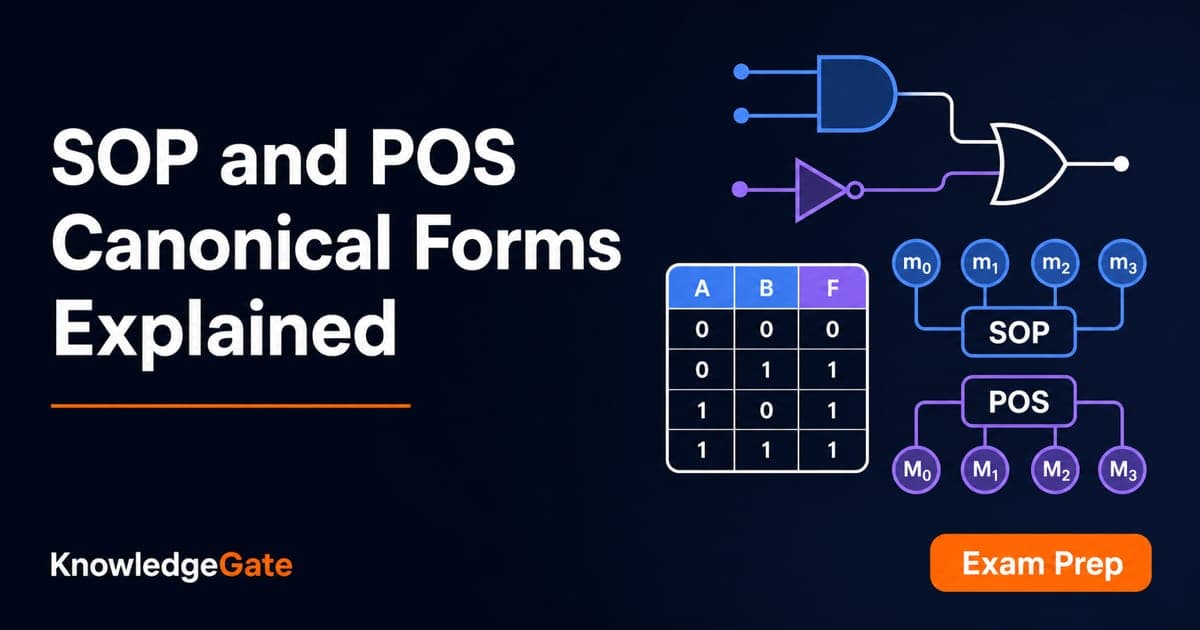
SOP and POS Canonical Forms Explained: Minterms, Maxterms and Worked Conversions
Learn how canonical SOP and POS encode the same Boolean function. Follow one three-variable truth table through minterms, maxterms, conversions and exam-style checks.
Updated 21 Sep 20265 min read119 viewsDigital Logic
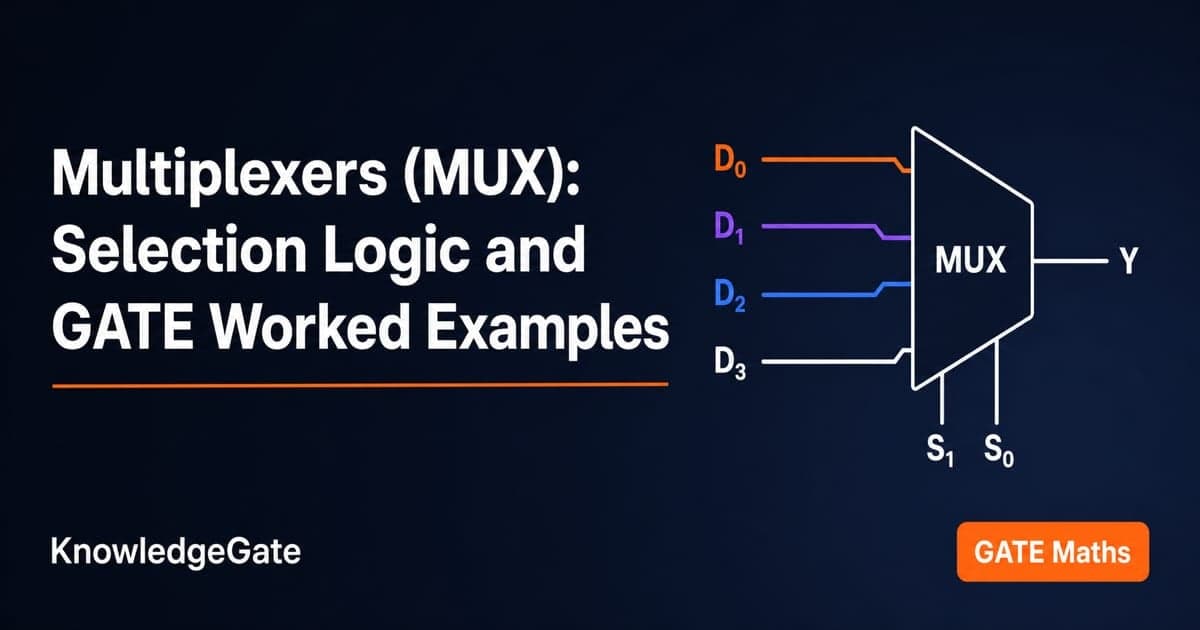
Multiplexers (MUX): Selection Logic, Boolean Function Realization and GATE Worked Examples
Learn how a MUX selects data, realizes Boolean functions, and scales through cascading. Trace two exact circuits and repair the mistakes that usually change the answer.
Updated 20 Sep 20265 min read98 viewsDigital Logic
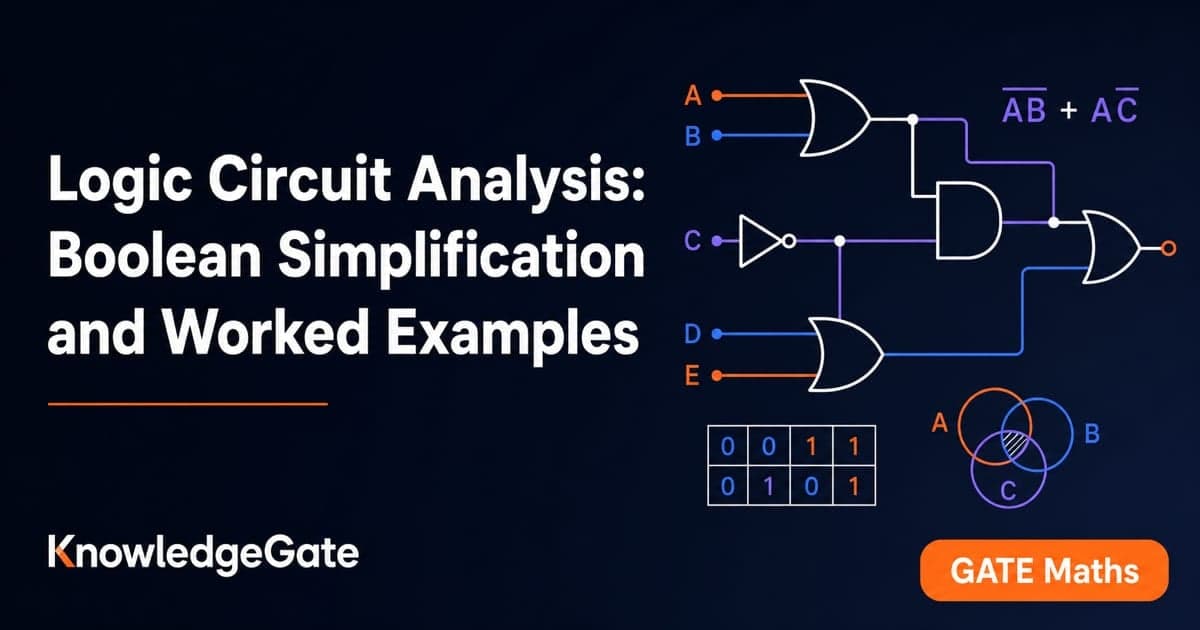
Logic Circuit Analysis: Boolean Simplification and Worked Examples
Learn a repeatable way to trace combinational circuits, simplify their Boolean expressions, and verify the result. Two worked examples cover a three-input network and a four-NAND XOR.
Updated 18 Sep 20265 min readDigital Logic