Engineering Mathematics
50 articles in this topic
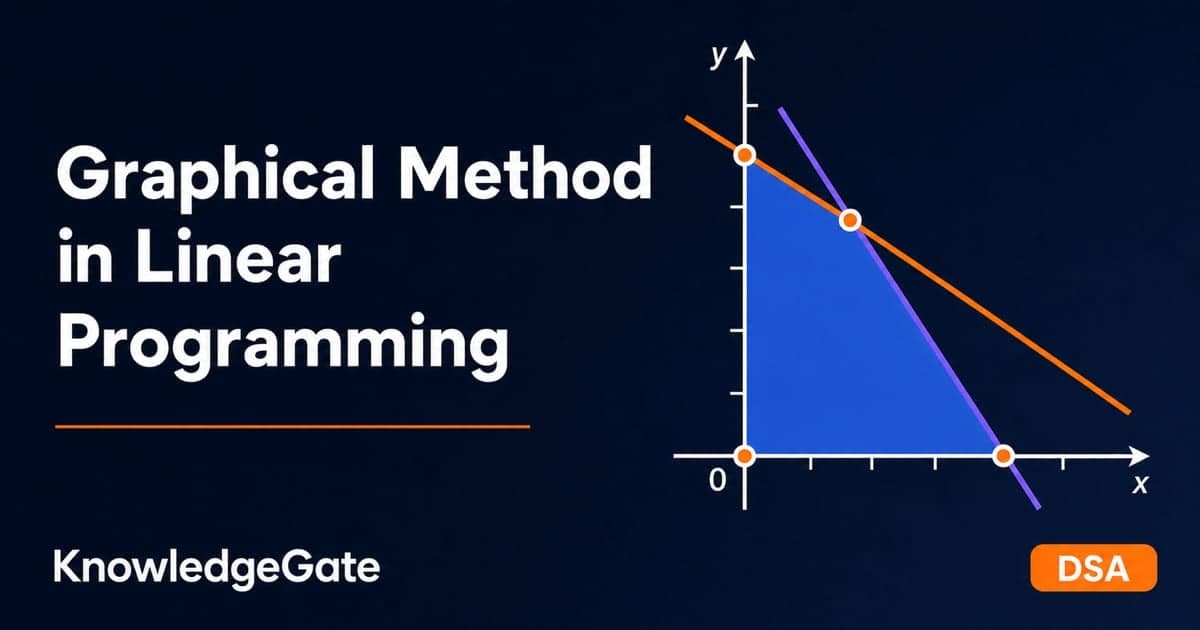
Graphical Method in Linear Programming: Feasible Region, Corner Points and Optimality with a Worked Example
Learn the two-variable graphical method in the right order, then solve and audit a complete maximisation model without trusting the sketch alone.
Updated 21 Oct 20265 min readEngineering Mathematics
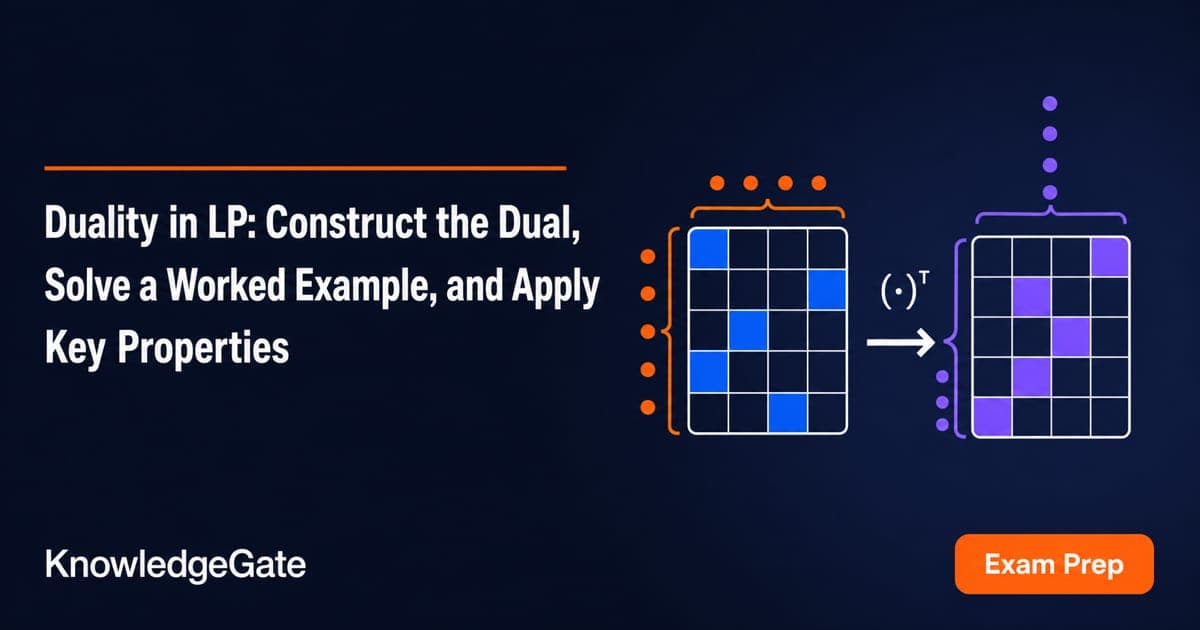
Duality in LP: Construct the Dual, Solve a Worked Example, and Apply Key Properties
Learn a reliable matrix-first method to form an LP dual, solve both programs to value 21, and use duality properties to check optimality and avoid sign errors.
Updated 17 Oct 20266 min readEngineering Mathematics
Commutative Property and Abelian Groups: Tests, Worked Examples and Exam Traps
Learn how to separate commutativity from the other group axioms, test custom operations step by step, and avoid the usual classification traps.
Updated 13 Oct 20266 min readEngineering Mathematics

Closure, Semigroup and Monoid: Worked Algebraic Structure Examples
Learn a reliable order for testing closure, associativity and identity. Worked tables and counterexamples show exactly when a structure becomes a semigroup or monoid.
Updated 9 Oct 20266 min readEngineering Mathematics

Classification of Finite and Infinite Groups: Orders, Cyclicity and Worked Examples
Learn how group axioms, group order, element order and generators classify finite and infinite groups through complete, checkable examples.
Updated 4 Oct 20266 min readEngineering Mathematics
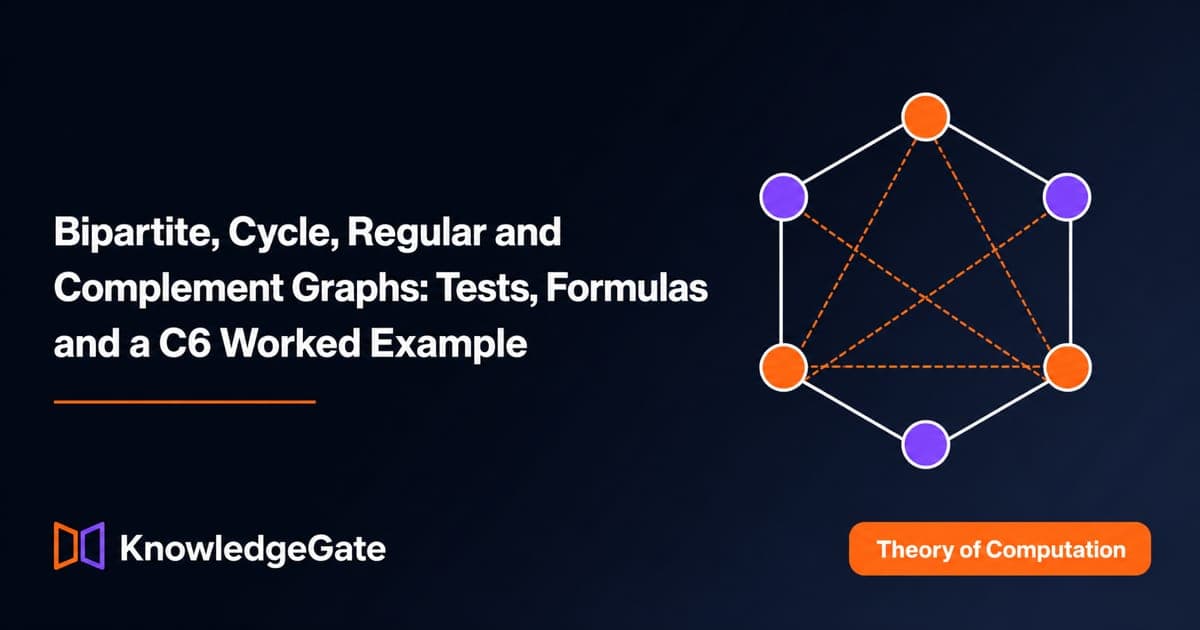
Bipartite, Cycle, Regular and Complement Graphs: Tests, Formulas and a C6 Worked Example
Learn a dependable order for classifying simple graphs, then apply it to C6 and list, count and test every edge in its complement.
Updated 29 Sep 20266 min readEngineering Mathematics
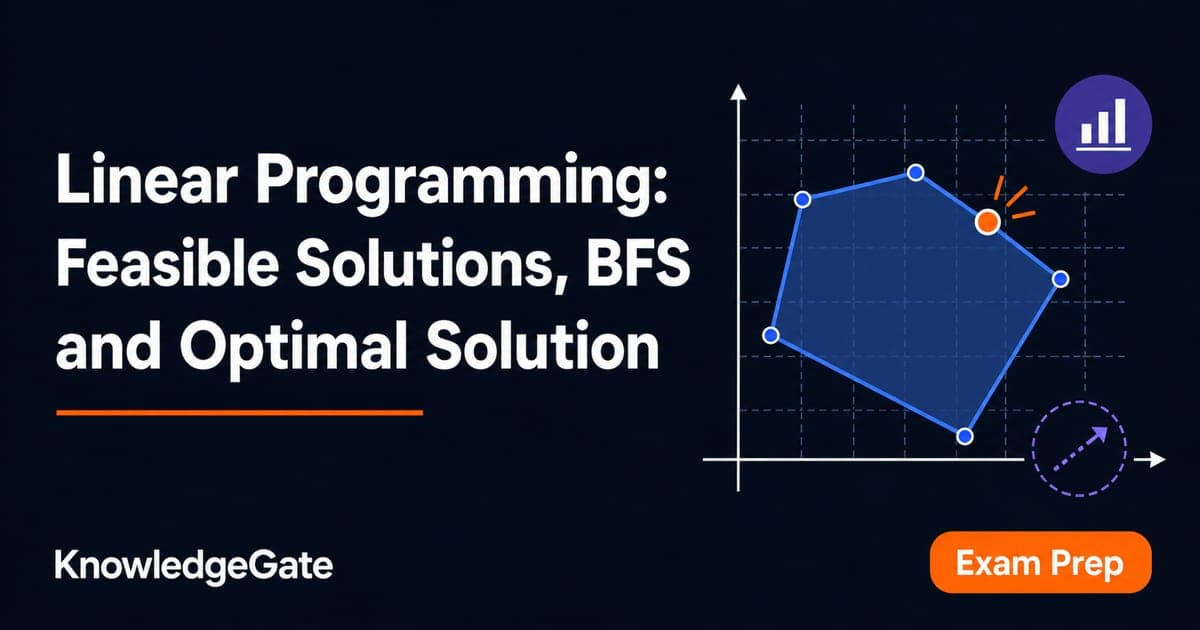
Basic Terminologies in Linear Programming: Feasible Solutions, BFS and an Optimal Solution Worked Step by Step
Separate feasible, basic feasible and optimal solutions through geometry, slack variables, vertex enumeration and concise counterexamples.
Updated 25 Sep 20265 min readEngineering Mathematics
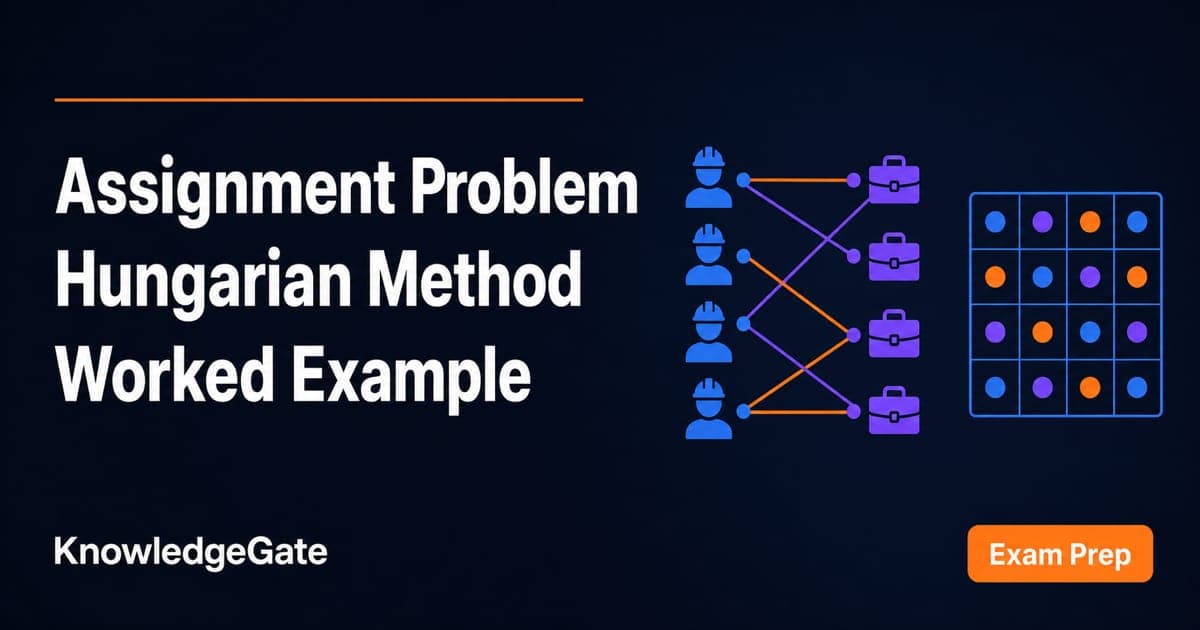
Assignment Problem and Hungarian Method: Formulation with a Complete Worked Example
Learn why greedy assignment fails, how matrix reductions preserve the optimum, and how the uncovered-value adjustment leads to a minimum cost of 140.
Updated 24 Sep 20266 min readEngineering Mathematics

Applications of Mathematical Induction in Inequalities and Recurrence Relations: Worked Proofs
Learn how to choose a valid base index, complete an inequality step, and verify closed forms for first-order and second-order recurrences.
Updated 23 Sep 20266 min readEngineering Mathematics
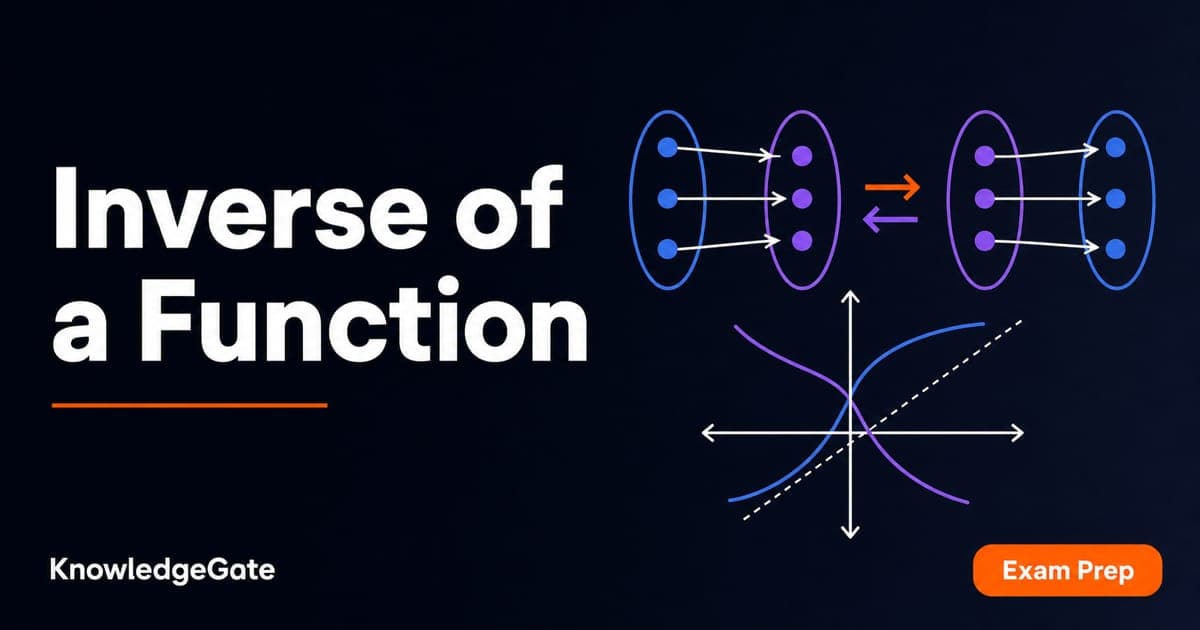
Inverse of a Function: Definition, Existence Conditions and Worked Examples
Learn when an inverse function exists, how domain restrictions make a rule invertible, and how to derive and verify the inverse of a quadratic step by step.
Updated 22 Sep 20266 min readEngineering Mathematics
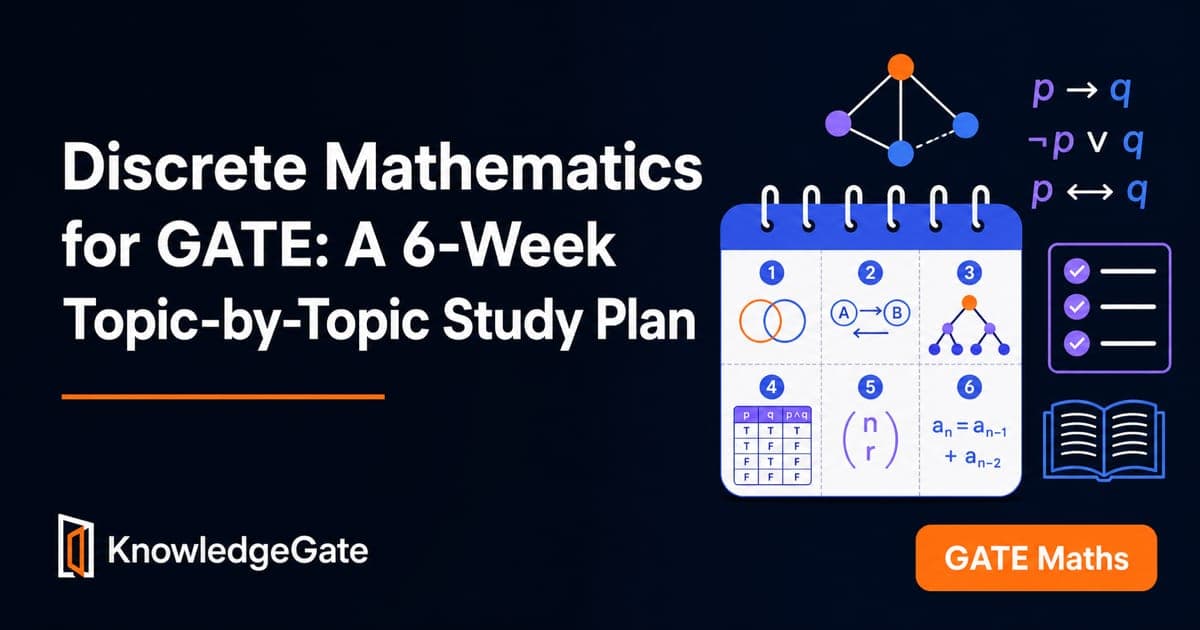
Discrete Mathematics for GATE: A 6-Week Topic-by-Topic Study Plan
Build Discrete Mathematics in prerequisite order over six weeks. Each week combines concepts, worked problems, timed sets, and scheduled error repair.
Updated 20 Sep 20265 min readEngineering Mathematics
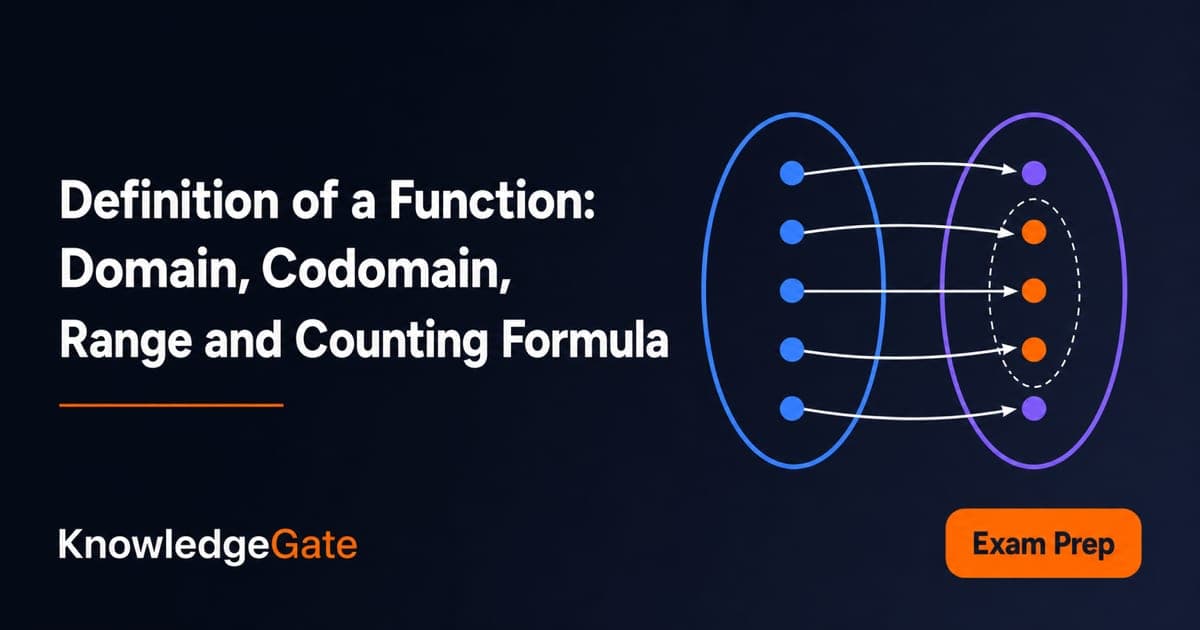
Definition of a Function: Domain, Codomain, Range and Counting Formula
Build the definition from first principles, separate the three sets, verify one finite map, and count all functions before handling common restrictions.
Updated 19 Sep 20266 min readEngineering Mathematics