Computer Networks
50 articles in this topic
Bit Stuffing Algorithm: Worked Encoding, De-stuffing and Exam Traps
Learn bit stuffing from the framing problem through a complete 21-bit sender and receiver trace. Calculate inserted bits, lengths and efficiency without losing original data.
Updated 16 Sep 20266 min readComputer Networks
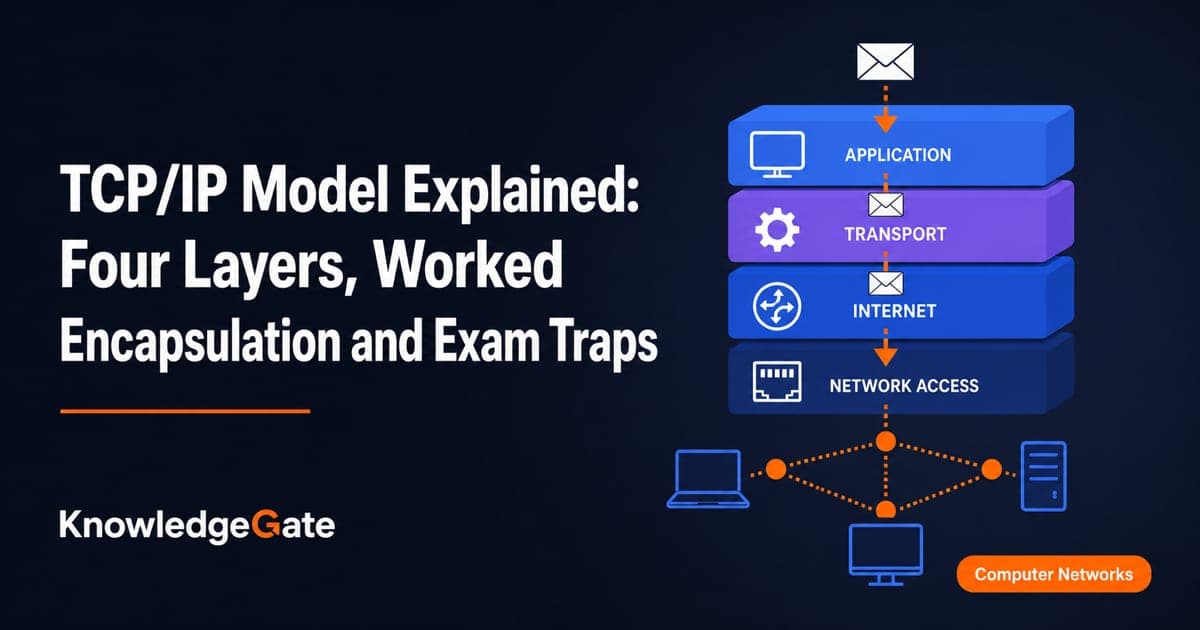
TCP/IP Model Explained: Four Layers, Worked Encapsulation and Exam Traps
Learn the four TCP/IP layers through one complete packet journey. The worked example calculates headers, MTU fit, frame efficiency and serialization time step by step.
Updated 15 Sep 20266 min read82 viewsComputer Networks

SMTP, POP3 and IMAP Explained with Worked Examples
Follow one email from sender to mailbox, then compare SMTP dialogue, POP3 deletion, IMAP synchronisation, timing and bandwidth through closed examples.
Updated 14 Sep 20266 min readComputer Networks
MPLS Explained: Label Switching, Header Fields and a Packet Walkthrough
See where an MPLS label comes from, why it changes at each hop, how the shim header is encoded, and when ordinary IP forwarding resumes.
Updated 12 Sep 20266 min readComputer Networks

Cloud Deployment Models: Public, Private, Community and Hybrid with a 60-VM Worked Example
Learn a four-question method to classify cloud deployment models, then carry one 60-VM workload through public, private, community, and hybrid designs.
Updated 11 Sep 20265 min readComputer Networks

Cloud Computing: Concepts, Service Models, Evolution and a Worked Capacity Plan
Learn what makes a service a cloud, how its two classification axes differ, and how elasticity changes compute and storage capacity.
Updated 9 Sep 20266 min readComputer Networks

Diffie-Hellman Key Exchange Explained: Worked Examples, Security and Exam Traps
Learn what Diffie-Hellman shares, calculate two exchanges by hand, trace an unauthenticated attack, and avoid the most common conceptual and arithmetic errors.
Updated 8 Sep 20266 min read107 viewsComputer Networks
DLL Framing in Computer Networks: Methods, Bit Stuffing and Worked Examples
Learn how the data link layer finds frame boundaries and preserves transparency. Work through corrupted counts, escaped bytes and bit stuffing with exact overhead calculations.
Updated 6 Sep 20265 min readComputer Networks
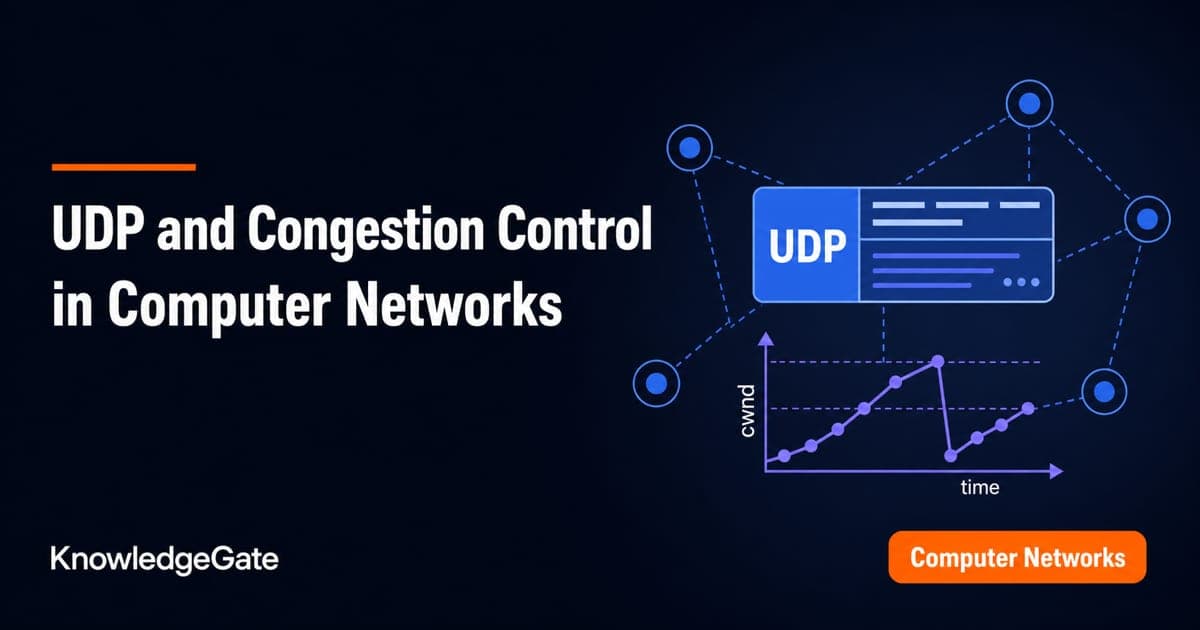
UDP and Congestion Control in Computer Networks: Headers, Timers and Worked Examples
UDP datagrams preserve message boundaries, while checksum arithmetic, congestion windows, RTT timers and socket calls solve different transport-layer problems. Worked calculations expose the exam traps.
Updated 5 Sep 20266 min readComputer Networks
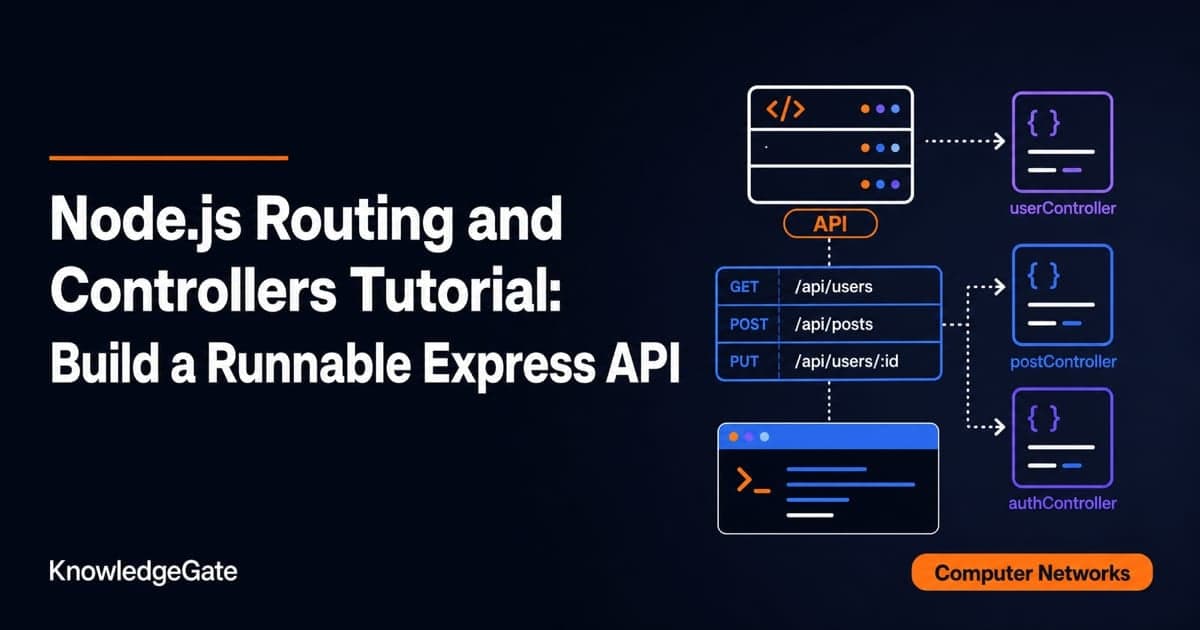
Node.js Routing and Controllers Tutorial: Build a Runnable Express API
Build a small Express users API from scratch, separate routes from controllers, and test successful and failed requests against predictable responses.
Updated 3 Sep 20266 min readComputer Networks

Network Security and Cryptography in Computer Networks: How Ciphers, Key Exchange, and TLS Actually Work
Cipher internals for computer networks: ECB vs CBC block modes, HMAC construction, square-and-multiply RSA, a Diffie-Hellman man-in-the-middle, and TLS.
Updated 2 Sep 202611 min read65 viewsComputer Networks
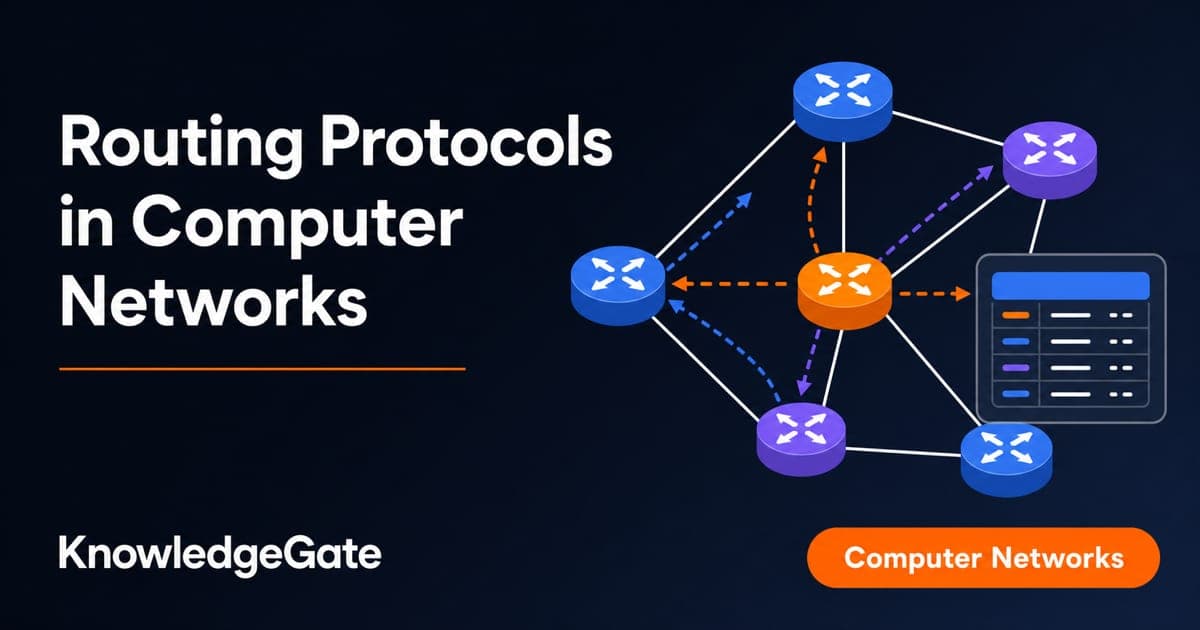
Routing Protocols in Computer Networks: Distance Vector, Link State, RIP, OSPF, BGP with Worked Examples
Build routing from the control plane to Internet-wide policy. Compare how RIP, OSPF, and BGP carry updates, use ports and timers, react to failure, and create common GATE CS traps.
Updated 31 Aug 20265 min readComputer Networks