Theory of Computation
47 articles in this topic
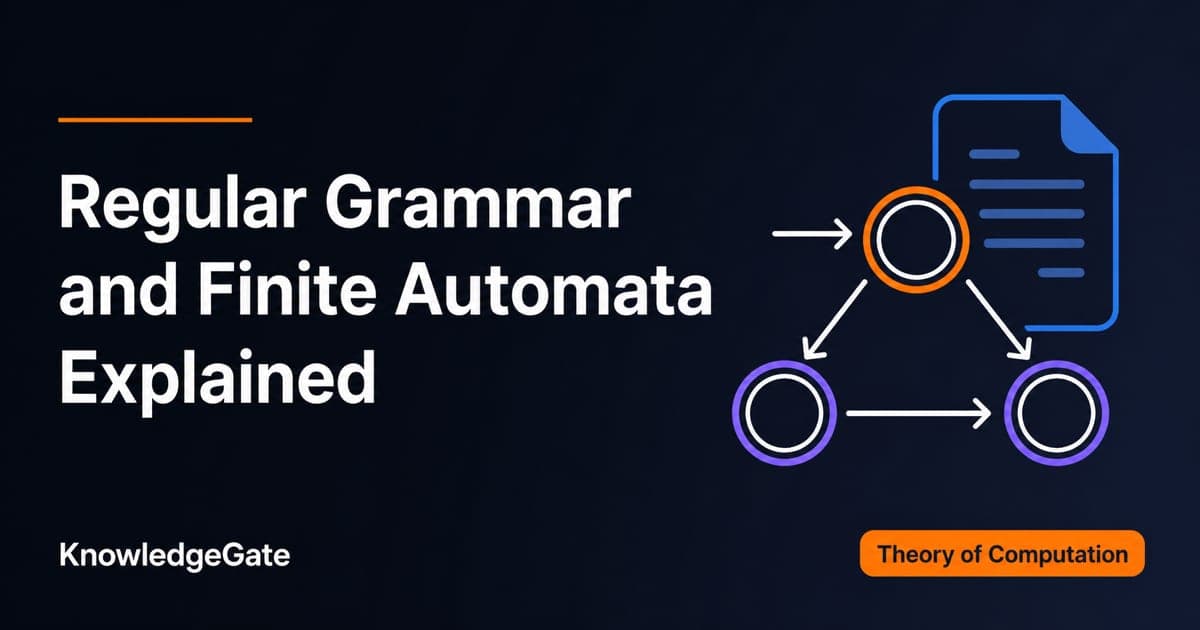
Regular Grammar and Finite Automata Explained: Conversion, Worked Example and Exam Traps
Connect right-linear productions to automaton transitions, carry one grammar through an NFA and a DFA, and learn the mistakes that change the language.
Updated 16 Sep 20266 min read53 viewsTheory of Computation
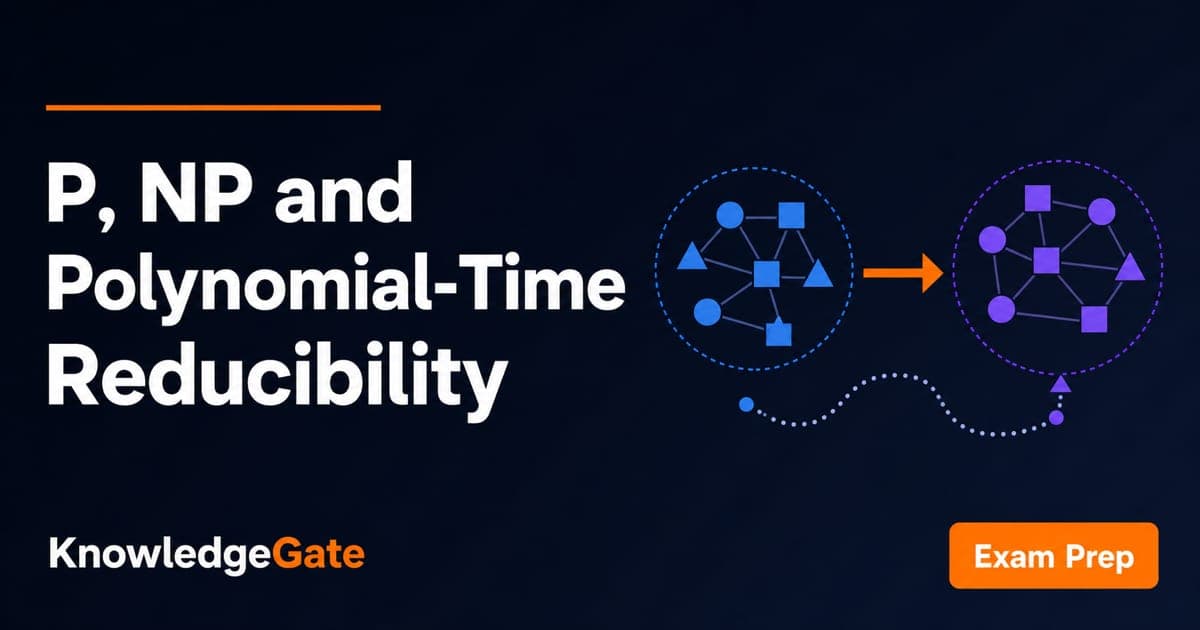
P, NP and Polynomial-Time Reducibility: Definitions, Direction and a Worked Example
Separate solving from verification, learn what A <=p B really says, and follow a complete reduction from Vertex Cover to Independent Set on one five-vertex graph.
Updated 15 Sep 20266 min readTheory of Computation
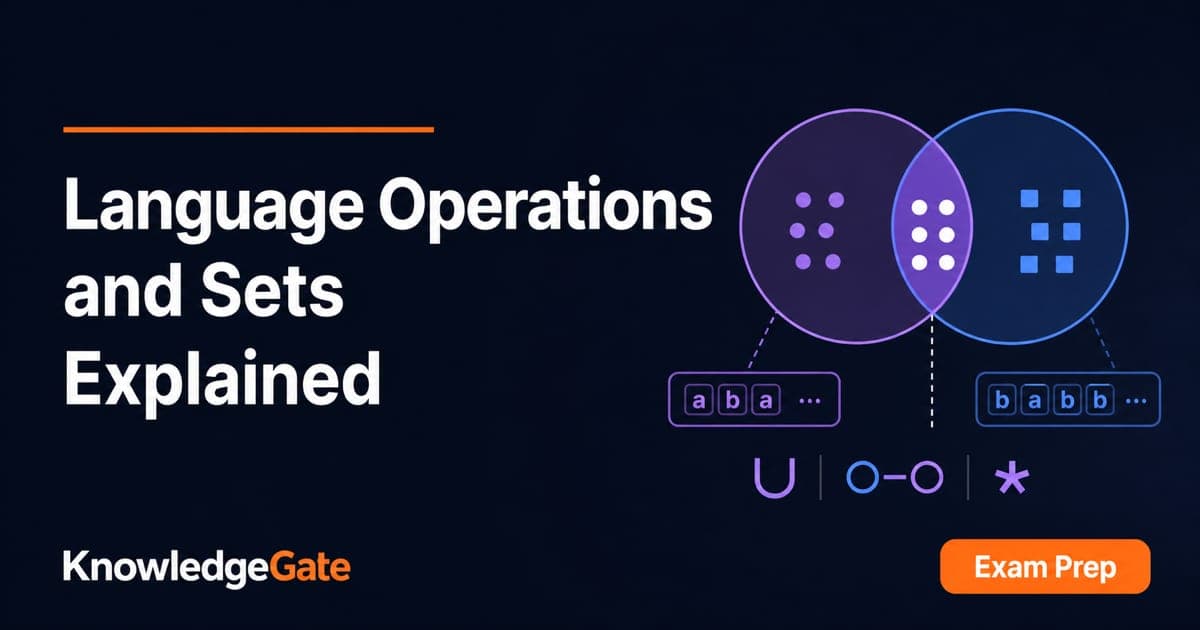
Language Operations and Sets Explained: Union, Concatenation, Kleene Star and Exam Problems
Learn why epsilon differs from the empty language, how order changes concatenation, and how small counterexamples expose false identities. Two worked languages carry every result.
Updated 13 Sep 20266 min readTheory of Computation
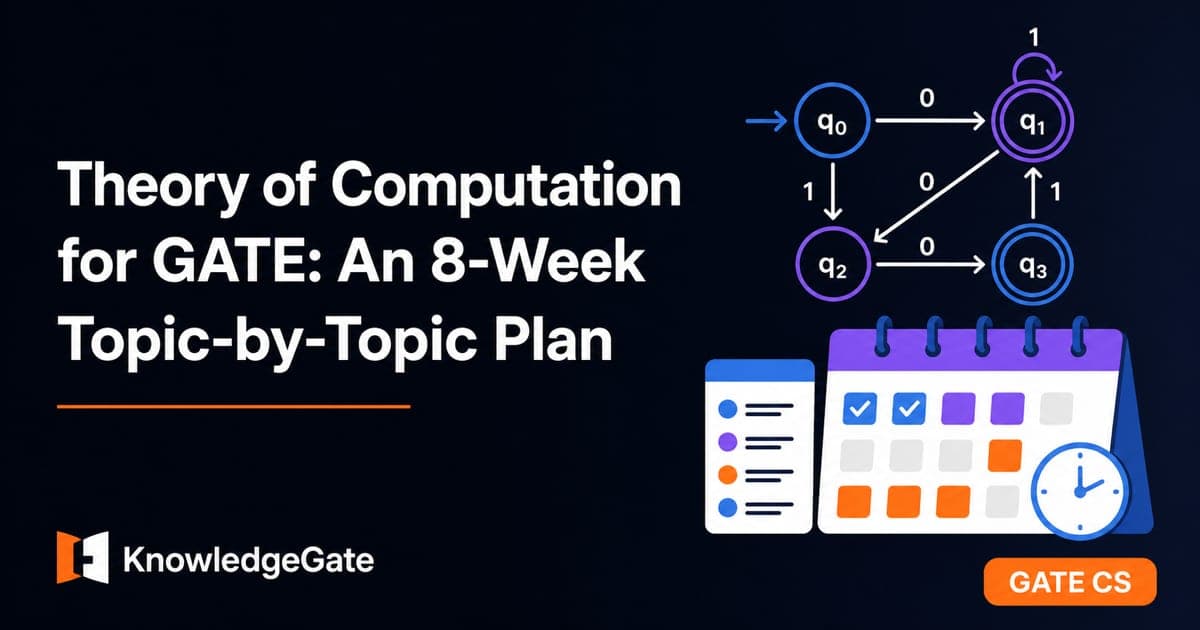
Theory of Computation for GATE: An 8-Week Topic-by-Topic Plan
Turn Theory of Computation into an eight-week routine with a dependency-based sequence, worked examples, an error loop, recovery time, and timed revision.
Updated 12 Sep 20265 min read90 viewsTheory of Computation
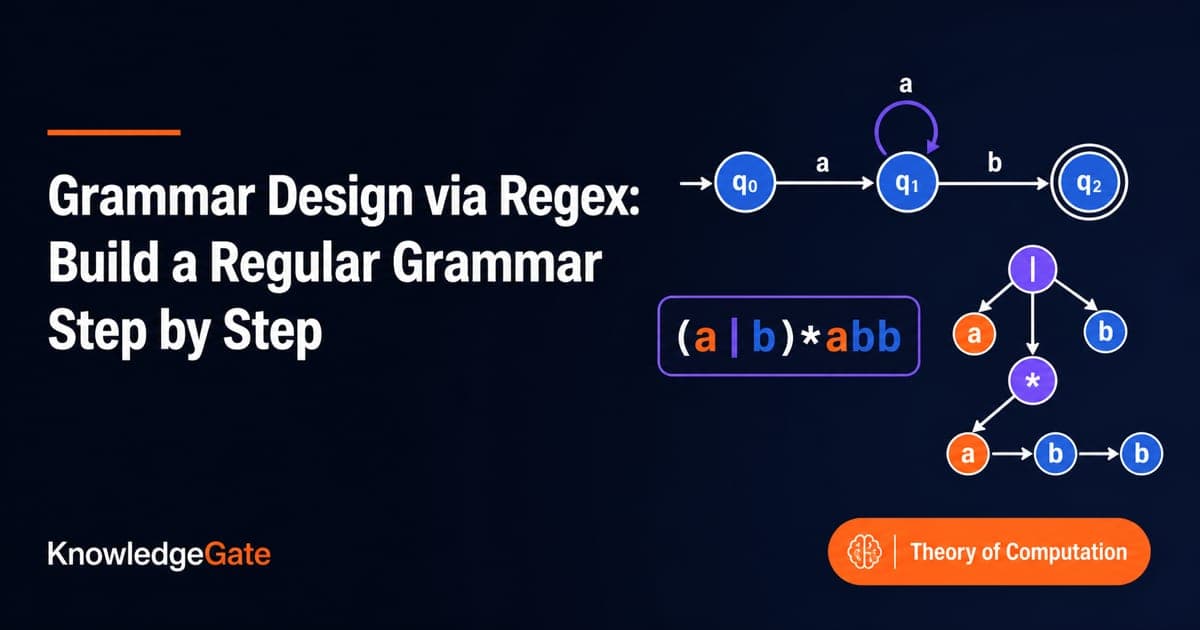
Grammar Design via Regex: Build a Regular Grammar Step by Step
Turn `(a|b)*abb` into a right-linear grammar through a four-state DFA, then check the construction with complete accepted and rejected traces.
Updated 10 Sep 20266 min readTheory of Computation
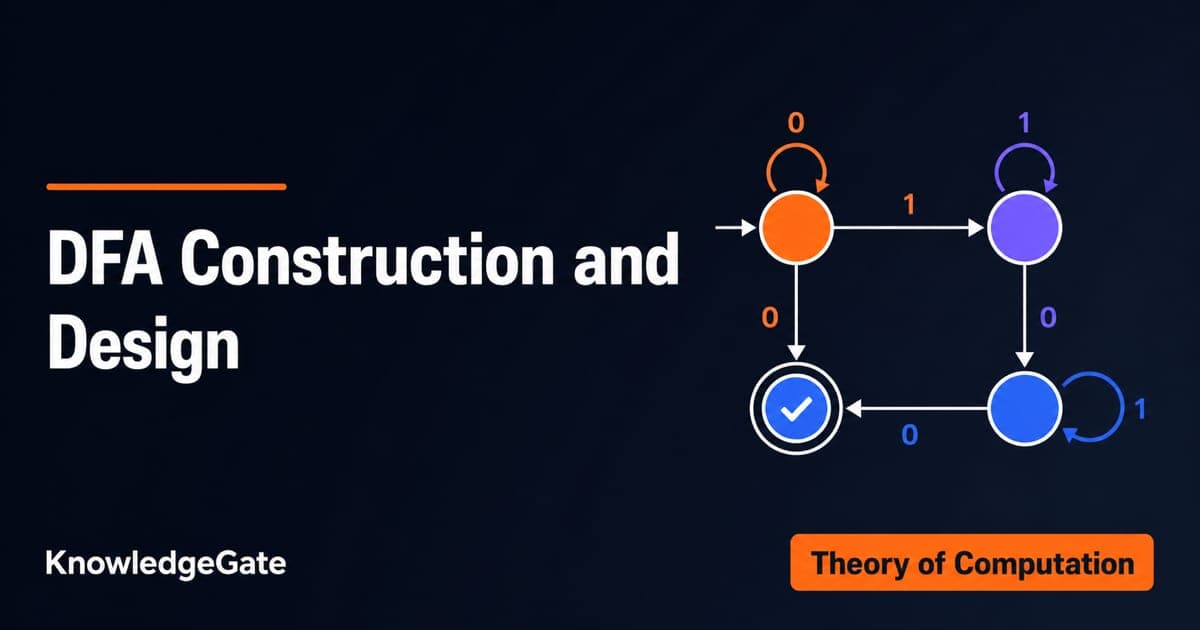
DFA Construction and Design: State Invariants, Worked Examples and Exam Traps
Learn a repeatable method for direct DFA design. Build and verify machines for strings containing 101 and for strings with even parity that end in 0.
Updated 9 Sep 20266 min readTheory of Computation
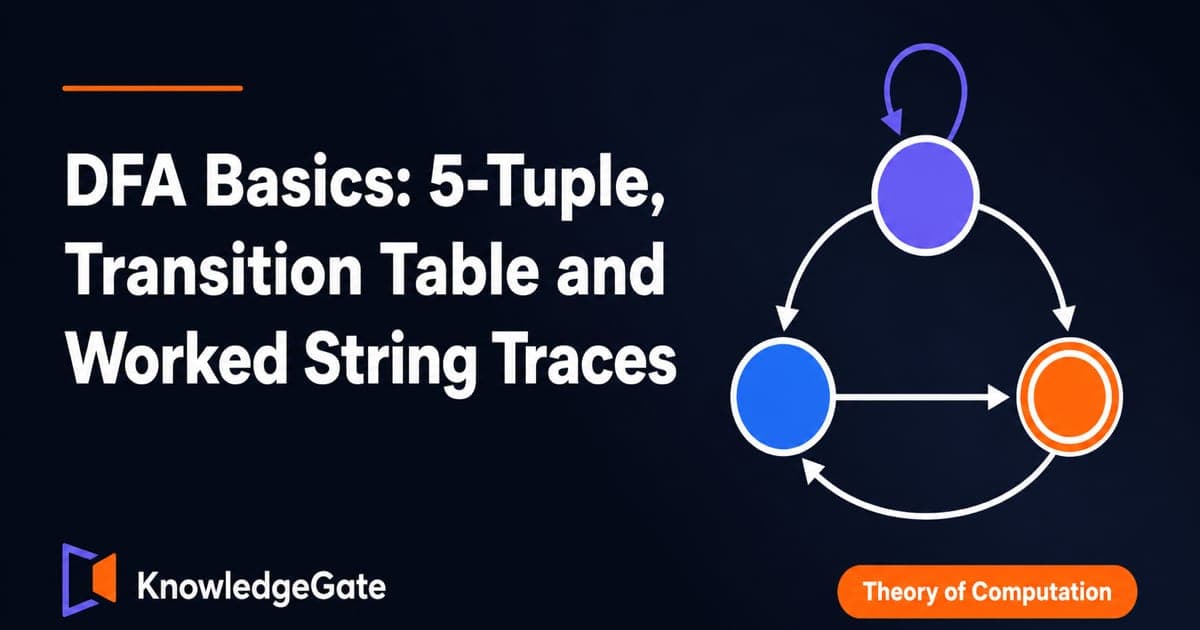
DFA Basics and Definitions: 5-Tuple, Transition Table and Worked String Traces
Understand what makes a finite automaton deterministic and complete. Build one DFA for strings ending in 01, trace inputs, test acceptance, and repair a missing transition.
Updated 7 Sep 20266 min readTheory of Computation
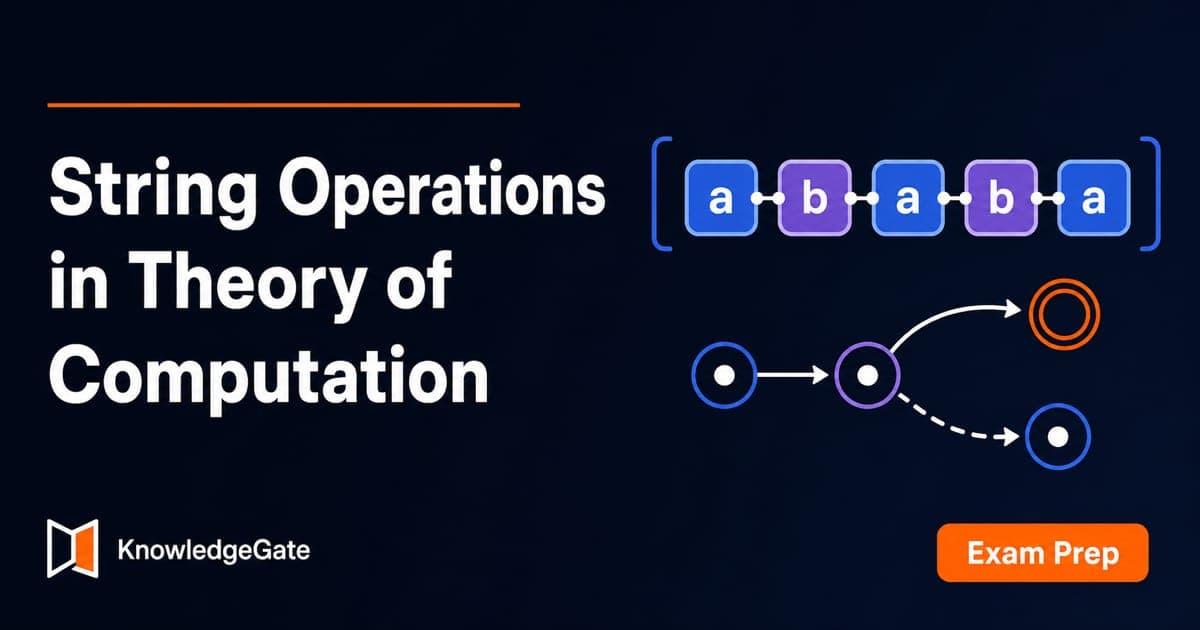
String Operations in Theory of Computation: Basics, Definitions and Worked Examples
Build string notation from alphabet and epsilon through prefixes, reversal, language products and Kleene closure. Every rule is checked with exact worked values.
Updated 6 Sep 20265 min readTheory of Computation
Decidability in Regular Languages: DFA Tests, Worked Example and Exam Traps
Learn why DFA decision problems halt, how graph searches settle key language properties, and how a product automaton exposes the counterexample 10.
Updated 4 Sep 20266 min readTheory of Computation
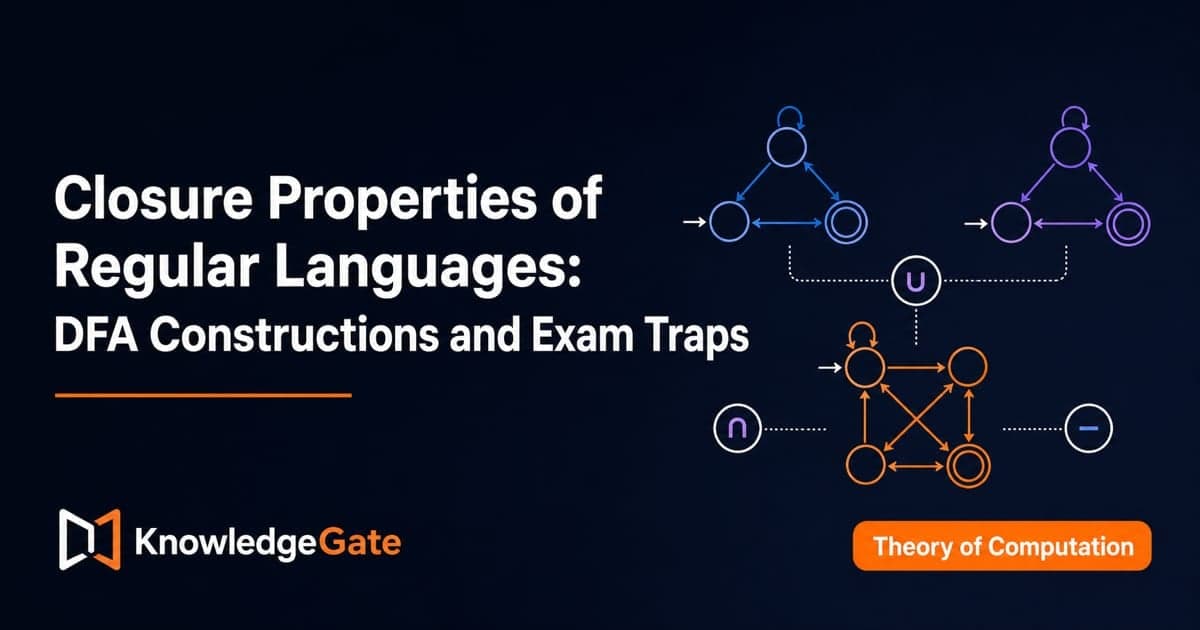
Closure Properties of Regular Languages: DFA Constructions and Exam Traps
Learn why regular languages remain regular under major operations. Build one product DFA, trace two strings, and compare the constructions operation by operation.
Updated 3 Sep 20266 min read51 viewsTheory of Computation
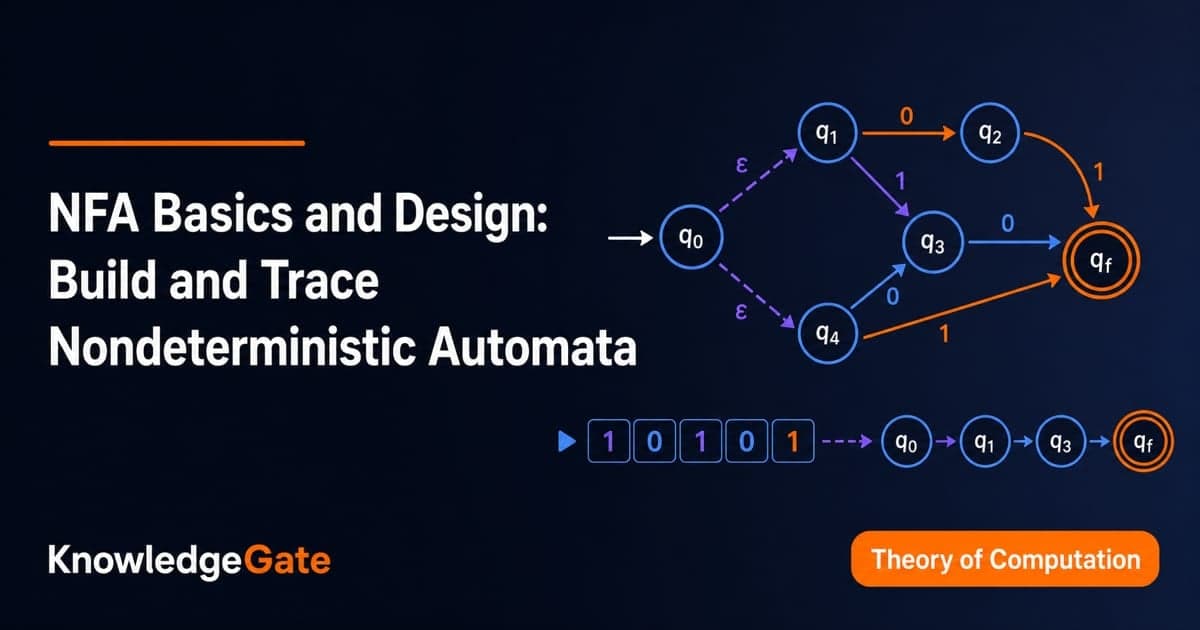
NFA Basics and Design: Build and Trace Nondeterministic Automata
Learn how an NFA branches, trace complete state sets, handle epsilon-closure, and convert a worked three-state machine into its reachable-subset DFA.
Updated 1 Sep 20265 min readTheory of Computation
Chomsky Hierarchy Explained: Grammar Types, Worked Classification and Exam Traps
Learn how to test a grammar from Type 3 outwards, distinguish all four production classes, classify a complete grammar, and derive its strings step by step.
Updated 31 Aug 20266 min read127 viewsTheory of Computation