CS Fundamentals
451 articles in this topic
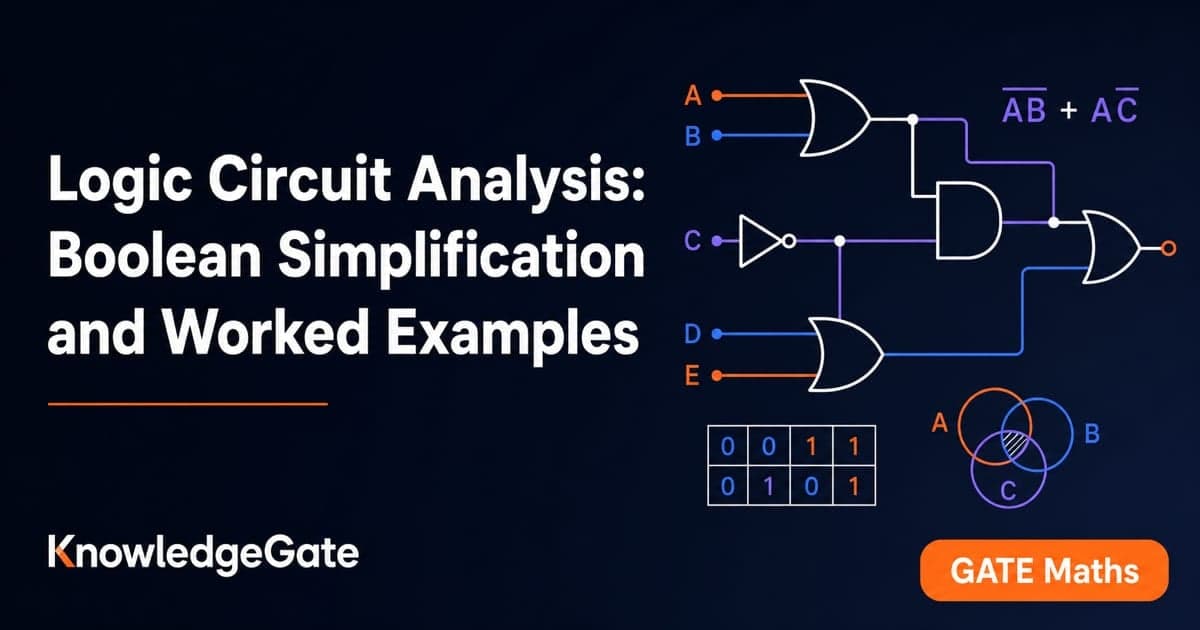
Logic Circuit Analysis: Boolean Simplification and Worked Examples
Learn a repeatable way to trace combinational circuits, simplify their Boolean expressions, and verify the result. Two worked examples cover a three-input network and a four-NAND XOR.
Updated 18 Sep 20265 min readDigital Logic
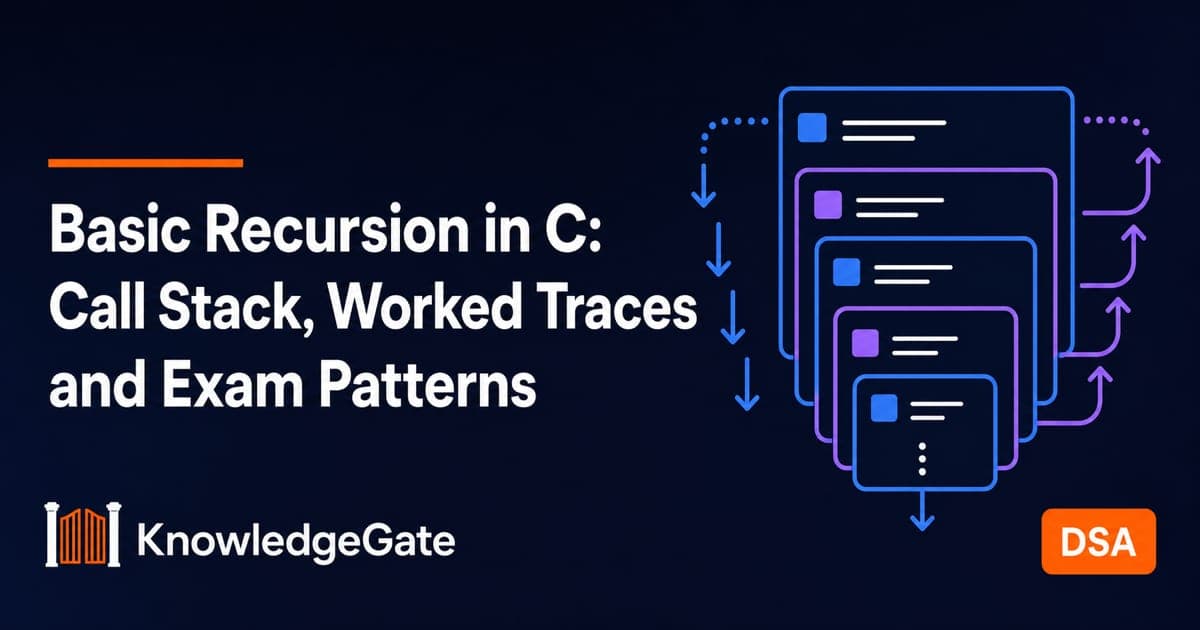
Basic Recursion in C: Call Stack, Worked Traces and Exam Patterns
Learn how recursive C functions descend, stop and unwind. Trace factorial and printed output, count Fibonacci calls, and compare recursion with iteration.
Updated 18 Sep 20265 min readC Programming & Data Structures
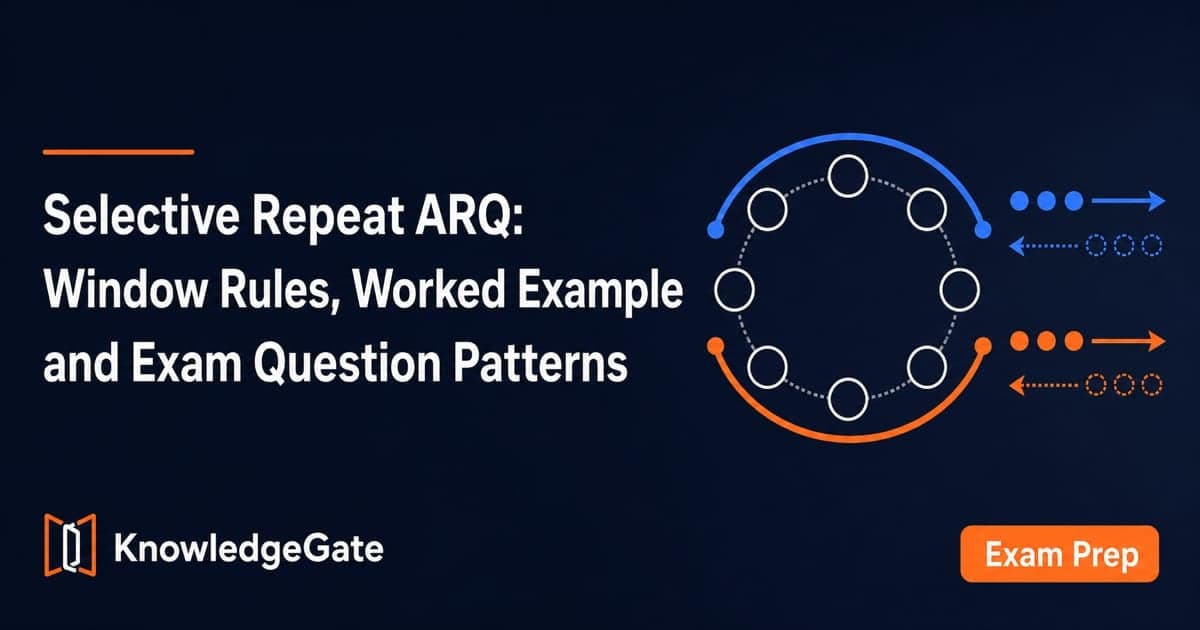
Selective Repeat ARQ: Window Rules, Worked Example and Exam Question Patterns
Build a reliable Selective Repeat trace from sender and receiver state, then test the window rule and utilisation formula with worked numbers.
Updated 18 Sep 20265 min readComputer Networks
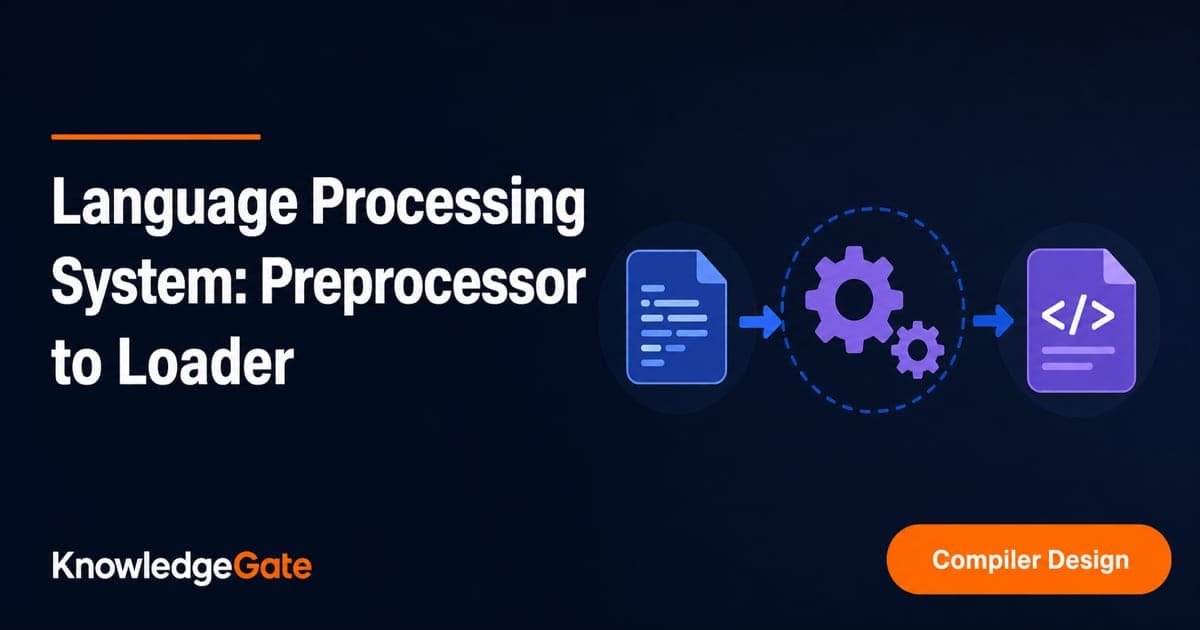
Language Processing System in Compiler Design: Preprocessor to Loader with a Worked Trace
Follow one macro-containing C program through every language processor. The trace shows object-file relocation, a linker patch of +4, and the final value 7.
Updated 18 Sep 20265 min readCompiler Design
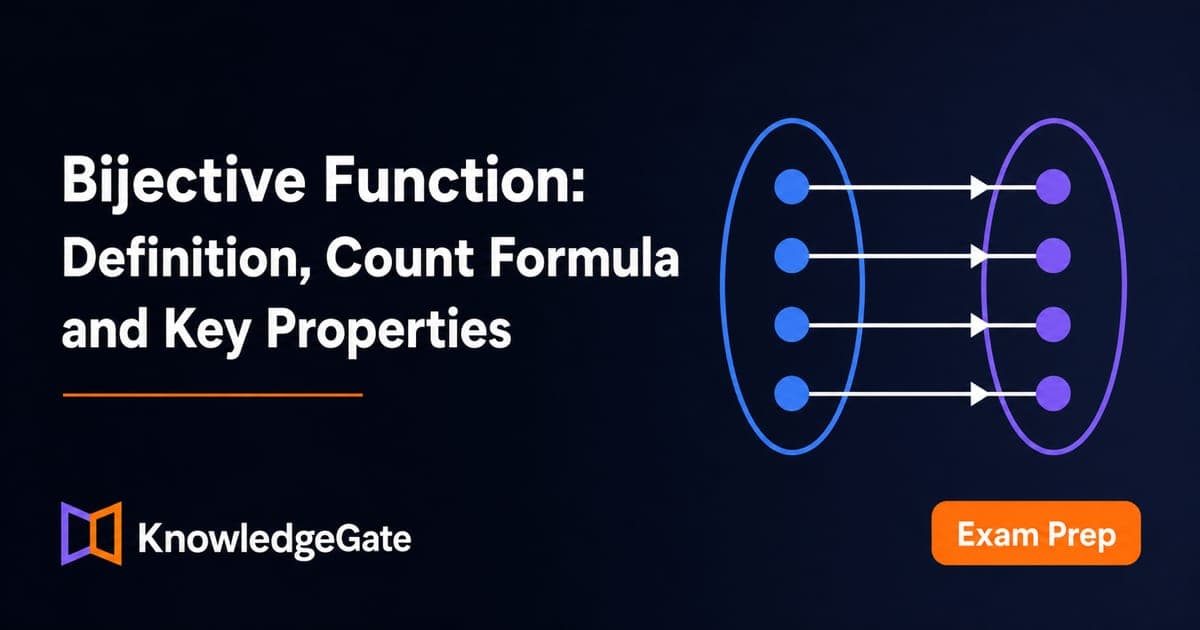
Bijective Function: Definition, Count Formula and Key Properties
Learn how to identify a bijection, construct its inverse, count bijections between finite sets, and avoid the mistakes that commonly spoil exam answers.
Updated 18 Sep 20266 min readEngineering Mathematics
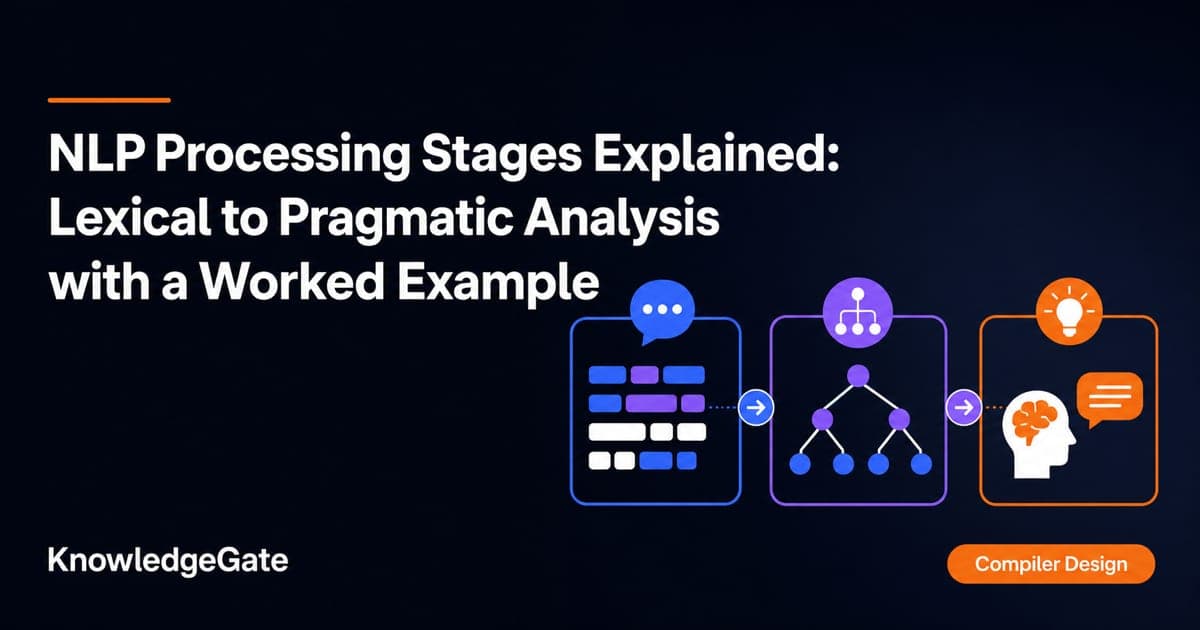
NLP Processing Stages Explained: Lexical to Pragmatic Analysis with a Worked Example
Follow one two-sentence input through tokenisation, morphology, parsing, meaning, coreference and contextual interpretation, with every intermediate result visible.
Updated 18 Sep 20265 min readOperating Systems

SQL WHERE Clause and Filtering: Syntax, Operators, and Worked Examples
Learn SQL filtering on one runnable eight-row orders table. Trace WHERE conditions row by row, combine Boolean operators, handle NULL, and check exact results.
Updated 18 Sep 20266 min readDBMS
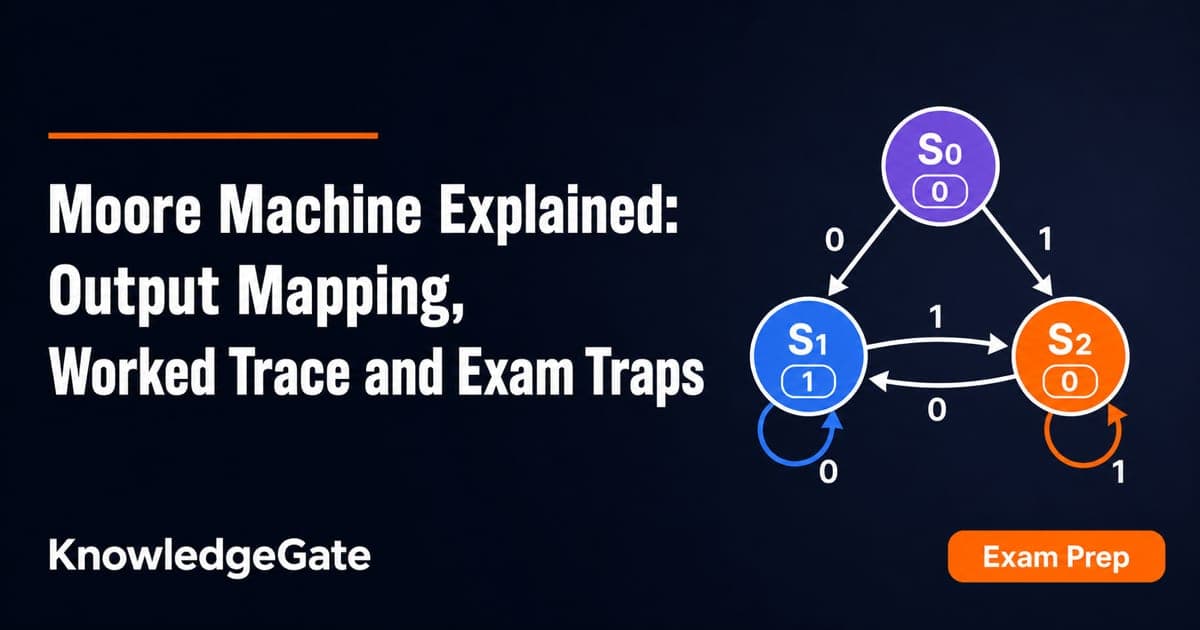
Moore Machine Explained: Output Mapping, Worked Trace and Exam Traps
Learn where a Moore machine places its outputs, then construct and trace a three-state suffix detector. The same example makes conversion and minimisation clear.
Updated 18 Sep 20266 min readTheory of Computation
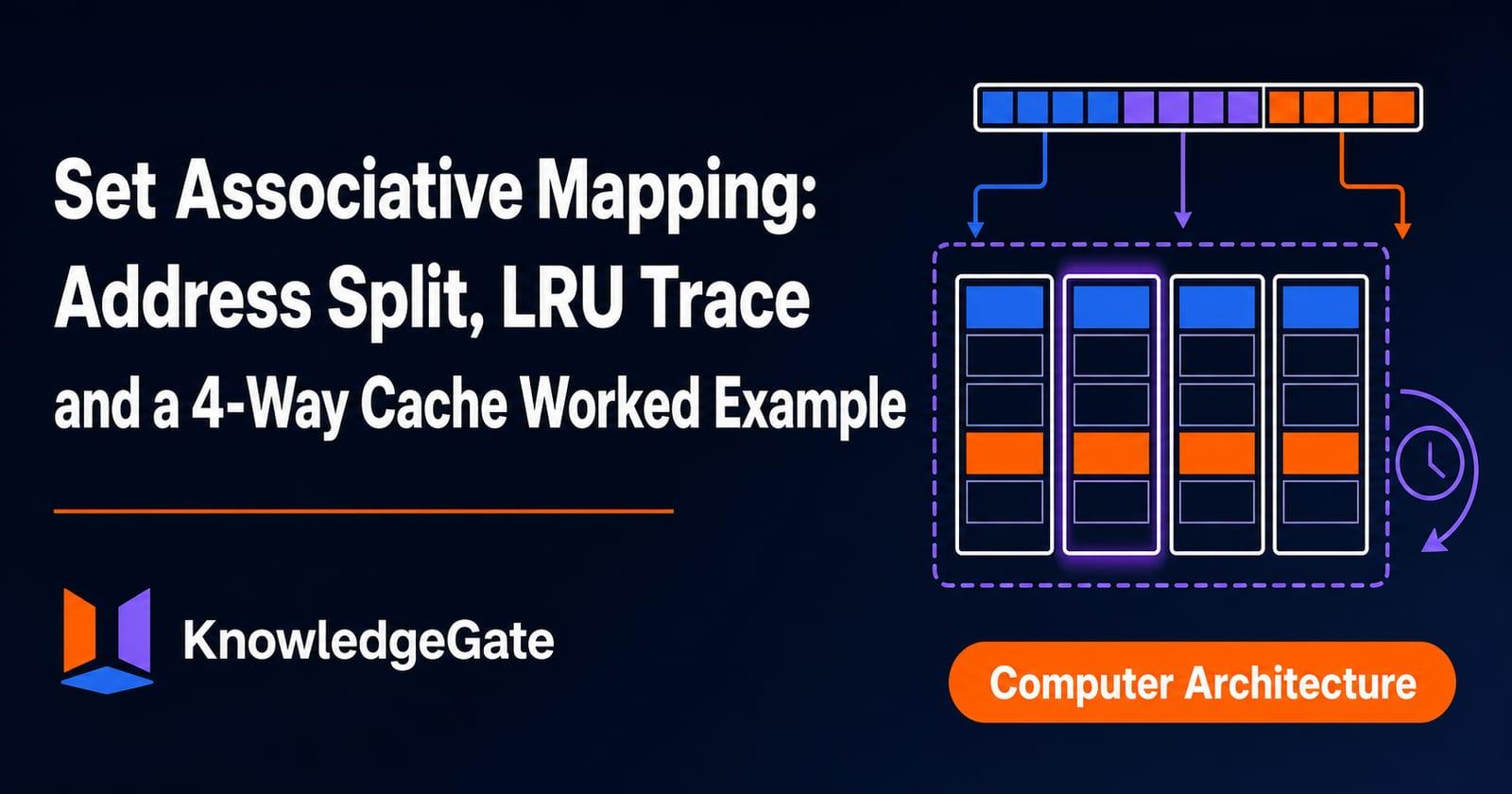
Set Associative Mapping: Address Split, LRU Trace and a 4-Way Cache Worked Example
Build set associative mapping from cache lines and sets, then decode 0x2B6D4, trace true LRU in one 4-way set, compare AMAT, and correct common numerical traps.
Updated 17 Sep 20266 min readComputer Organization & Architecture
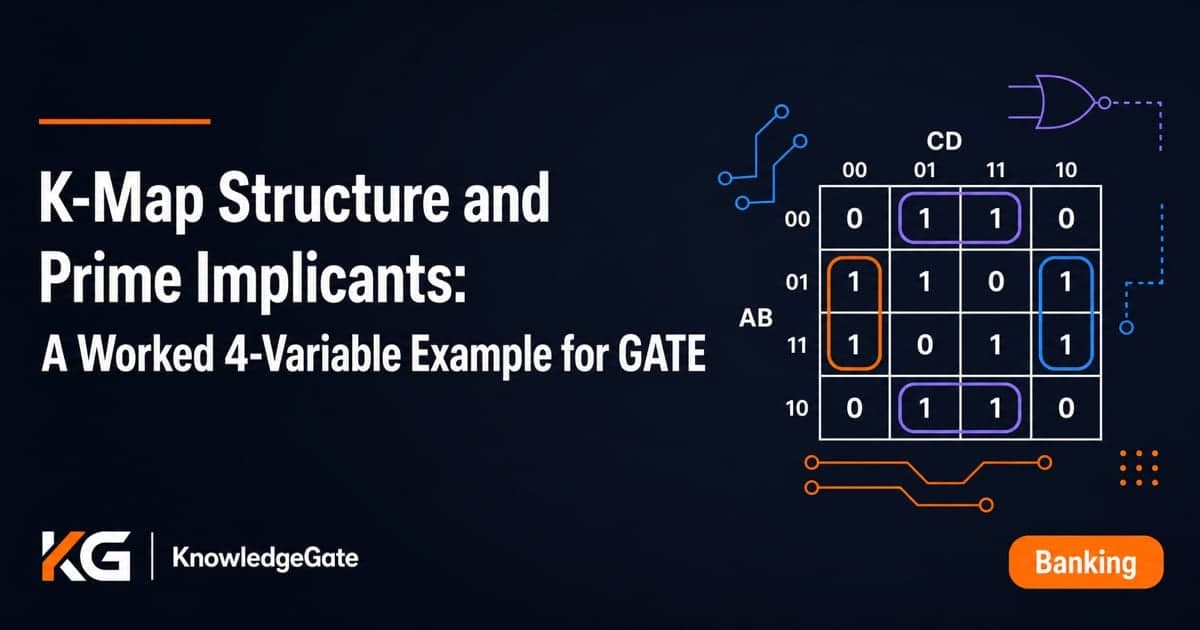
K-Map Structure and Prime Implicants: A Worked 4-Variable Example for GATE
Learn how a 4-variable K-map is laid out, why Gray-code adjacency matters, and how one eight-minterm example leads to three PIs, two EPIs, and a minimum SOP.
Updated 17 Sep 20265 min read56 viewsDigital Logic
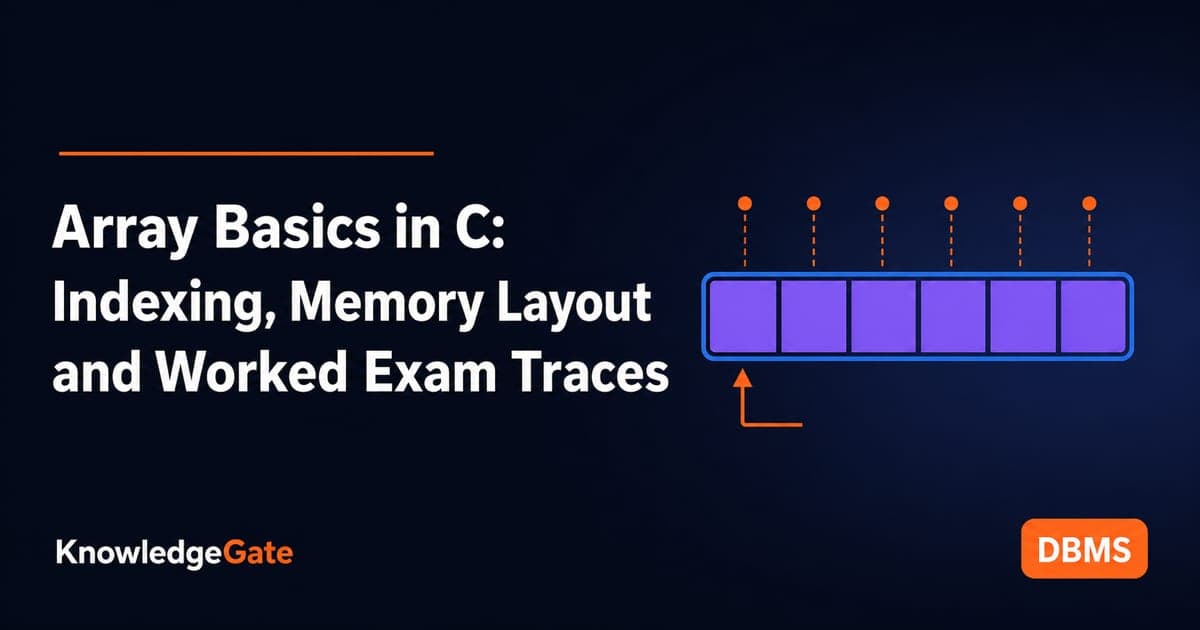
Array Basics in C: Indexing, Memory Layout and Worked Exam Traces
C arrays become much easier once indices, addresses, loop bounds, and mutations are kept separate. Build that model with two complete traces and common-error checks.
Updated 16 Sep 20266 min readC Programming & Data Structures
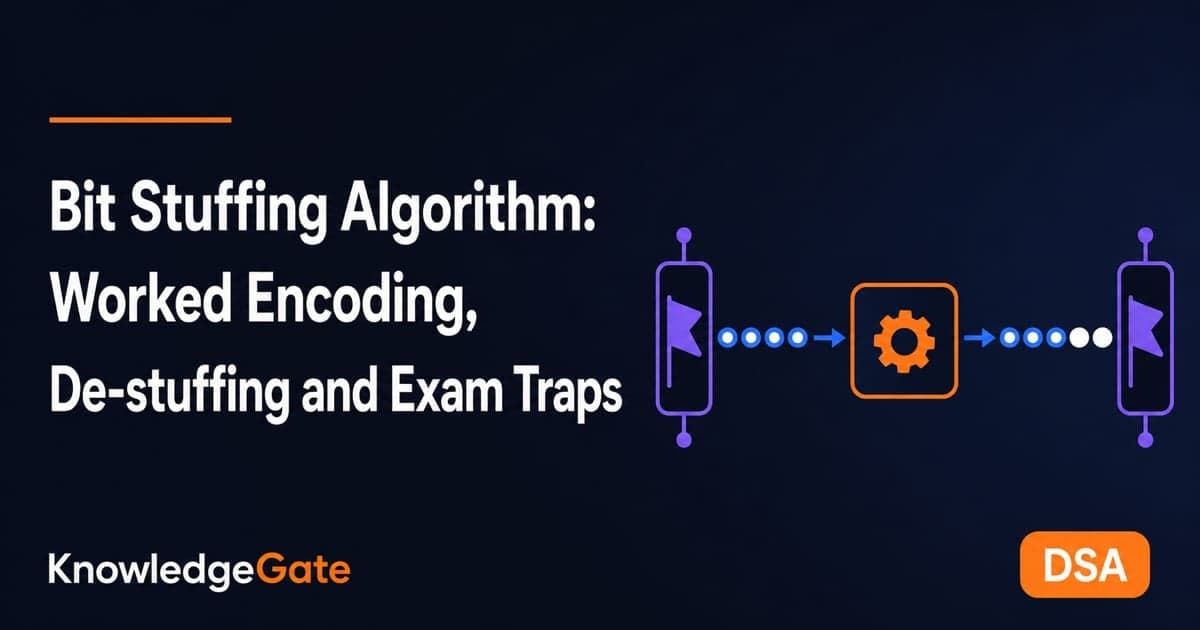
Bit Stuffing Algorithm: Worked Encoding, De-stuffing and Exam Traps
Learn bit stuffing from the framing problem through a complete 21-bit sender and receiver trace. Calculate inserted bits, lengths and efficiency without losing original data.
Updated 16 Sep 20266 min readComputer Networks