CS Fundamentals
456 articles in this topic
C Programming Mixed-Concept Questions Explained: Arrays, Pointers, Functions and Output Tracing
Learn a four-pass method for tracing C programs that combine arrays, pointer aliases, function calls, static storage and side effects, with a complete worked output trace.
Updated 15 Sep 20266 min readC Programming & Data Structures
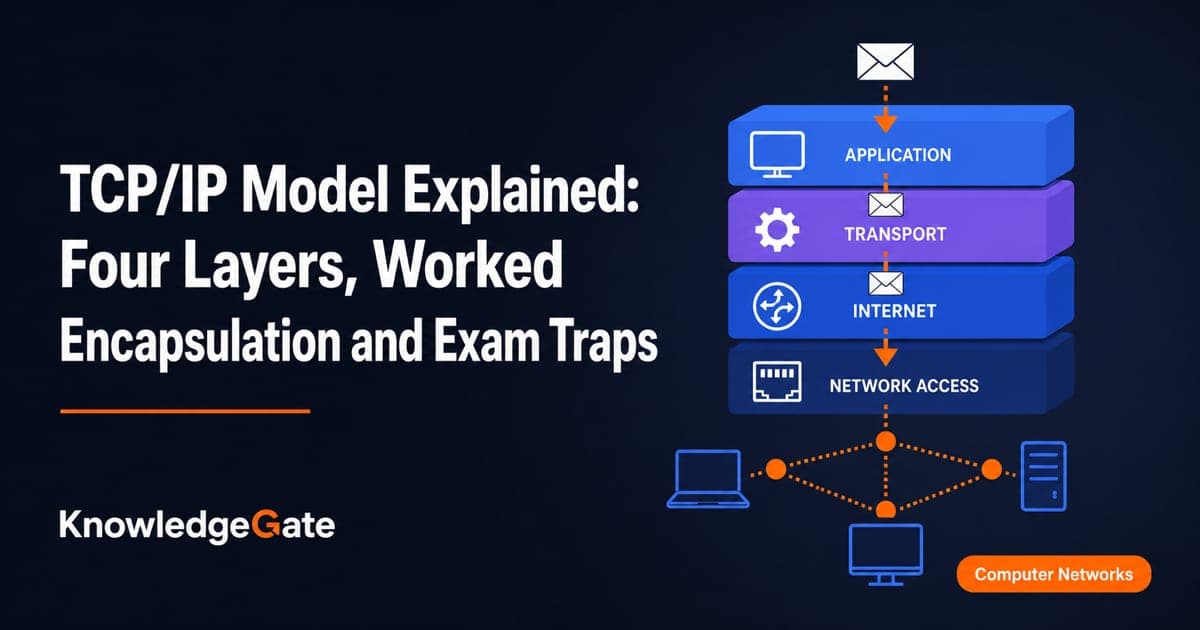
TCP/IP Model Explained: Four Layers, Worked Encapsulation and Exam Traps
Learn the four TCP/IP layers through one complete packet journey. The worked example calculates headers, MTU fit, frame efficiency and serialization time step by step.
Updated 15 Sep 20266 min read91 viewsComputer Networks
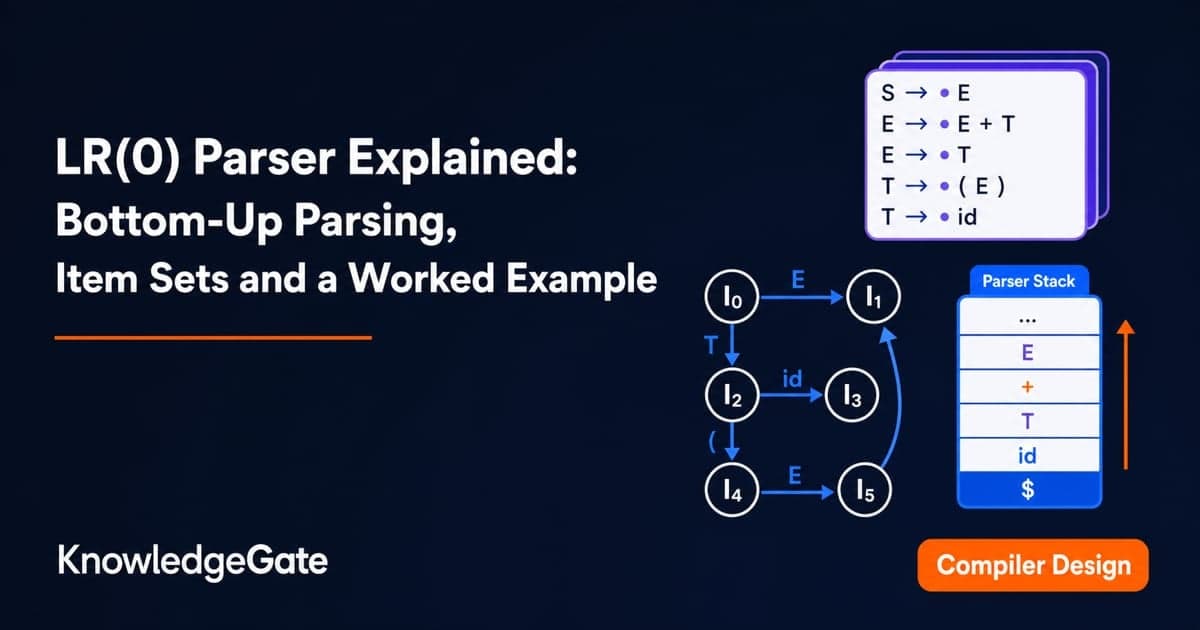
LR(0) Parser Explained: Bottom-Up Parsing, Item Sets and a Worked Example
Build an LR(0) parser from one augmented grammar, then follow every state, table entry and stack operation until cdd$ is accepted.
Updated 15 Sep 20266 min readCompiler Design
Universal and Existential Quantifiers Explained: Scope, Meaning and Worked Examples
Learn universal and existential quantifiers from zero, then evaluate finite domains, translations, negations and nested formulas with worked examples.
Updated 15 Sep 20266 min read74 viewsEngineering Mathematics

Introduction to Operating System: Concepts, Types and a Worked System Call
Build a practical mental model of an operating system, then follow one read request across modes, process states and exact memory addresses.
Updated 15 Sep 20266 min readOperating Systems
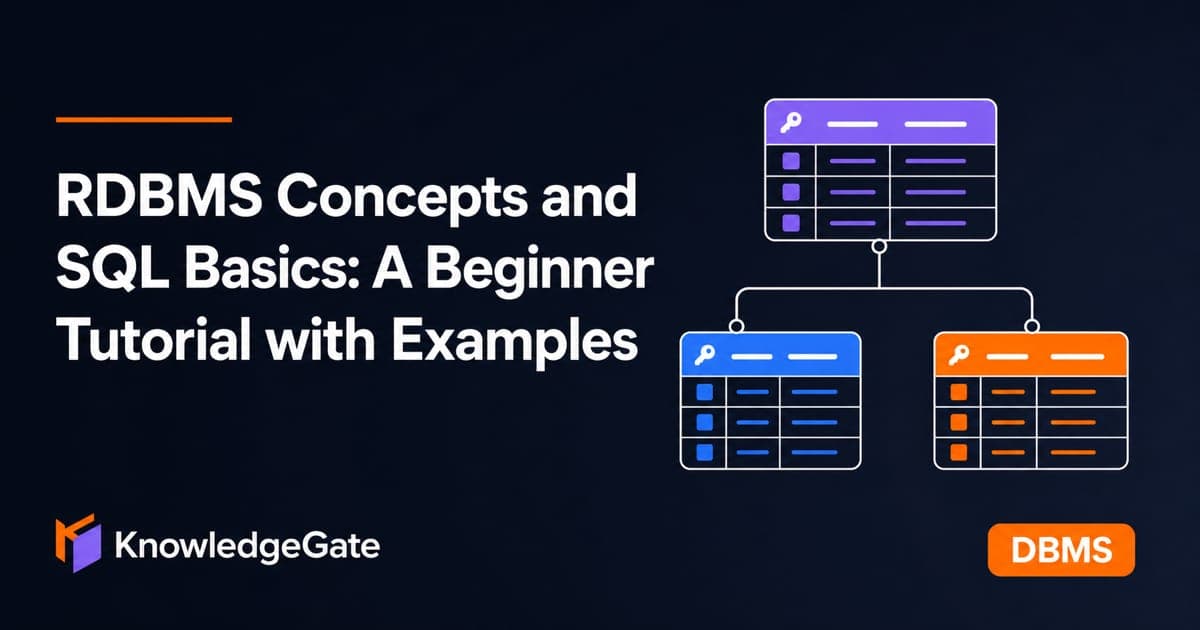
RDBMS Concepts and SQL Basics: A Beginner Tutorial with Examples
Build a three-table college database in SQLite, then use exact rows and queries to understand relations, keys, constraints, joins and data anomalies.
Updated 15 Sep 20266 min readDBMS

P, NP and Polynomial-Time Reducibility: Definitions, Direction and a Worked Example
Separate solving from verification, learn what A <=p B really says, and follow a complete reduction from Vertex Cover to Independent Set on one five-vertex graph.
Updated 15 Sep 20266 min readTheory of Computation

Memory Organisation and Performance: Cache Mapping, AMAT and Worked GATE Examples
Connect cache capacity, address fields and access time through one 32-bit worked system. Then compare mapping choices and solve a past GATE-style field relation.
Updated 14 Sep 20265 min readComputer Organization & Architecture
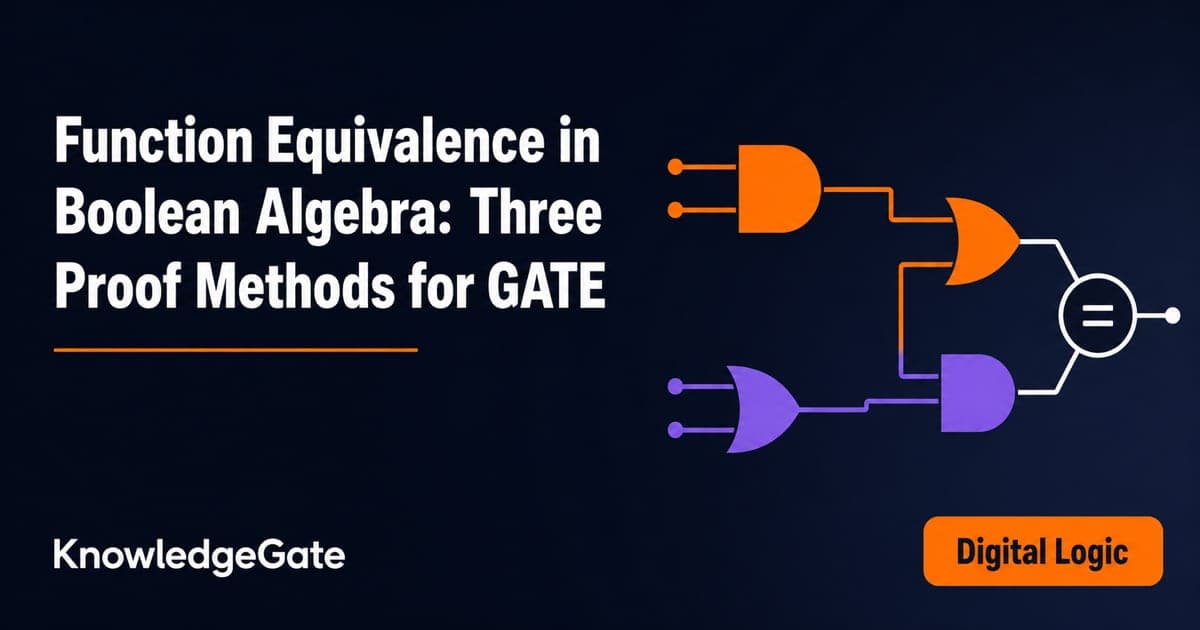
Function Equivalence in Boolean Algebra: Three Proof Methods for GATE
Two Boolean expressions can look different yet describe the same function. Prove equivalence exactly with a truth table, Boolean algebra, a K-map, or an XOR miter.
Updated 14 Sep 20265 min readDigital Logic
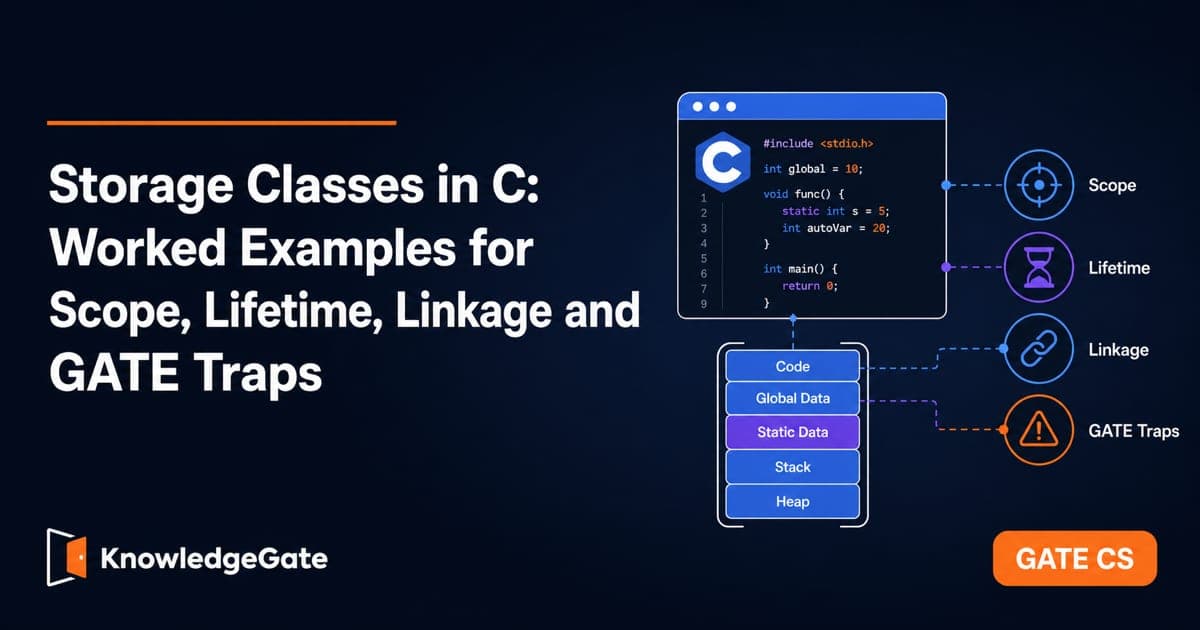
Storage Classes in C: Worked Examples for Scope, Lifetime, Linkage and GATE Traps
Learn what auto, register, static and extern actually control. Classification tables, two-file code and exact traces turn similar-looking declarations into predictable C behaviour.
Updated 14 Sep 20266 min readC Programming & Data Structures
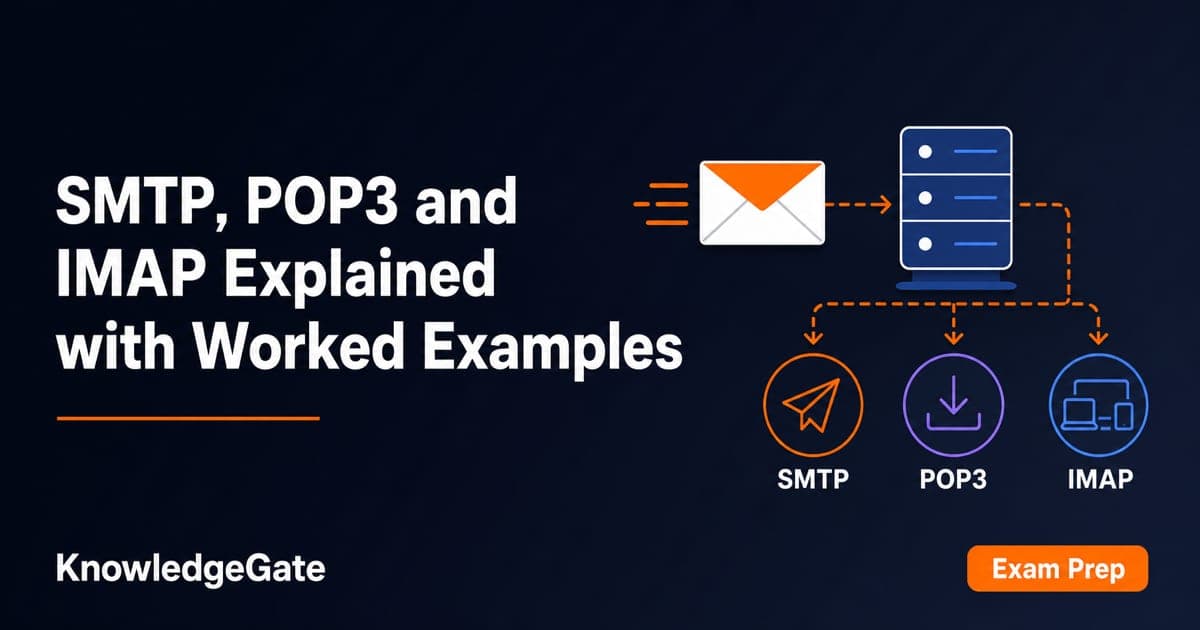
SMTP, POP3 and IMAP Explained with Worked Examples
Follow one email from sender to mailbox, then compare SMTP dialogue, POP3 deletion, IMAP synchronisation, timing and bandwidth through closed examples.
Updated 14 Sep 20266 min readComputer Networks
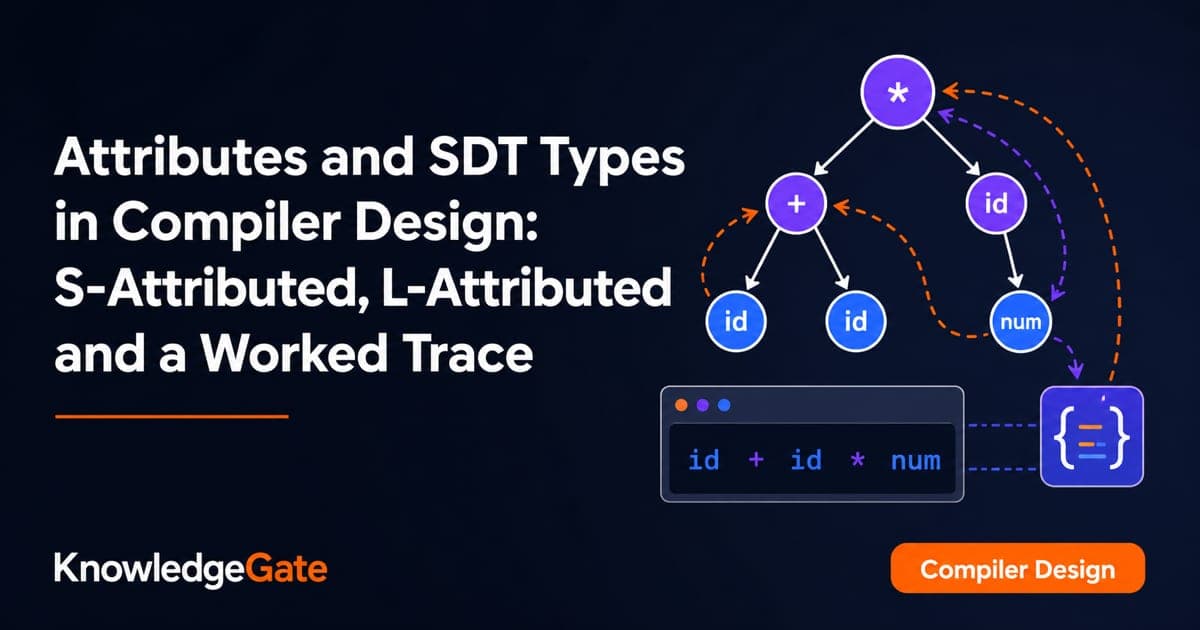
Attributes and SDT Types in Compiler Design: S-Attributed, L-Attributed and a Worked Trace
See how attributes add meaning to a parse tree, how S-attributed and L-attributed definitions differ, and how one expression becomes both a value and postfix output.
Updated 13 Sep 20266 min read54 viewsCompiler Design