CS Fundamentals
464 articles in this topic
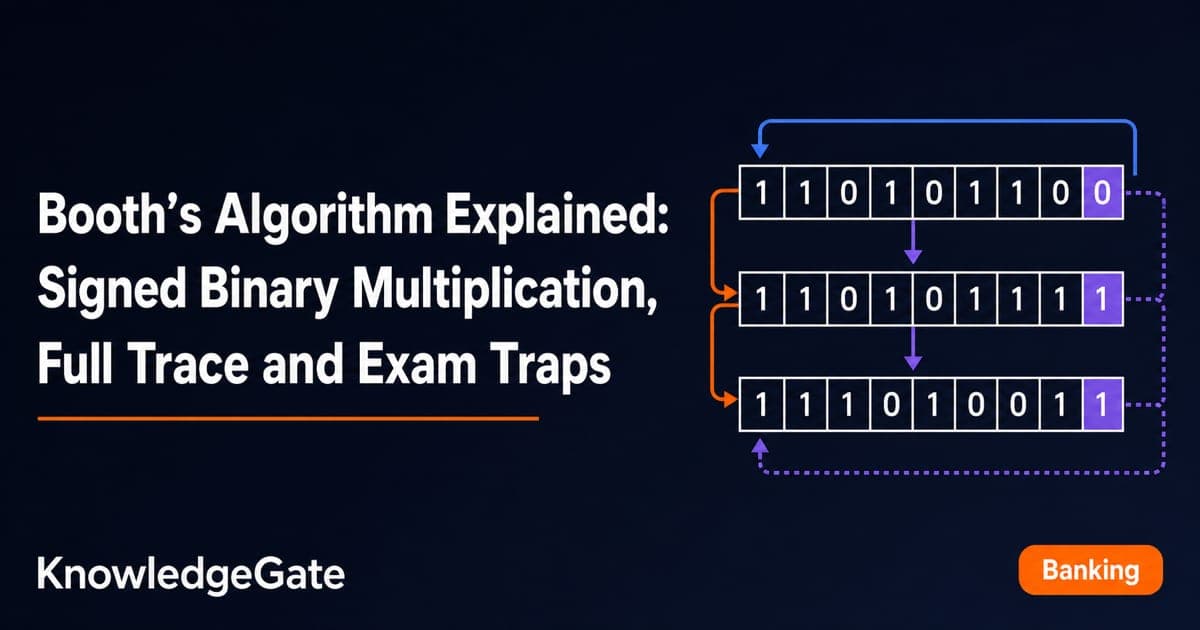
Booth’s Algorithm Explained: Signed Binary Multiplication, Full Trace and Exam Traps
Learn how Booth’s Algorithm reads bit pairs, updates fixed-width registers, and shifts them as one field. A four-cycle trace proves why 0011 × 1011 gives -15.
Updated 7 Sep 20266 min read77 viewsComputer Organization & Architecture
Digital Electronics for GATE: A 6-Week Topic-by-Topic Study Plan
Build Digital Electronics in dependency order with seven focused hours each week. The plan includes worked examples, timed practice and an error-log routine.
Updated 7 Sep 20265 min readDigital Logic
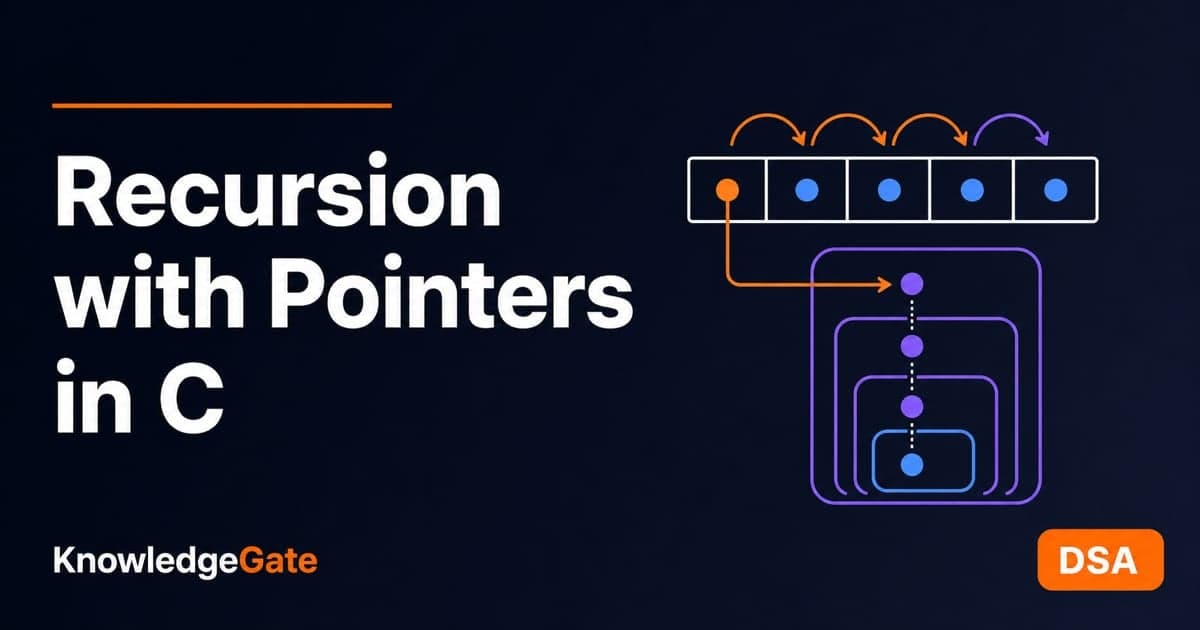
Recursion with Pointers in C: Concepts, Traces and Worked Examples
Learn how local pointer copies interact with shared array memory, then trace one mutating sum and one reverse-print function from descent to unwind.
Updated 6 Sep 20266 min readC Programming & Data Structures
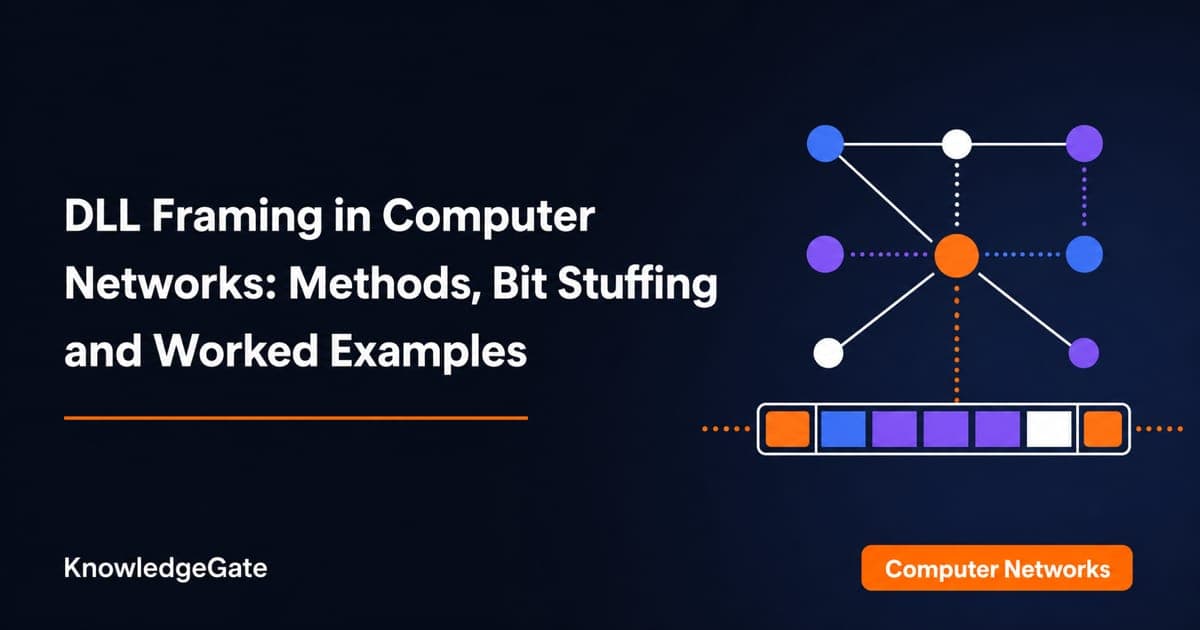
DLL Framing in Computer Networks: Methods, Bit Stuffing and Worked Examples
Learn how the data link layer finds frame boundaries and preserves transparency. Work through corrupted counts, escaped bytes and bit stuffing with exact overhead calculations.
Updated 6 Sep 20265 min readComputer Networks
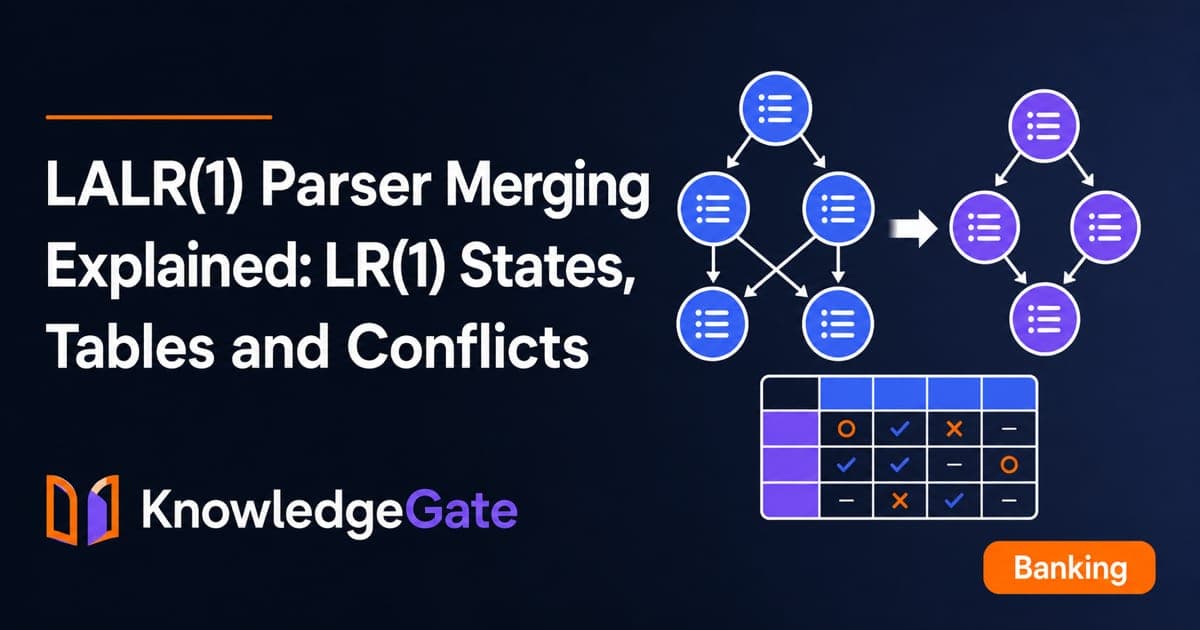
LALR(1) Parser Merging Explained: LR(1) States, Tables and Conflicts
Build ten canonical LR(1) states, merge them into seven LALR(1) states, construct the parsing table, and trace an accepted string without skipping steps.
Updated 6 Sep 20266 min readCompiler Design
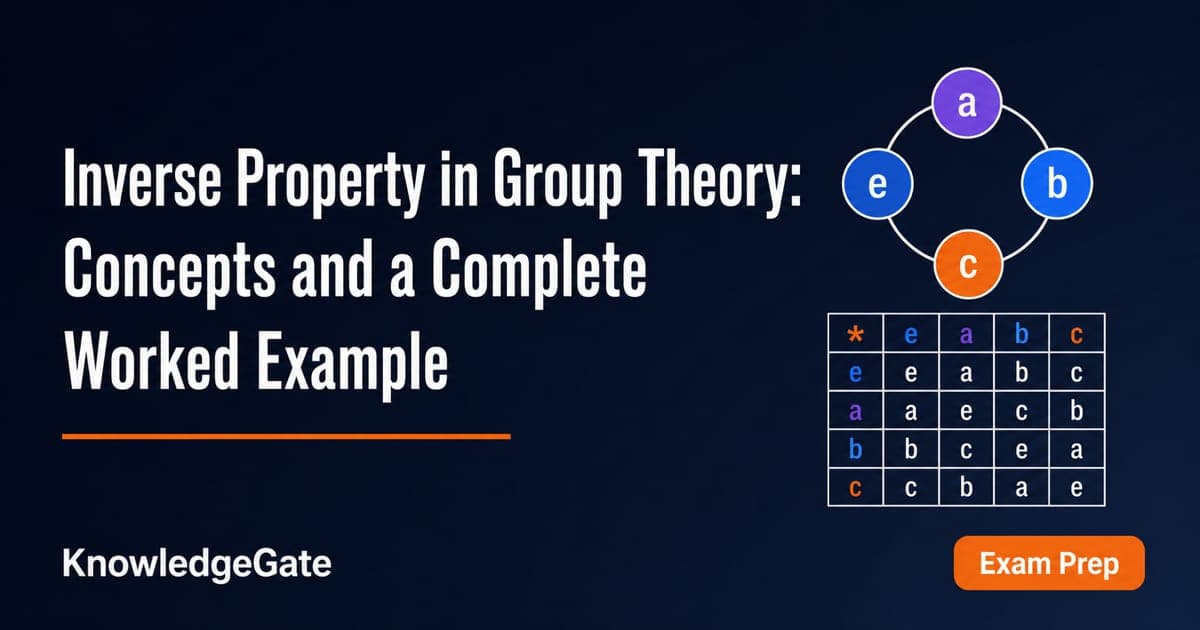
Inverse Property in Group Theory: Concepts and a Complete Worked Example
Learn how identity and inverses work in a group, then prove and use every inverse in U(10). Includes a Cayley table, solved equations, and key inverse laws.
Updated 6 Sep 20266 min readEngineering Mathematics
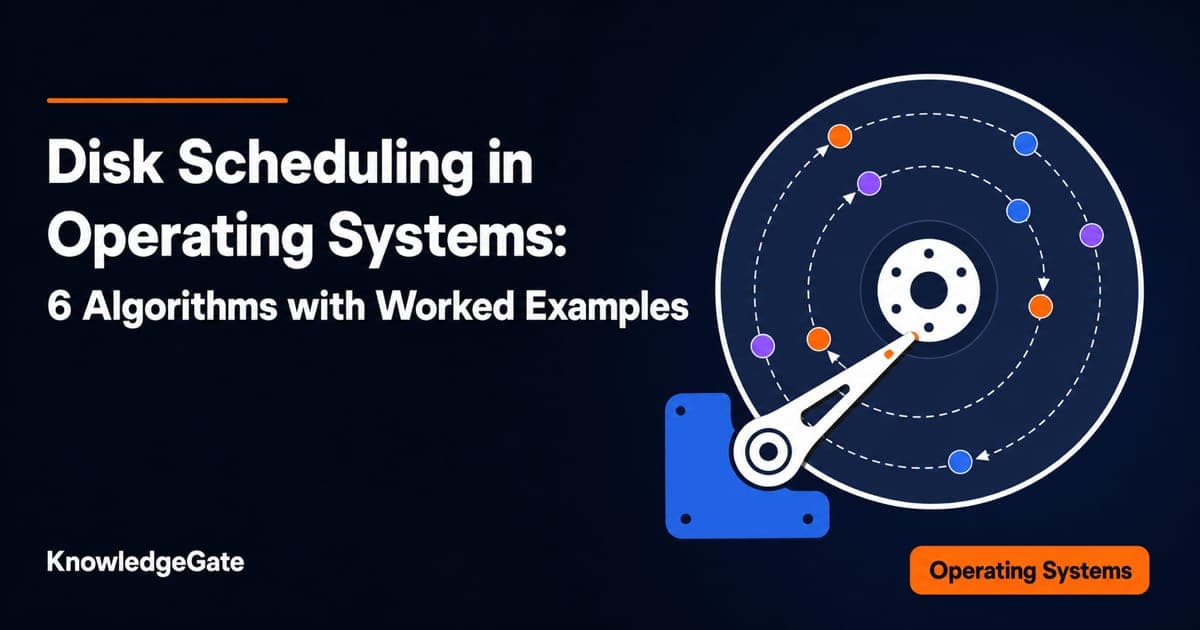
Disk Scheduling in Operating Systems: 6 Algorithms with Worked Examples
Use one request queue to compare all six disk-scheduling algorithms. Every service path, endpoint rule, total movement and per-request average is worked out.
Updated 6 Sep 20266 min readOperating Systems
DBMS for GATE CS: Syllabus Areas, Question Weightage and Prep Order
Learn the DBMS syllabus in dependency order, see which areas recur most in PYQs, and practise the exact reasoning used in normalization, schedules, indexing and SQL questions.
Updated 6 Sep 20265 min read81 viewsDBMS
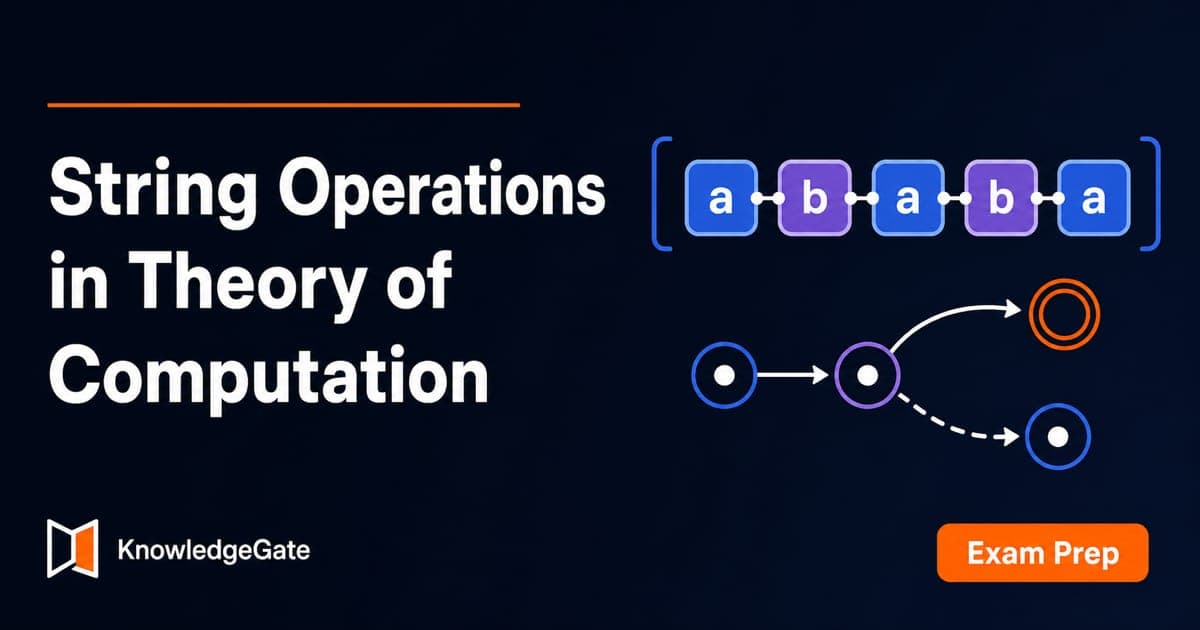
String Operations in Theory of Computation: Basics, Definitions and Worked Examples
Build string notation from alphabet and epsilon through prefixes, reversal, language products and Kleene closure. Every rule is checked with exact worked values.
Updated 6 Sep 20265 min readTheory of Computation
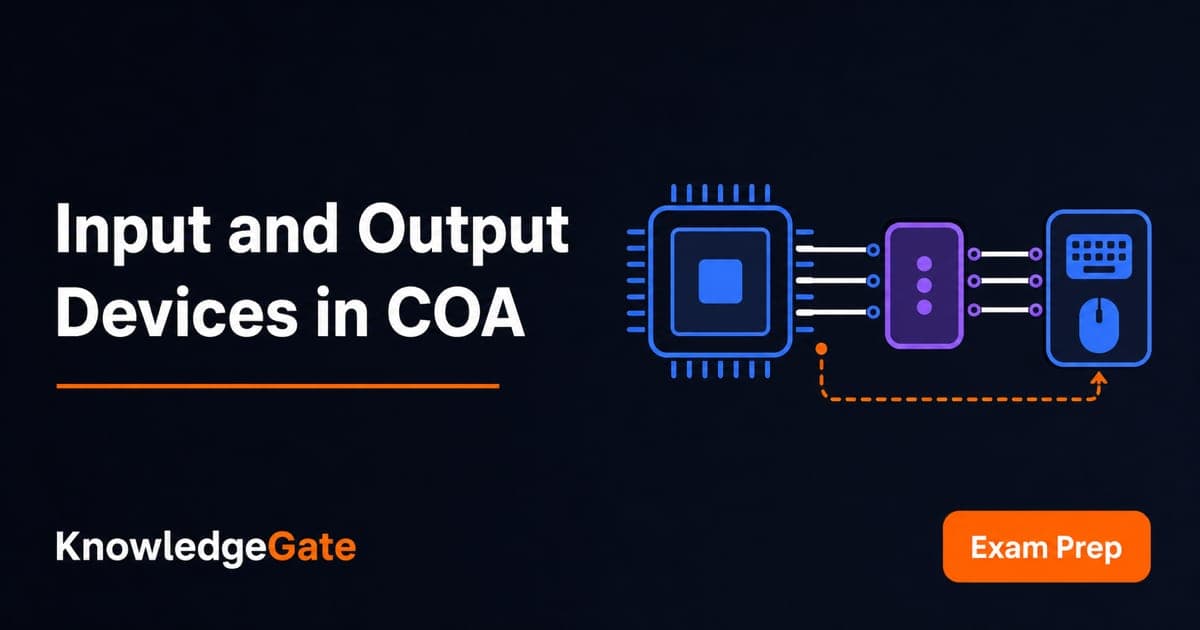
Input and Output Devices in COA: Interfaces, Interrupts and DMA with a Worked Example
Input and output devices in COA explained through interfaces, polling, interrupts and DMA, plus a FIFO that fills in 640 microseconds and loses 6 bytes at 700 microseconds.
Updated 5 Sep 20267 min readComputer Organization & Architecture
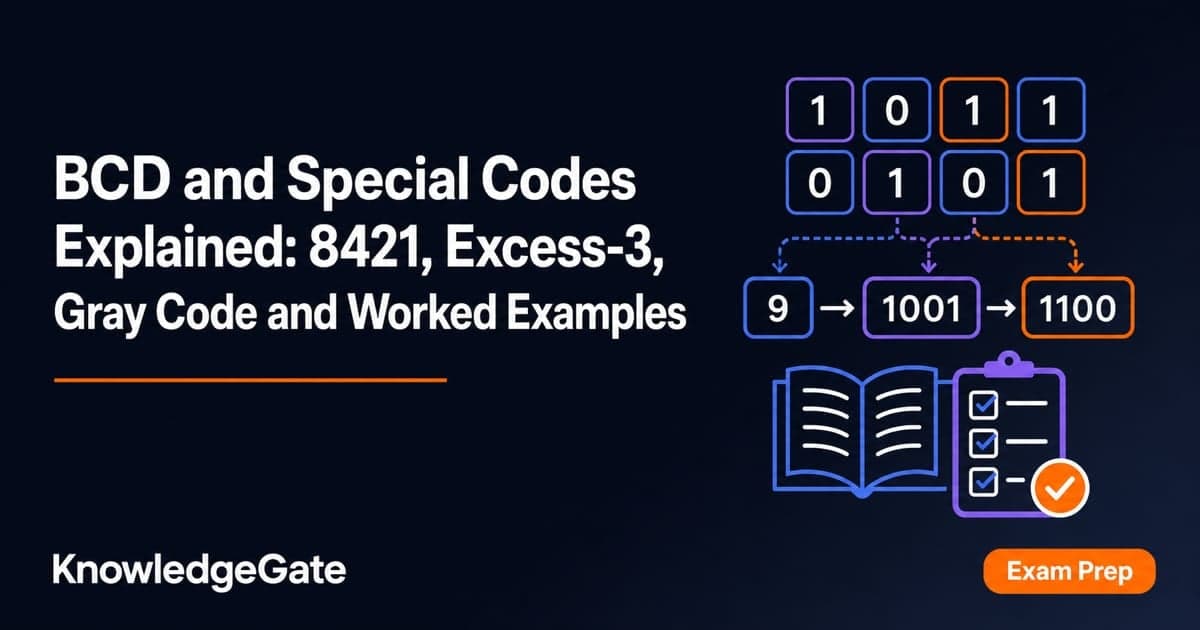
BCD and Special Codes Explained: 8421, Excess-3, Gray Code and Worked Examples
Learn how to encode, decode and add BCD values, use 2421 and Excess-3 correctly, and convert between binary and Gray code through checked examples.
Updated 5 Sep 20266 min read67 viewsDigital Logic
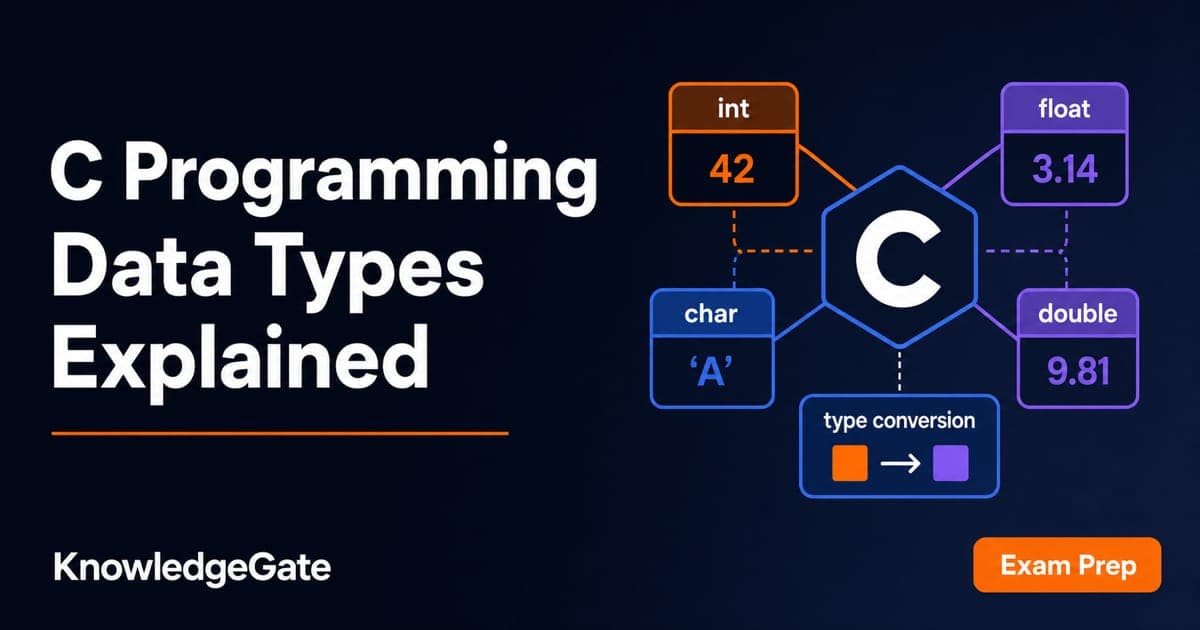
C Programming Data Types Explained: Concepts, Conversions and Worked Examples
Learn how C declarations, literal types, conversions, sizeof and format specifiers work. Follow one complete calculation and correct common objective-question traps.
Updated 5 Sep 20266 min readC Programming & Data Structures