DBMS
53 articles in this topic
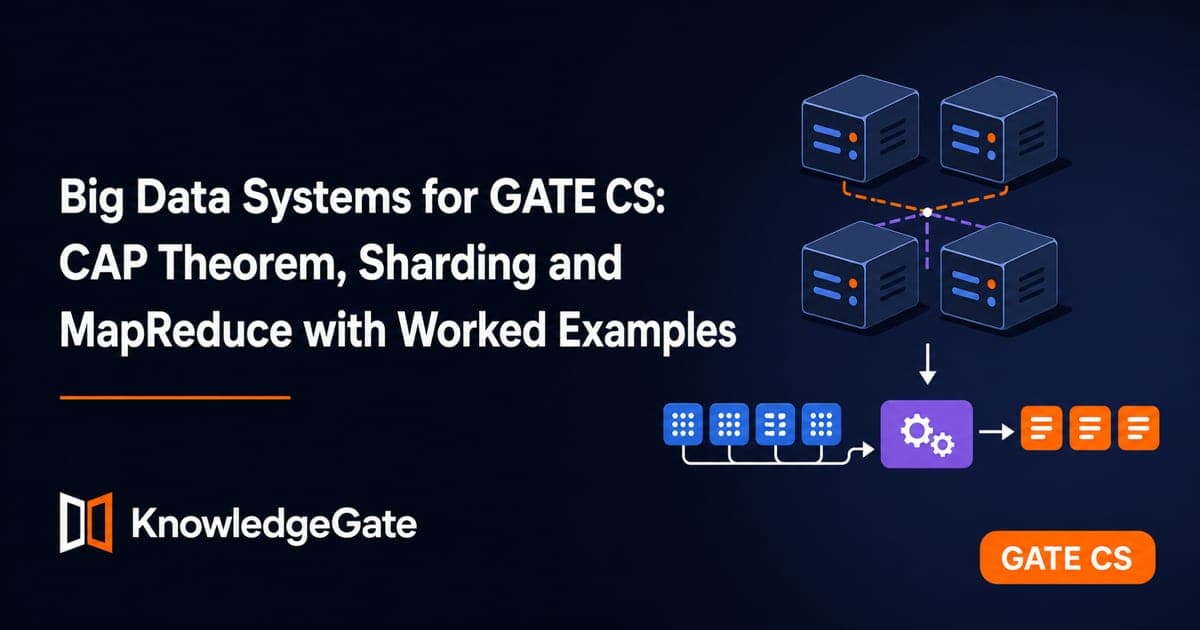
Big Data Systems for GATE CS: CAP Theorem, Sharding and MapReduce with Worked Examples
See what changes when a database spreads across machines. Build a clear mental model of shards, replicas, CAP choices, quorums, MapReduce and NoSQL.
Updated 31 Aug 20266 min readDBMS
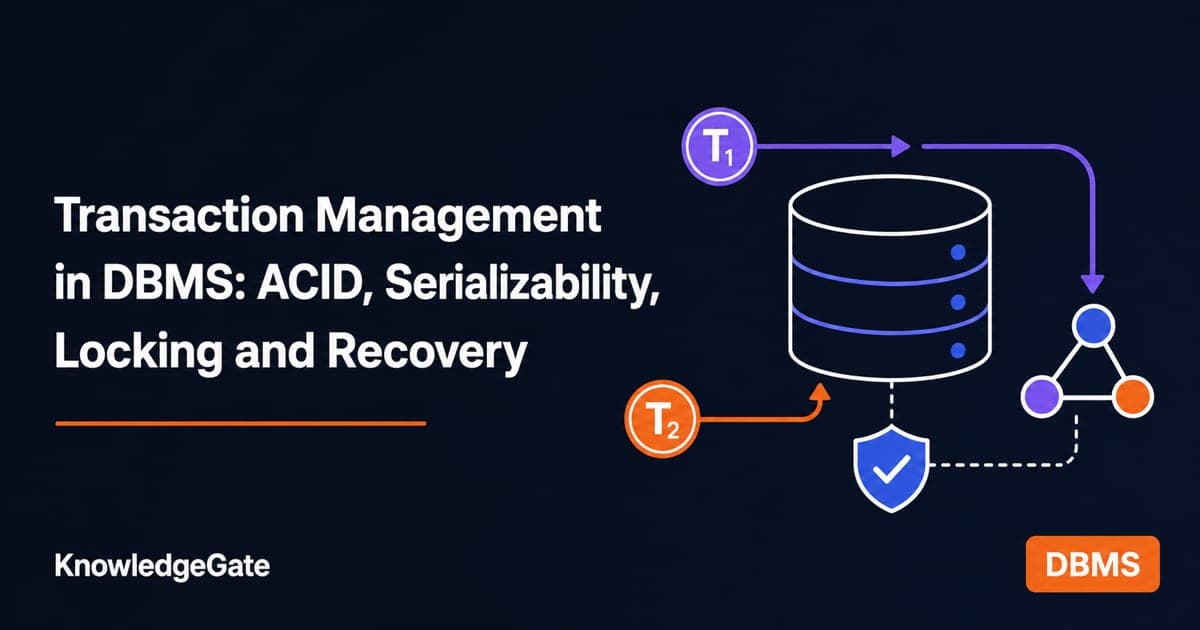
Transaction Management in DBMS: ACID, Serializability, Locking and Recovery
Learn to trace DBMS transactions from operation sequences to precedence graphs, recovery rules, lock protocols, timestamp checks, and crash handling.
Updated 29 Aug 20266 min read64 viewsDBMS
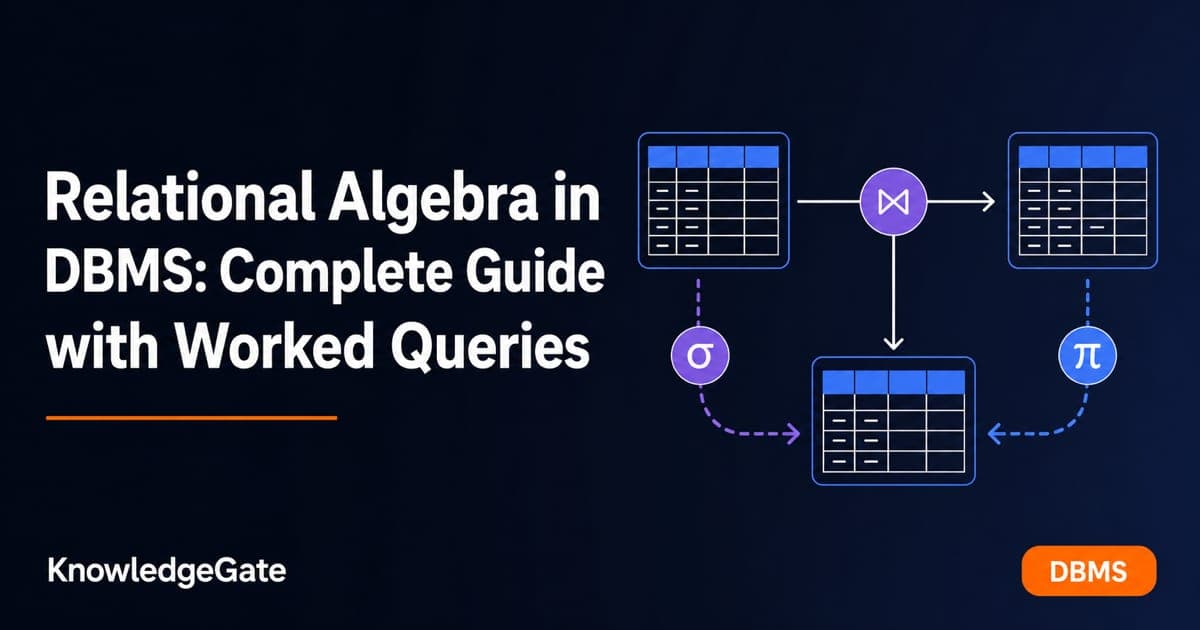
Relational Algebra in DBMS: Complete Guide with Worked Queries
Learn relational algebra by tracing selection, projection, set operations, joins, and division through one small university database with exact outputs.
Updated 27 Aug 20265 min readDBMS
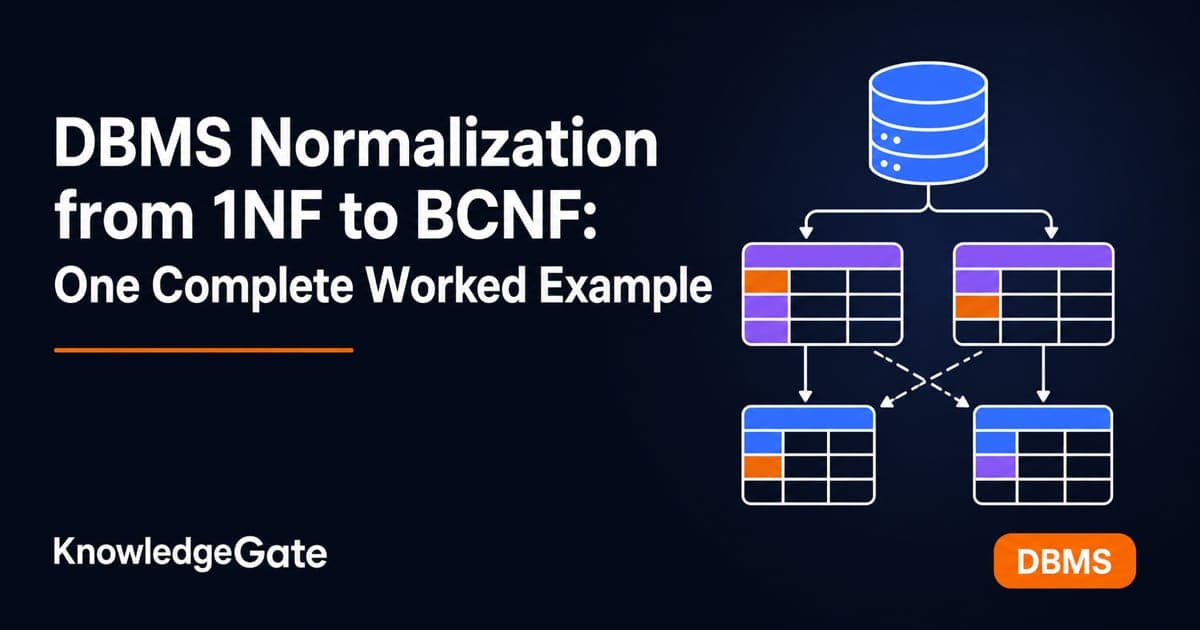
DBMS Normalization from 1NF to BCNF: One Complete Worked Example
Follow one university-registration relation from a repeating group to BCNF. Compute both candidate keys, remove each dependency violation, and test the final split.
Updated 26 Aug 20266 min readDBMS
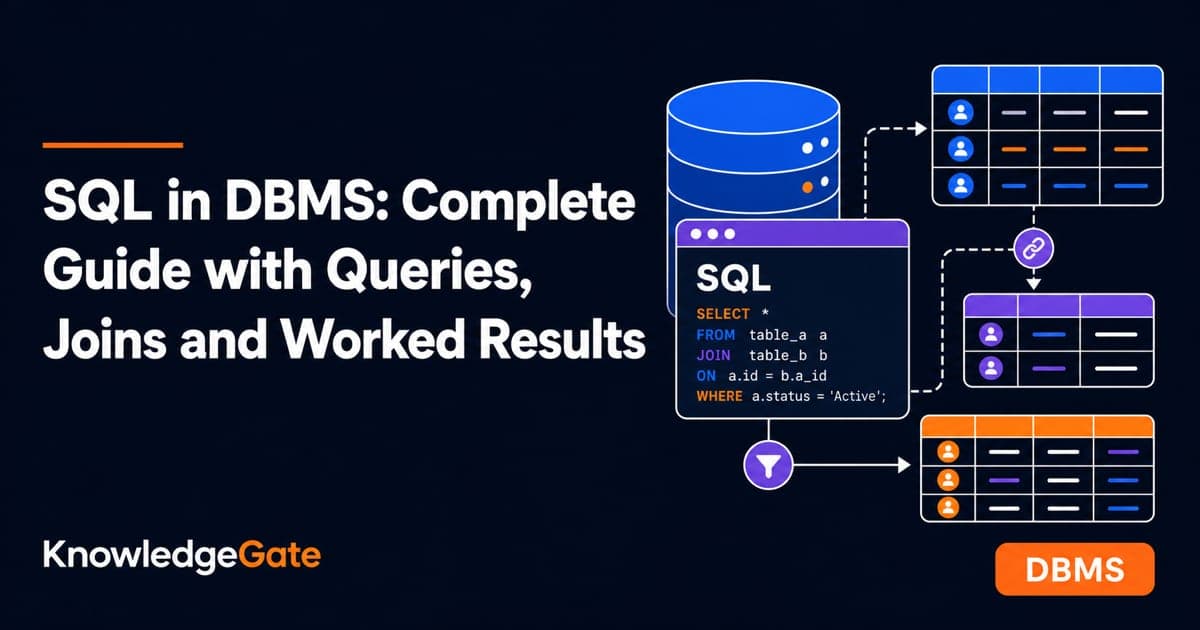
SQL in DBMS: Complete Guide with Queries, Joins and Worked Results
Learn SQL by following one college database from table creation to joins, aggregates, subqueries, and transactions. Every worked query includes the rows you should predict.
Updated 24 Aug 20266 min readDBMS
Relational Model and Functional Dependencies in DBMS: Keys, Closure and Minimal Cover
Build keys, closures and a minimal cover from one seven-attribute enrolment relation. Then use the same dependencies to explain redundancy and decomposition.
Updated 22 Aug 20265 min read56 viewsDBMS
ER Diagram in DBMS: Complete Guide with Worked Examples for GATE and Interviews
Learn to read a crowded ER diagram, reduce it to the minimum relational tables, and avoid the weak-entity, multivalued-attribute, and relationship traps that change the answer.
Updated 21 Aug 20267 min readDBMS
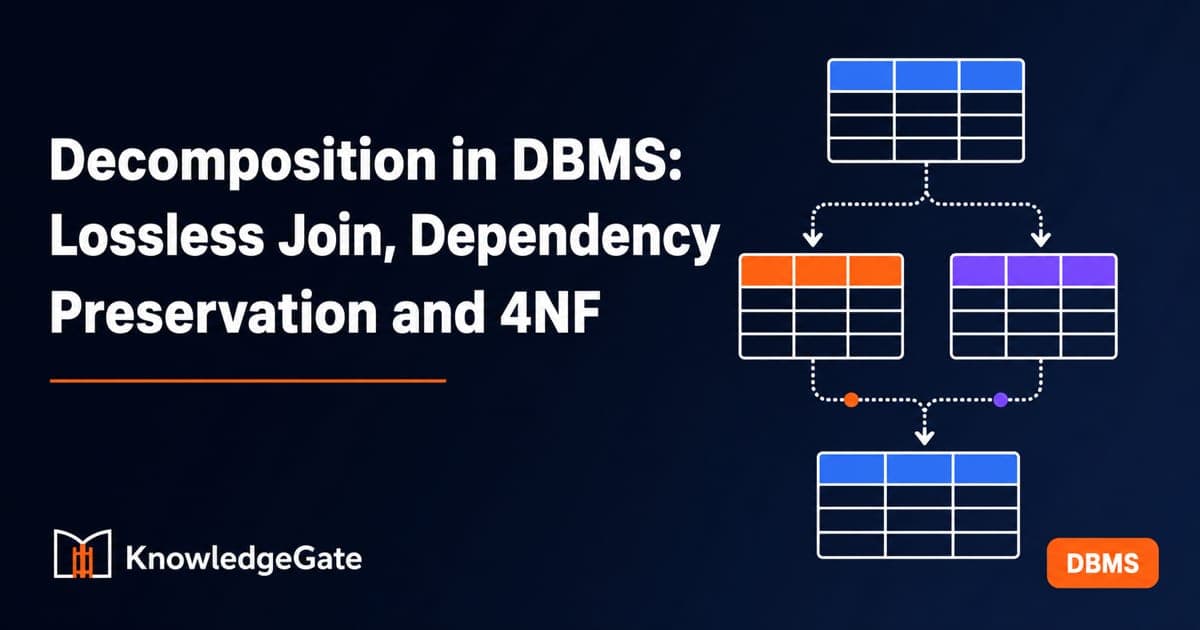
Decomposition in DBMS: Lossless Join, Dependency Preservation and 4NF with Worked Examples
Learn the two decomposition checks through concrete joins, attribute closures, the 3NF and BCNF trade-off, and a worked 4NF example.
Updated 19 Aug 20265 min readDBMS
Database Recovery in DBMS: Log-Based Recovery, Checkpoints, and a Fully Worked Crash Example
Learn how logs, WAL, checkpoints, undo, and redo restore a DBMS after failure. Then replay a complete crash log to find the final values of A, B, and C.
Updated 17 Aug 20266 min readDBMS
Data Warehousing and Data Mining in DBMS: Star Schema, OLAP Operations and Apriori with Worked Examples
Move from warehouse vocabulary to hand-worked answers. Build a star schema, operate on a data cube, run Apriori, and follow two k-means iterations.
Updated 15 Aug 20266 min readDBMS
Relational Calculus in DBMS: Tuple and Domain Calculus Explained with Worked Examples
Learn TRC and DRC through one small database, then trace existential and universal queries without getting caught by quantifier or safety mistakes.
Updated 13 Aug 20267 min read51 viewsDBMS
File Organization and Indexing in DBMS: Complete Guide with Worked Block-Access Examples
Carry one 30,000-record EMPLOYEE file through heap, ordered, indexed, B+ tree, and hash access paths. See where every block-access figure comes from.
Updated 10 Aug 20266 min read98 viewsDBMS