Government & Teaching Exams
Preparation strategy for computer-science-based government and teaching recruitment exams.
61 articles in this topic
SBI PO Descriptive Paper
Turn descriptive practice into a timed routine: plan before writing, use reliable structures, edit with purpose and score every attempt against the same checklist.
Software Quality in Software Engineering: Metrics, Testing and Worked Examples
Learn the vocabulary and calculations behind software quality, from McCall's factors to basis-path testing and service availability.
DSSSB TGT Computer Science Eligibility and Exam Pattern: One Tier, Negative Marking and Qualification Rules
Understand the broad eligibility route and the one-tier CBT before you prepare. This guide also shows which details must be checked in the current DSSSB advertisement.
CTET Qualifying Marks and Certificate Validity
Understand the CTET pass threshold, how category concessions are applied, why the certificate lasts for life, and when another attempt is worth taking.
SSC CGL Posts Explained: How to Set Your Preference Order
Build your SSC CGL preference list around the work, location, career path and transfer pattern you can actually live with, then confirm every current detail officially.
IBPS SO IT Officer vs IBPS PO: Which Should a CS Graduate Target?
Compare the specialist and generalist banking routes by daily work, exam focus, eligibility and preparation overlap. A four-question framework makes the final choice practical.
IBPS PO Syllabus 2026: Prelims and Mains Topics Decoded Section by Section
The IBPS PO syllabus is two syllabi wearing one name. A section-by-section decode of the three Prelims sections and five Mains sections, with exactly what drops and what appears between the stages.
SSC CGL Eligibility 2026: Age Limit, Attempts, Education and Post-wise Requirements
SSC CGL eligibility is post-wise, not one rule: the age band depends on the post, the degree requirement carries statistics-post exceptions, and there is no attempt limit. This guide maps the bands, the category-wise age relaxation, and the final-year and crucial-date edge cases, with every exact figure pointed at the official 2026 notification.
IBPS PO Previous Year Paper Analysis: Topic-wise Weightage in Prelims and Mains
Topic-wise question ranges from recent IBPS PO papers, turned into an expected-marks picture for Prelims and Mains: where puzzles, data interpretation, and reading comprehension actually concentrate the marks.
IBPS PO Eligibility and Exam Pattern 2026: Age, Attempts, Sectional Timing and Marking
IBPS PO 2026 eligibility and exam pattern: age and attempts, Prelims sectional timing, negative-marking penalty math, and the Mains descriptive paper.
SBI PO vs IBPS PO: Exam Pattern, Difficulty and Career Differences That Decide Your Prep
SBI PO vs IBPS PO compared: the shared syllabus, SBI's tougher Mains and extra selection stages, career differences, and a plan that prepares for both.
SSC CGL Tier 2 Computer Knowledge Module: Full Topic List and How to Clear the Qualifying Section
The SSC CGL Tier 2 Computer Knowledge module is qualifying in nature, and it fails prepared candidates every cycle because nobody treats it as a syllabus. Here is the full topic list, how deep each area actually goes, and a two-week plan to clear it safely.
SBI PO Syllabus and Exam Pattern 2026: Prelims, Mains, Psychometric Test and Interview Decoded
The SBI PO selection runs beyond Prelims and Mains: a psychometric test, group exercise and interview decide the final merit. A stage-by-stage decode of what each assessment tests, which parts have a syllabus, and how to split your preparation, with every official specific pointed at the current SBI notification.
CTET Syllabus 2026 Decoded: Paper 1 and Paper 2 Subject-wise Topics and Weightage
The CTET 2026 syllabus decoded subject by subject: Paper 1 and Paper 2 section structure, subject-wise topics, and the pedagogy vs content mark split, mapped to the official CBSE bulletin and to our course coverage.
SSC CGL Previous Year Paper Analysis: Topic-wise Question Distribution in Tier 1
We counted topic recurrence across our question bank built from SSC CGL previous year papers. Section by section, here is which Tier 1 topics repeat the most in quant, reasoning, English and General Awareness, and the study order that follows from the data.
CTET Eligibility 2026: Qualification Routes and What to Verify Officially
CTET eligibility runs route by route: D.El.Ed and related elementary routes for Paper 1, graduation plus B.Ed and other routes for Paper 2, and the 2023 B.Ed edge case. The September 2026 bulletin now directs candidates to current NCTE and recruiting-agency rules.
Banking Awareness for IBPS PO Mains: The Static-plus-Current Split That Actually Scores
Banking Awareness in IBPS PO Mains is two subjects wearing one name: a static core (RBI and monetary policy, money market, banking structure and history) you learn once and revise on a rotation, and a rolling current-affairs layer you maintain weekly. This post separates the two and gives each layer its own honest weekly routine inside a five-hour budget.
SSC CGL Computer Knowledge Questions with Answers: Most Repeated Tier 2 Topics Explained
12 solved computer knowledge MCQs for SSC CGL Tier 2, grouped by the patterns that repeat: keyboard shortcuts, MS Office features, protocol-layer matching and cyber security definitions, each with a real exam attribution and a linked solved page.
CTET Previous Year Analysis: The CDP Theorists and Pedagogy Patterns That Repeat
Across recent CTET cycles the same CDP theorists, concepts and question stems keep returning. We use recurrence density from our published question bank to show which theorists dominate (Piaget and Vygotsky, with Kohlberg third), which pedagogy patterns repeat, and an honest split of what to memorize versus what to understand.
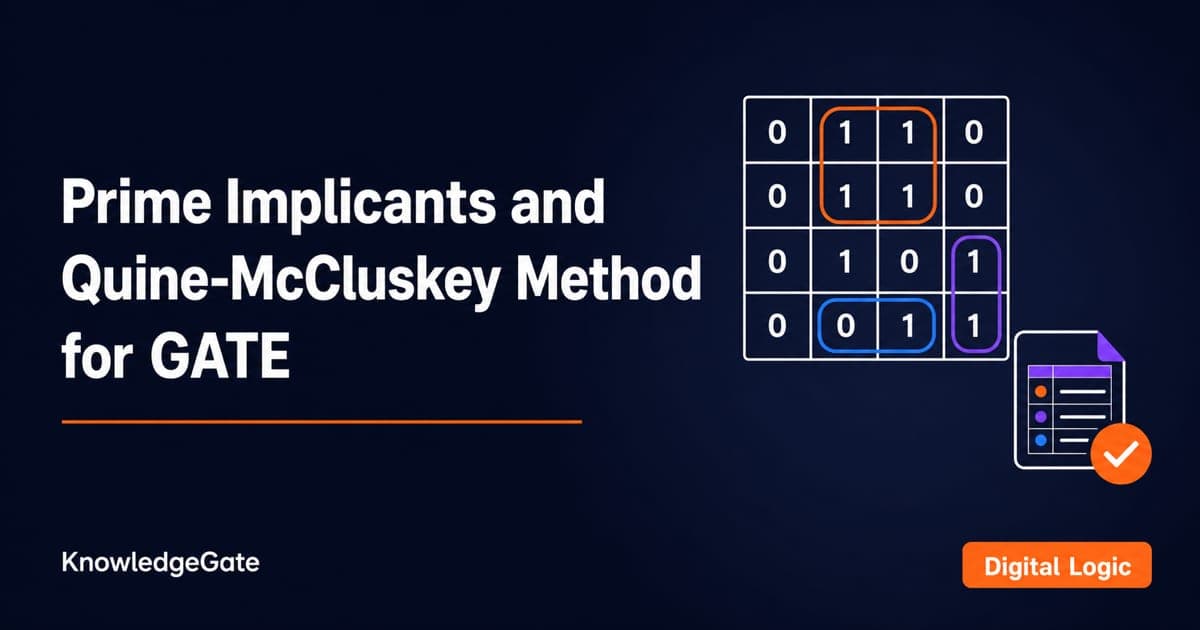
Prime Implicants and Quine-McCluskey Method for GATE: Counting Essential Prime Implicants Solved
A mechanical five-step procedure for counting prime implicants and essential prime implicants, run on three fully solved 4-variable K-maps, plus the Quine-McCluskey prime implicant chart that makes the count impossible to miss.
IBPS SO IT Officer Software Engineering: professional knowledge topics
IBPS SO IT Officer Software Engineering: master the SDLC, process models, requirements, testing and quality for the Mains Professional Knowledge paper.
MS Office and digital classroom tools for CS teaching exams
Word, Excel and PowerPoint core features, shared shortcuts and formula basics, plus digital classroom tools, taught the way DSSSB and KVS ICT sections test them for computer science teaching posts.
Computer fundamentals for teaching exams: generations, hardware and software
A survey of computer fundamentals for TGT and PGT computer science: the generations of computers, CPU and memory organization, number systems basics, and software categories, with how each is examined.
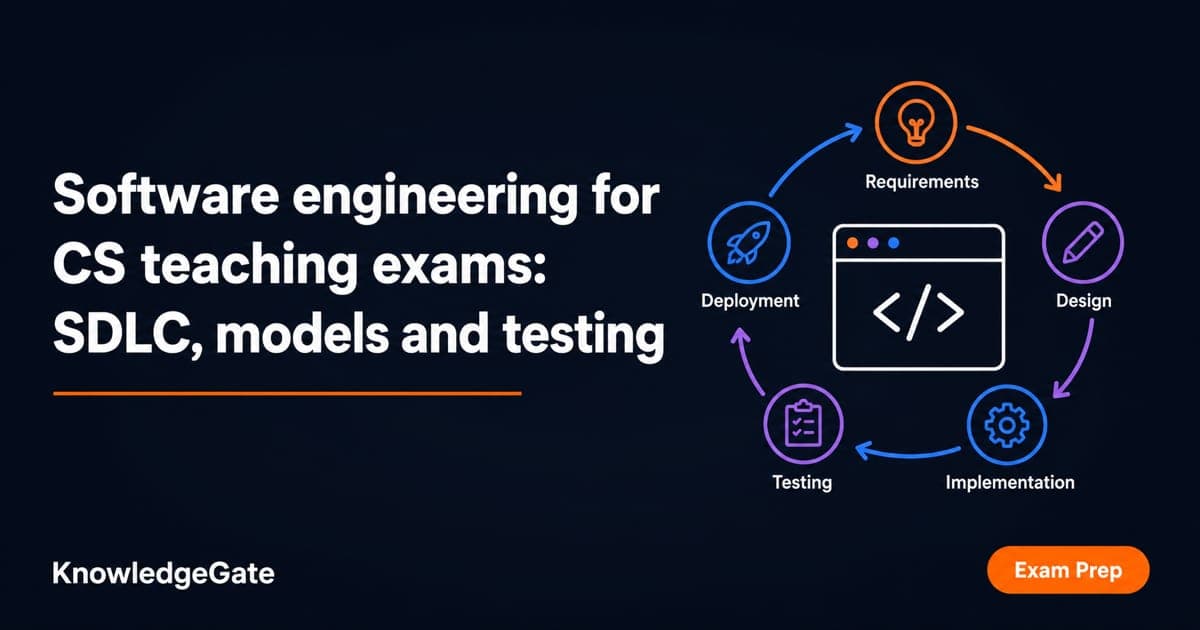
Software engineering for CS teaching exams: SDLC, models and testing
The full software engineering spine for TGT and PGT computer science papers: the SDLC phases, waterfall vs spiral vs agile models, requirements and design basics, and the testing levels, with a clear how-it-is-tested section.
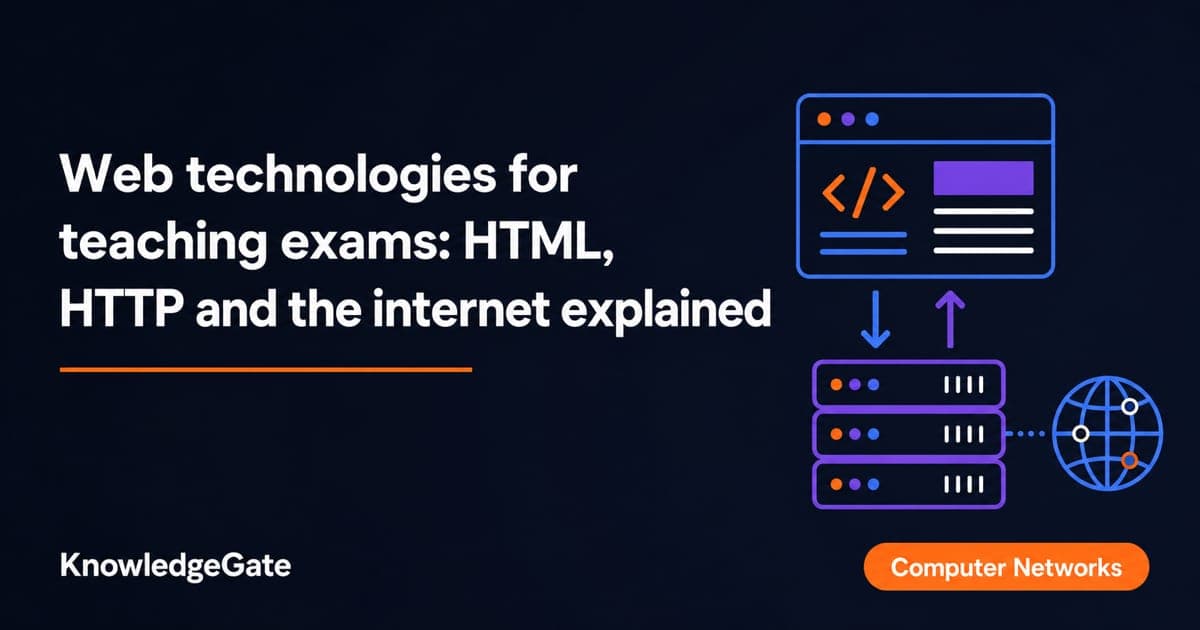
Web technologies for teaching exams: HTML, HTTP and the internet explained
Web technologies for teaching CS exams: HTML basics, the client-server model, HTTP and URLs, DNS, static versus dynamic pages, and web-authoring tools.
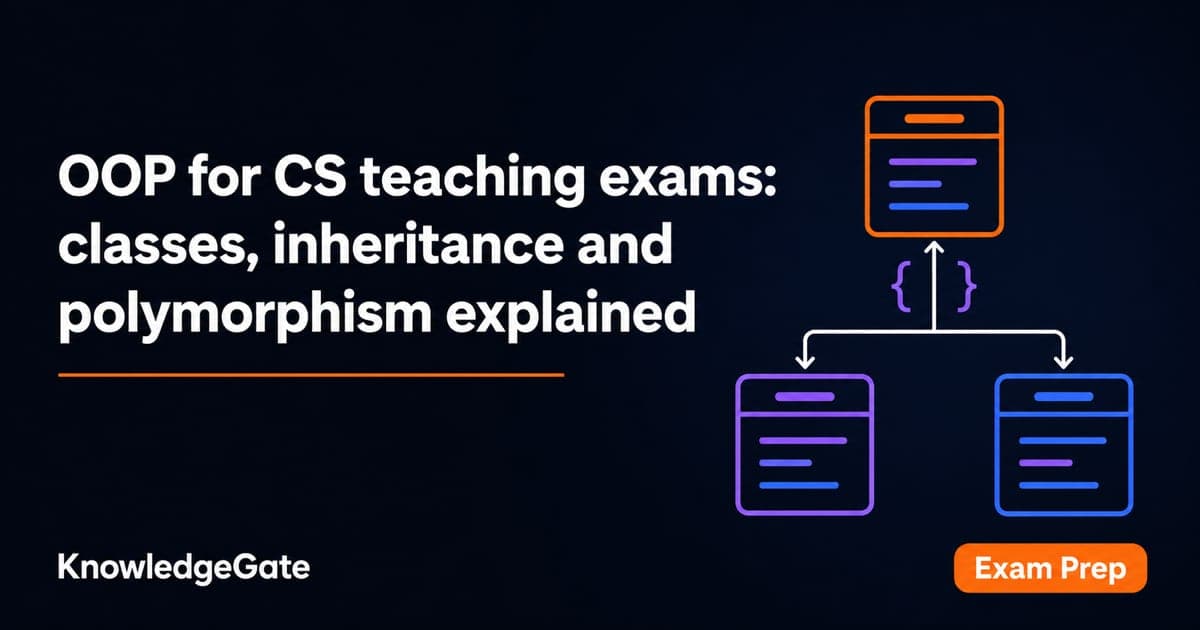
OOP for CS teaching exams: classes, inheritance and polymorphism explained
OOP for teaching CS exams: encapsulation, abstraction, inheritance and polymorphism, plus constructors and access specifiers, with a worked class example.
ICT for teaching exams: computer fundamentals, internet and e-learning
ICT for teaching exams explained: hardware and software basics, input and output devices, the internet and e-mail, and e-learning tools tested in DSSSB, KVS.
UGC NET Computer Science: common mistakes to avoid and what to do instead
Common UGC NET Computer Science mistakes and their fixes: neglecting Paper 1, skipping mocks, ignoring PYQs, and studying subjects like a semester exam.
UGC NET Computer Science last 45 days plan: a week-by-week revision and mock phase
A UGC NET Computer Science last 45 days plan, week by week: revision, sectional and full mocks, Paper 1 upkeep and an honest final-week taper before the exam.
UGC NET mock test strategy: how to use full and sectional mocks to raise your score
A UGC NET mock test strategy for Paper 1 and Computer Science Paper 2: when to start, how to mix full and sectional mocks, and reviewing to raise your score.
UGC NET vs GATE Computer Science: how the two exams differ and how to prepare both
UGC NET vs GATE Computer Science compared: purpose, question style, and depth, plus how the shared CS core lets you prepare both exams from one solid base.
UGC NET Computer Science high-yield topics: where practice volume and past emphasis concentrate
UGC NET Computer Science high-yield topics: which subjects to prioritise first, grounded in our question-bank density, with the MCQ sets to drill each one.
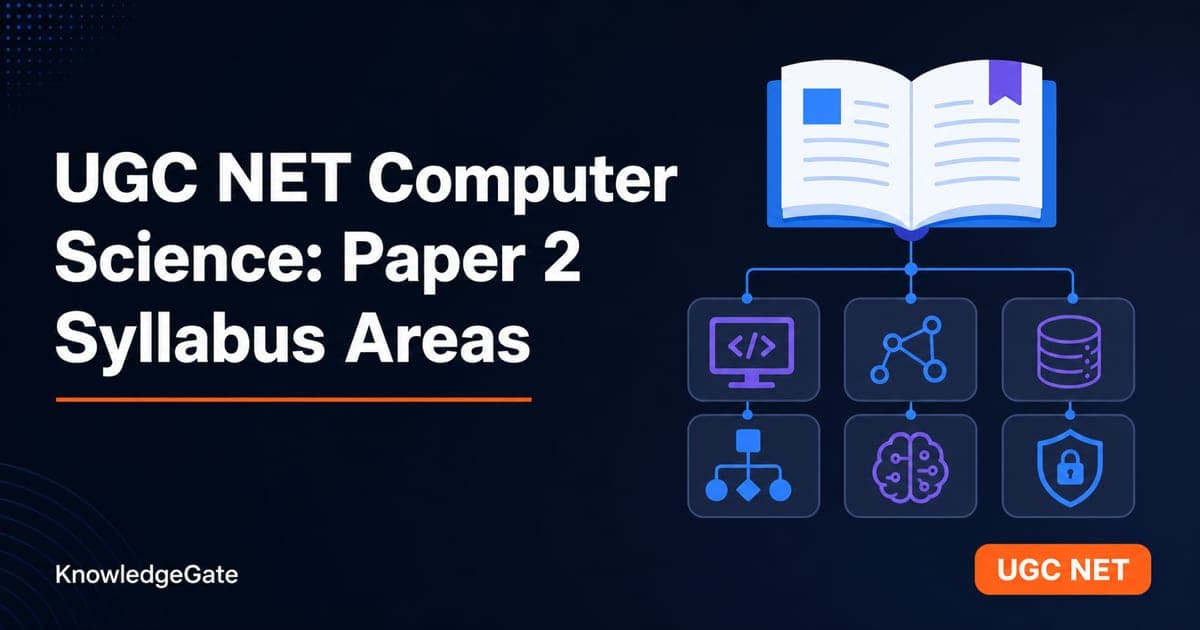
UGC NET Computer Science syllabus areas: the Paper 2 subjects and how our courses map to them
UGC NET Computer Science syllabus areas for Paper 2: DBMS, OS, networks, theory of computation, data structures, algorithms, and how our courses map to each.
UGC NET Paper 1 vs Paper 2 for Computer Science: what each tests and how to split your prep
UGC NET Paper 1 vs Paper 2 explained: what teaching and research aptitude covers, what the Computer Science subject paper tests, and how to split your prep.
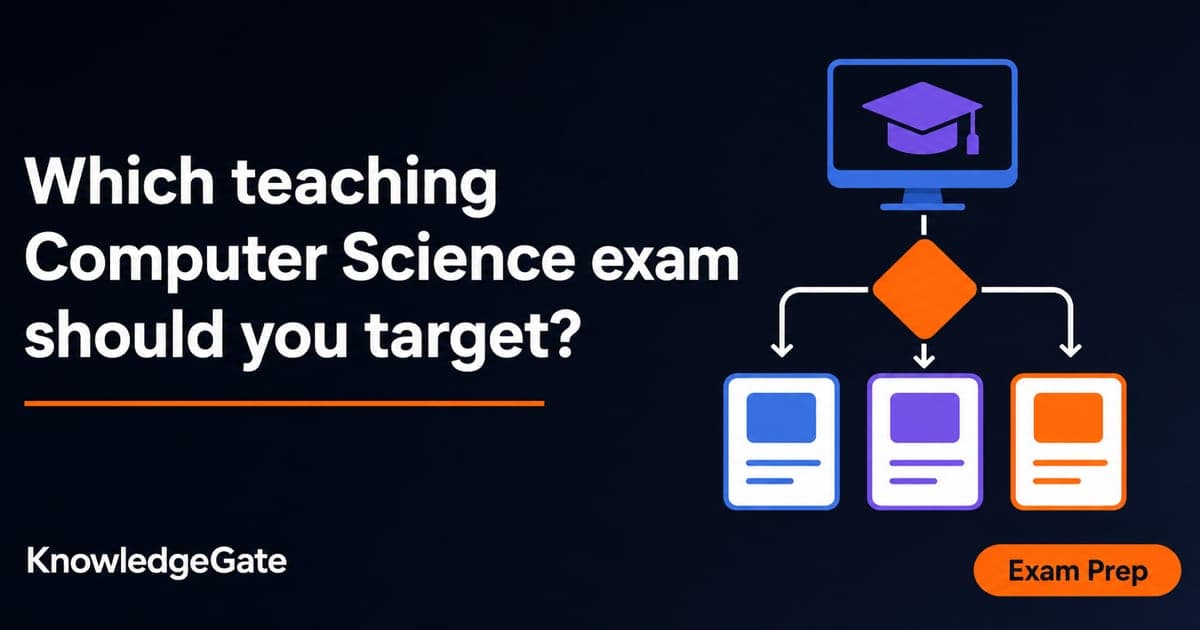
Which teaching Computer Science exam should you target? A decision guide
A decision guide for CS graduates choosing a teaching exam: pick by eligibility, post level, region and calendar across DSSSB, KVS, EMRS and RSSB posts.
Teaching-exam mock strategy: using mocks across DSSSB, KVS and state CS papers
A mock-test strategy for teaching CS exams: cadence, disciplined review, and how one shared core lets a single mock habit serve DSSSB, KVS and state papers.
Computer Science pedagogy for teacher recruitment exams: what it tests and how to score it
Computer Science pedagogy for teacher exams: how students learn programming, teaching methods, classroom assessment, CS misconceptions, and how it is tested.
Teaching jobs for Computer Science graduates: DSSSB, KVS, NVS, EMRS, RSSB and state PGT/TGT compared
Teaching jobs for Computer Science graduates compared: DSSSB, KVS, NVS, EMRS, RSSB and state PGT/TGT posts, the shared CS core, and which to target first.
RSSB Basic vs Senior Computer Instructor: which post and how to prepare
RSSB Basic vs Senior Computer Instructor compared: who each Rajasthan post suits, how the two selections differ, and how to prepare the shared CS core once.
EMRS Computer Science: Tier 1 vs Tier 2, and how to split your prep
EMRS Computer Science recruitment explained: how Tier 1 and Tier 2 differ, what each stage tests, and how a CS graduate should divide prep between them.
KVS and NVS Computer Science: exam structure and how to prepare
KVS and NVS Computer Science recruitment explained: the general section, the CS subject paper, teaching aptitude, and how to prepare one shared core for both.
DSSSB Section A: a subject-by-subject strategy CS aspirants keep skipping
DSSSB Section A strategy for Computer Science aspirants: why you lose marks in reasoning, GA, arithmetic and language, plus a weekly slot plan per subject.
SSC CGL last 60 days: a revision and mock plan for the final stretch
An SSC CGL last 60 days plan: a week-by-week revision and mock schedule, an error-sheet routine, selective revision, and honest advice for missed days.
7 common SSC CGL mistakes aspirants make, and what to do instead
Seven common SSC CGL mistakes aspirants keep making, from neglecting quant to skipping mock review and last-minute GA cramming, and what to do instead.
SSC CGL mock test strategy: how to use mocks so they raise your score
SSC CGL mock test strategy: the right cadence, why review must run longer than the attempt, how to build an error sheet, and how to balance pace and accuracy.
SSC CGL General Awareness: an approach that beats rote cramming
SSC CGL General Awareness approach: how to balance static GK and current affairs across science, polity, history and geography, and build a revisable sheet.
SSC CGL English: a section strategy that turns reading into marks
SSC CGL English strategy: build vocabulary, master grammar and error spotting, crack comprehension and cloze, with a daily practice cadence that compounds.
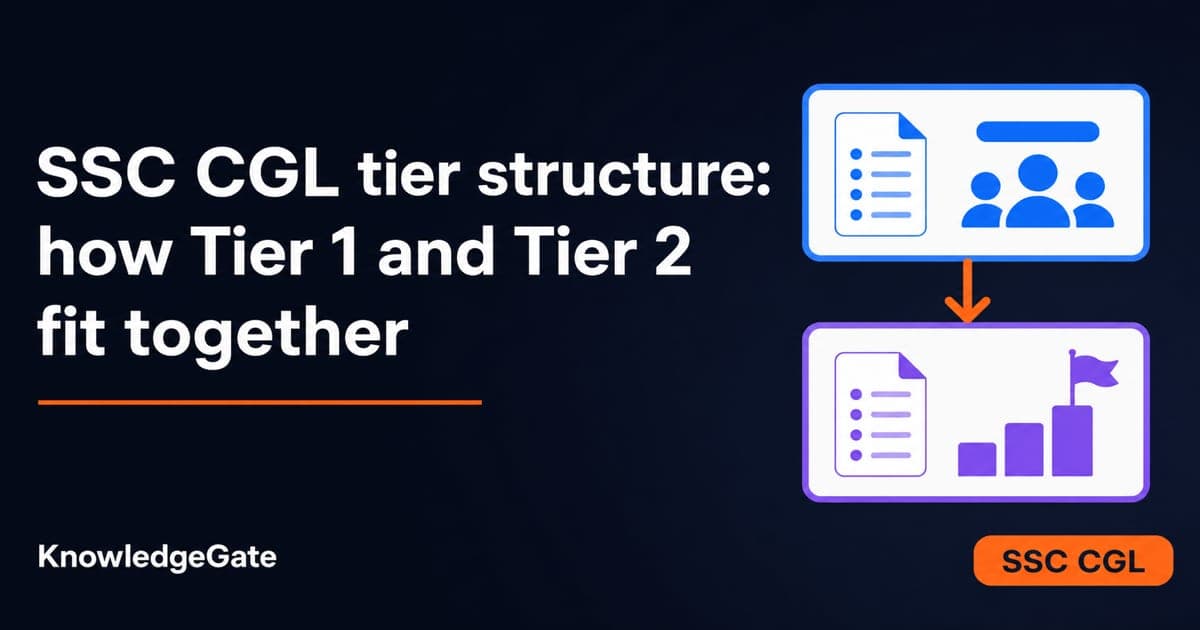
SSC CGL tier structure: how Tier 1 and Tier 2 fit together
SSC CGL tier structure explained: what Tier 1 screens, what Tier 2 decides, how the two stages relate, and how to split your preparation across both stages.
SSC CGL syllabus areas: what Tier 1 and Tier 2 actually cover
SSC CGL syllabus areas explained: the four Tier 1 sections, how Tier 2 deepens quant and English and adds computer and statistics, mapped to our courses.
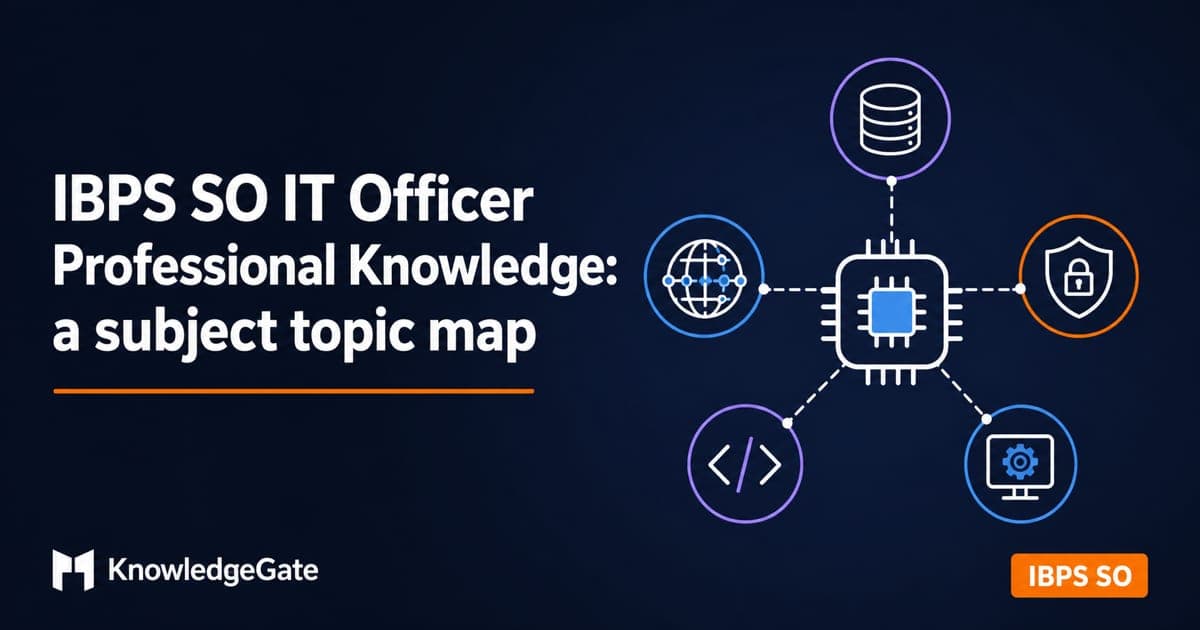
IBPS SO IT Officer Professional Knowledge: a subject topic map
An IBPS SO IT Officer Professional Knowledge topic map: the CS subjects the Mains paper draws on, the sub-areas to focus on, and how to study each of them.