CS Fundamentals
469 articles in this topic
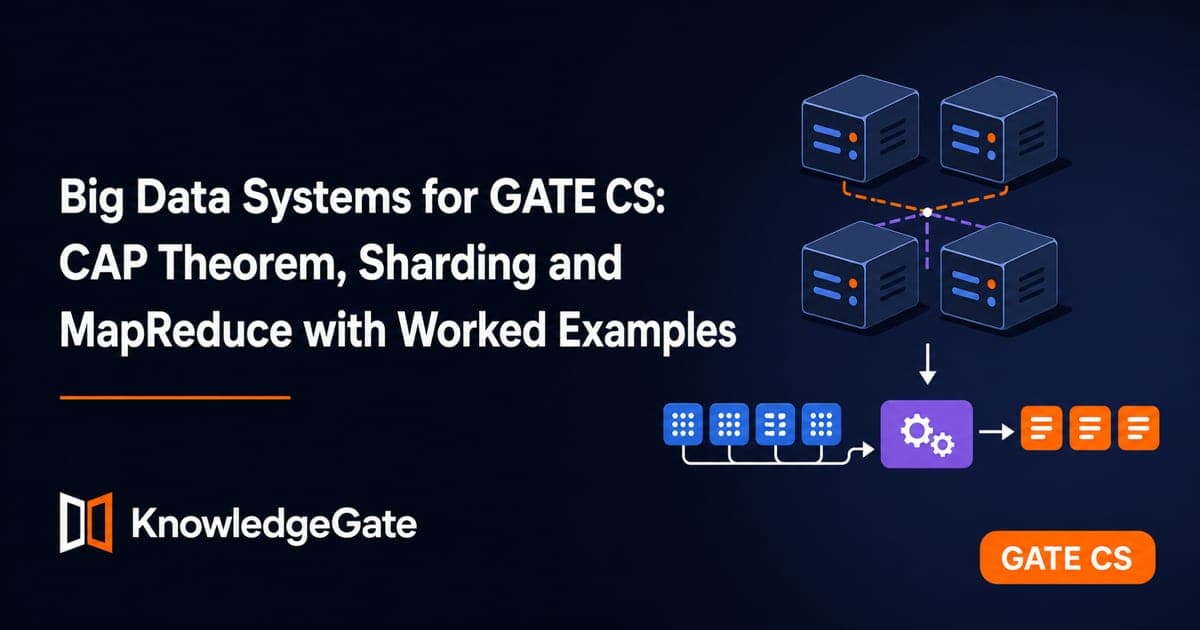
Big Data Systems for GATE CS: CAP Theorem, Sharding and MapReduce with Worked Examples
See what changes when a database spreads across machines. Build a clear mental model of shards, replicas, CAP choices, quorums, MapReduce and NoSQL.
Updated 31 Aug 20266 min readDBMS
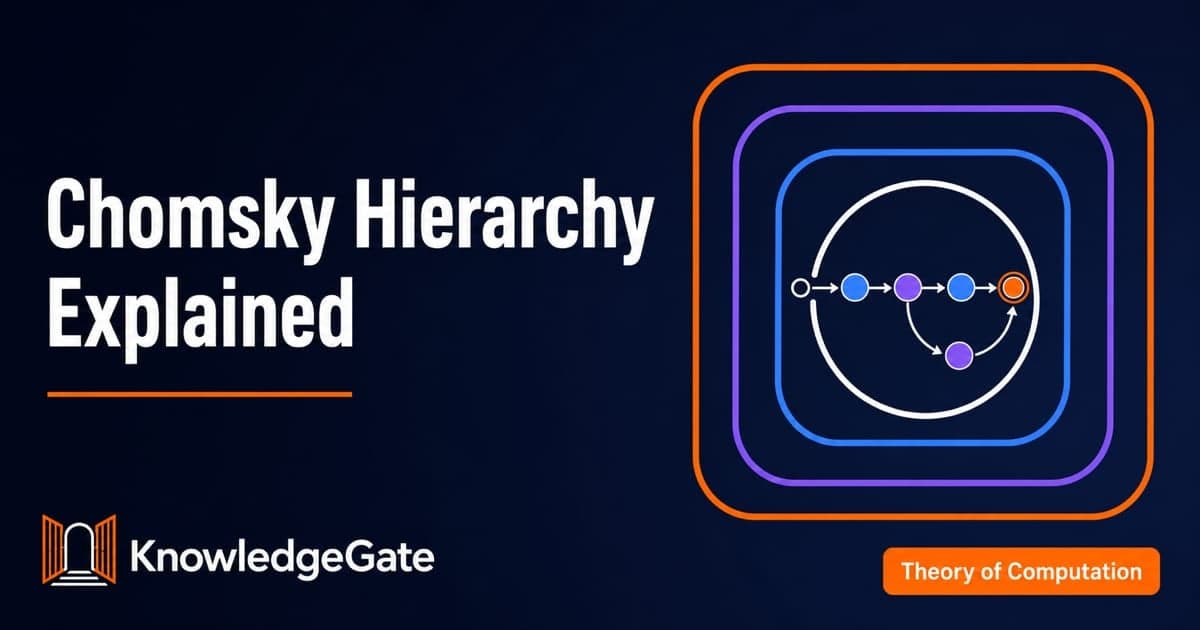
Chomsky Hierarchy Explained: Grammar Types, Worked Classification and Exam Traps
Learn how to test a grammar from Type 3 outwards, distinguish all four production classes, classify a complete grammar, and derive its strings step by step.
Updated 31 Aug 20266 min read132 viewsTheory of Computation
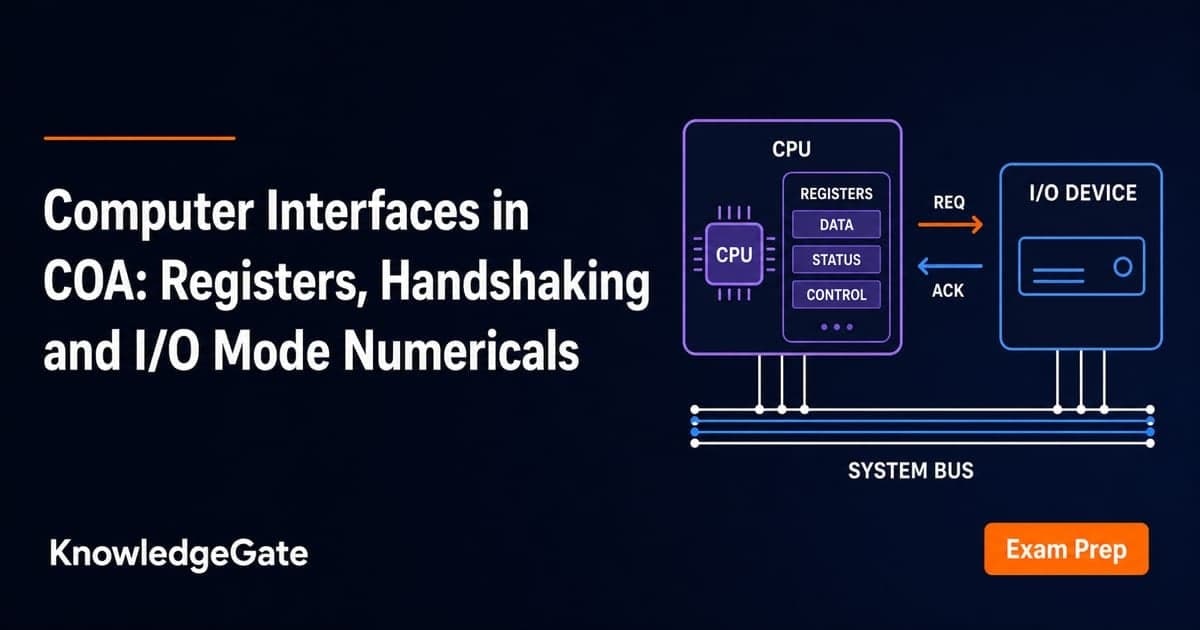
Computer Interfaces in COA: Registers, Handshaking and I/O Mode Numericals
Learn how an I/O interface decodes addresses, uses data, status and control registers, coordinates handshakes, and changes CPU occupancy across polling, interrupts and DMA.
Updated 30 Aug 20267 min readComputer Organization & Architecture
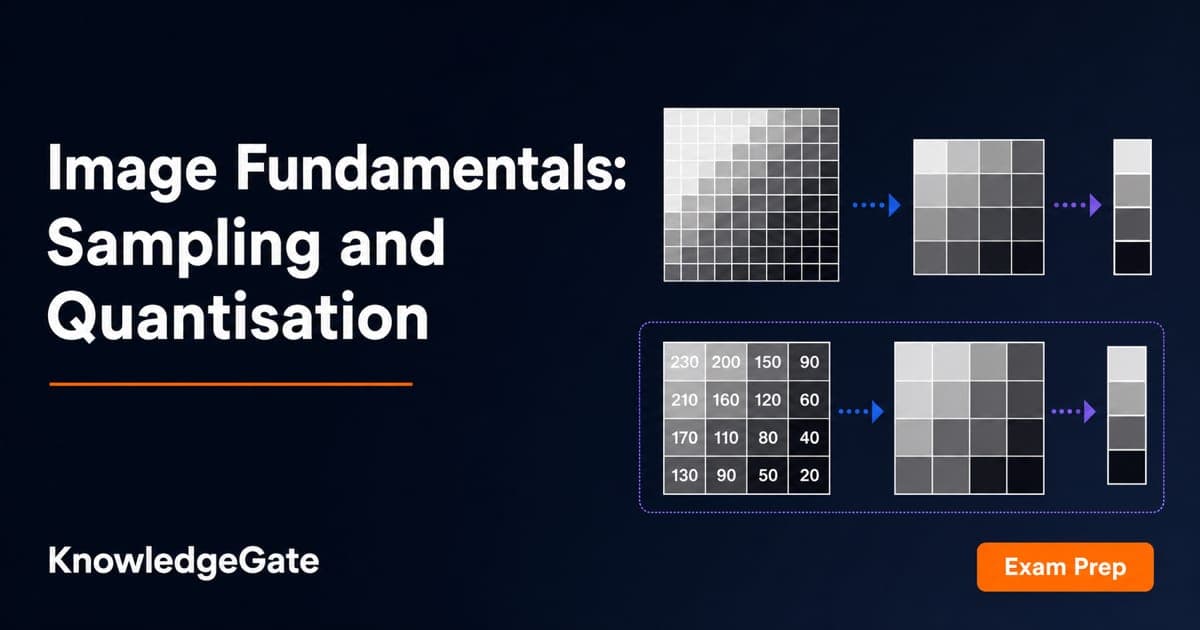
Image Fundamentals Explained: Sampling, Quantisation and Worked Examples
Follow one grayscale image from its pixel grid and histogram to downsampling, 2-bit quantisation, reconstruction error, neighbourhoods and distance measures.
Updated 30 Aug 20266 min readDigital Logic
Coding Questions for GATE CS: Trace Outputs and Complexity Step by Step
Learn a reliable way to solve coding output and complexity questions. Three fully traced C examples cover loops, mutation, recursion and operation counts.
Updated 29 Aug 20265 min readC Programming & Data Structures

IP Addressing in Computer Networks: Classes, Subnetting, CIDR, and Worked Examples for GATE
Build IP addressing from its 32-bit foundation through classful ranges, subnetting, VLSM, CIDR aggregation, and longest prefix match with checked examples.
Updated 29 Aug 20266 min readComputer Networks
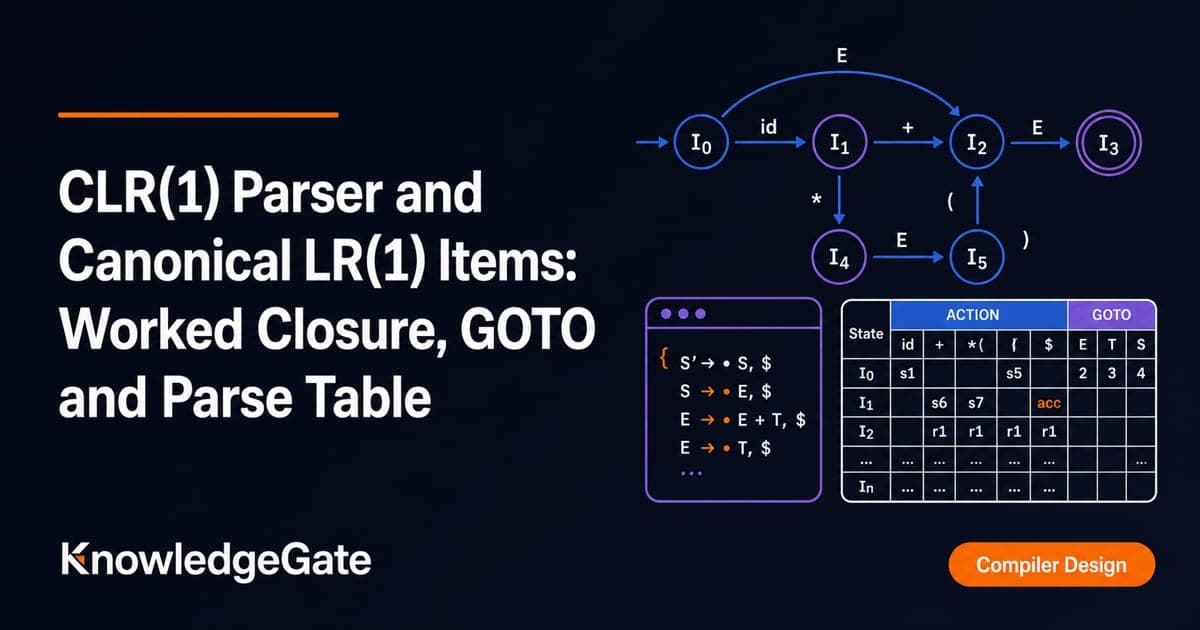
CLR(1) Parser and Canonical LR(1) Items: Worked Closure, GOTO and Parse Table
Build a CLR(1) parser from one small grammar. Follow every closure, GOTO, table entry, and stack action until ccdd is accepted.
Updated 29 Aug 20265 min readCompiler Design
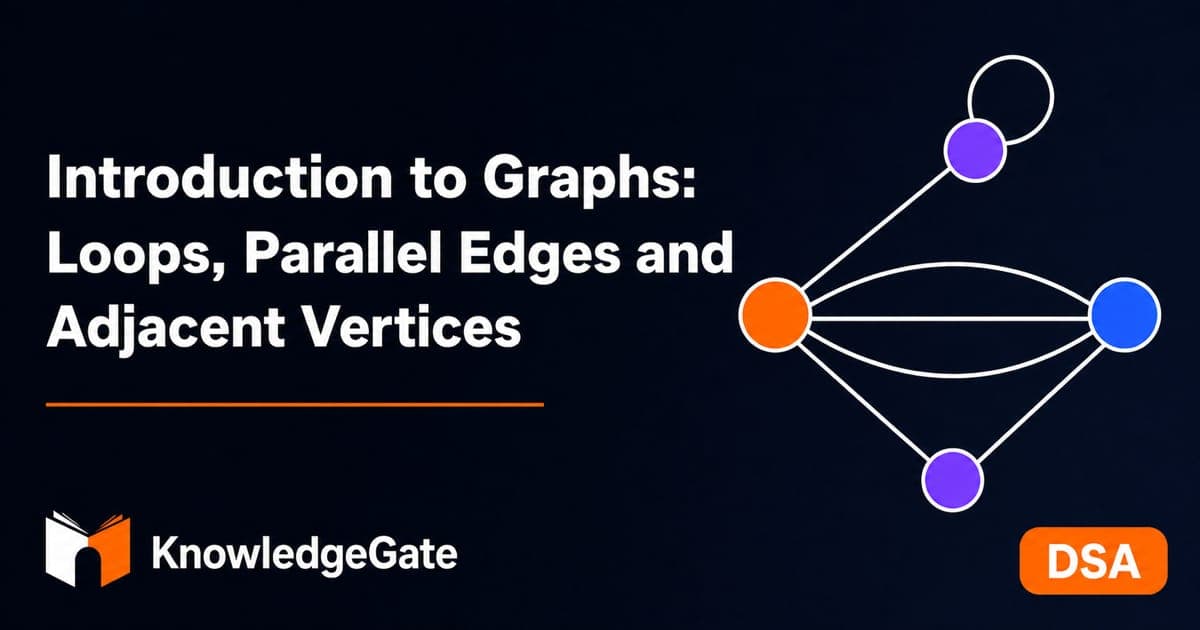
Introduction to Graphs: Loops, Parallel Edges and Adjacent Vertices with Worked Examples
Build every basic graph term from one five-vertex example. Track a loop and parallel edges correctly, audit the degree sum, then simplify the graph.
Updated 29 Aug 20265 min readEngineering Mathematics
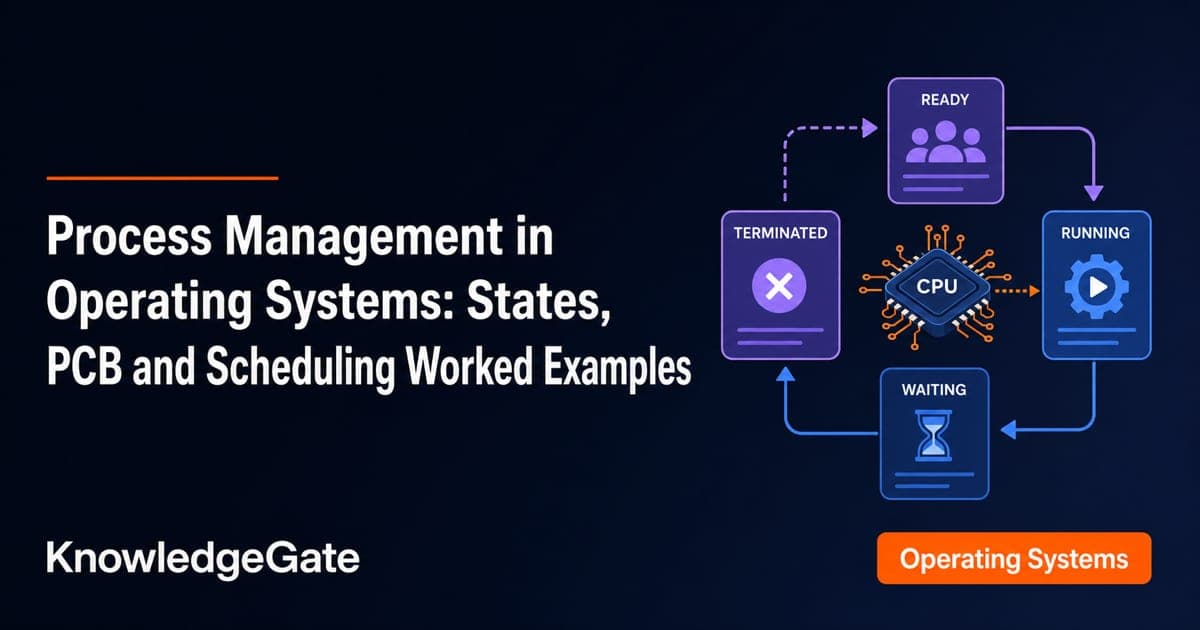
Process Management in Operating Systems: States, PCB and Scheduling Worked Examples
Connect the process lifecycle, PCB, queues and dispatcher, then calculate FCFS and Round Robin metrics through one complete scheduling example.
Updated 29 Aug 20266 min readOperating Systems
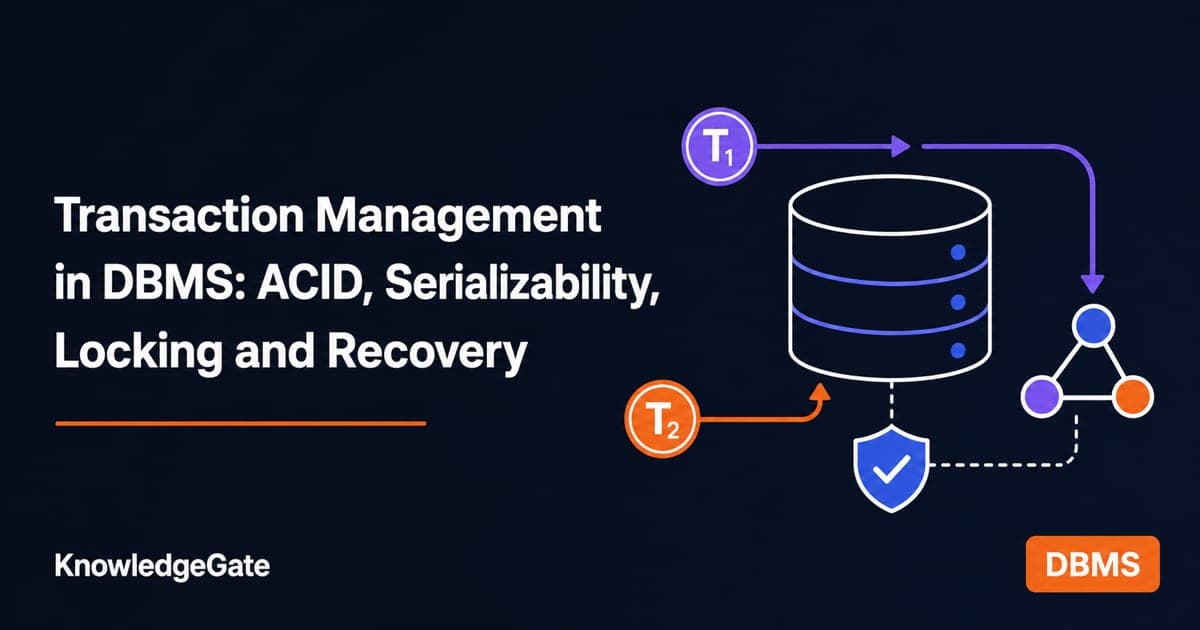
Transaction Management in DBMS: ACID, Serializability, Locking and Recovery
Learn to trace DBMS transactions from operation sequences to precedence graphs, recovery rules, lock protocols, timestamp checks, and crash handling.
Updated 29 Aug 20266 min read65 viewsDBMS
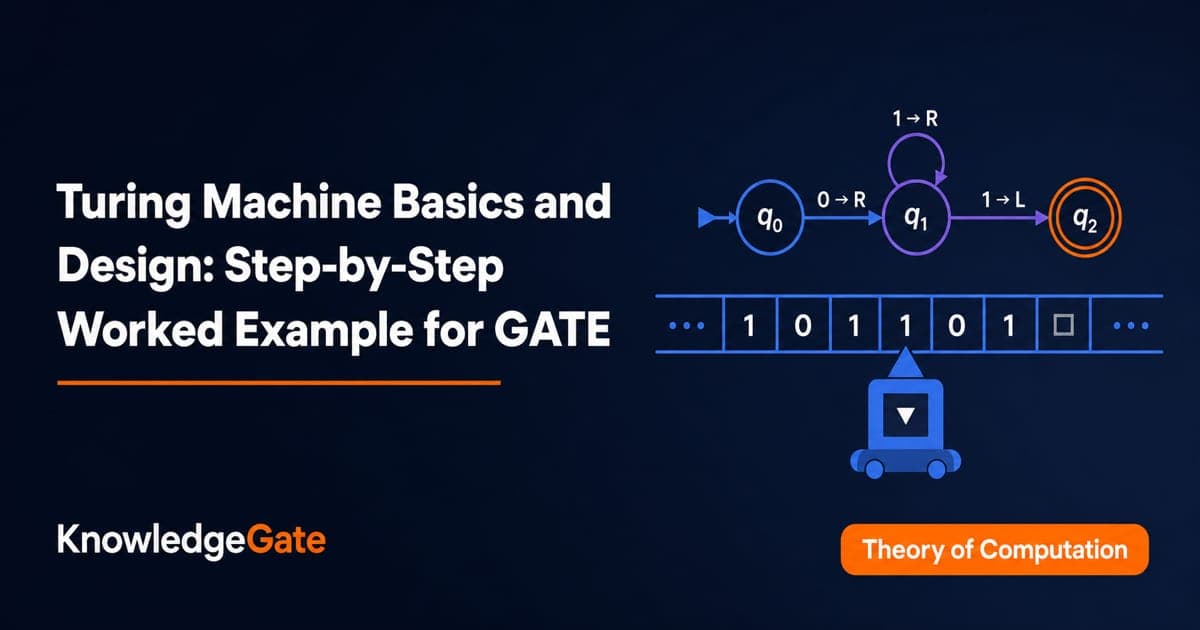
Turing Machine Basics and Design: Step-by-Step Worked Example for GATE
Build a deterministic single-tape TM that decides L = {0^n1^n | n >= 1}. Follow every move on 0011, test rejection cases, and connect the design to correctness and halting.
Updated 29 Aug 20266 min readTheory of Computation
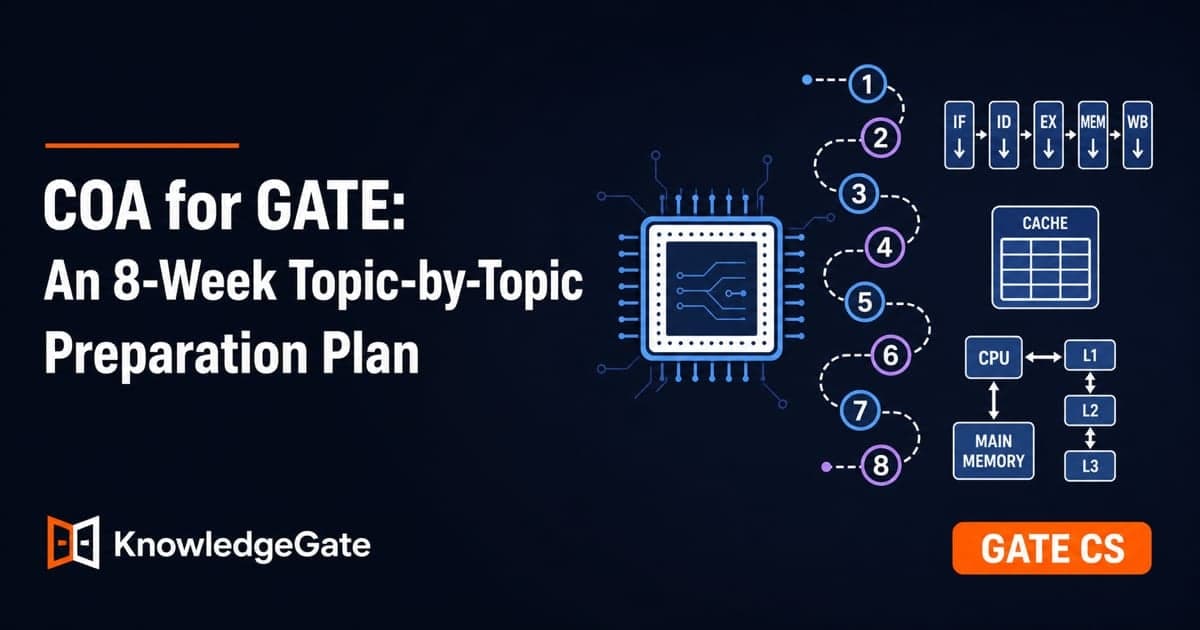
COA for GATE: An 8-Week Topic-by-Topic Preparation Plan
Study Computer Organization and Architecture in prerequisite order with an adjustable 80-hour plan, checked numericals, timed practice, and a practical recovery rule.
Updated 29 Aug 20265 min read78 viewsComputer Organization & Architecture