GATE CS Preparation
Subject-wise strategy, PYQ analysis, and realistic study plans for GATE CS aspirants.
84 articles in this topic
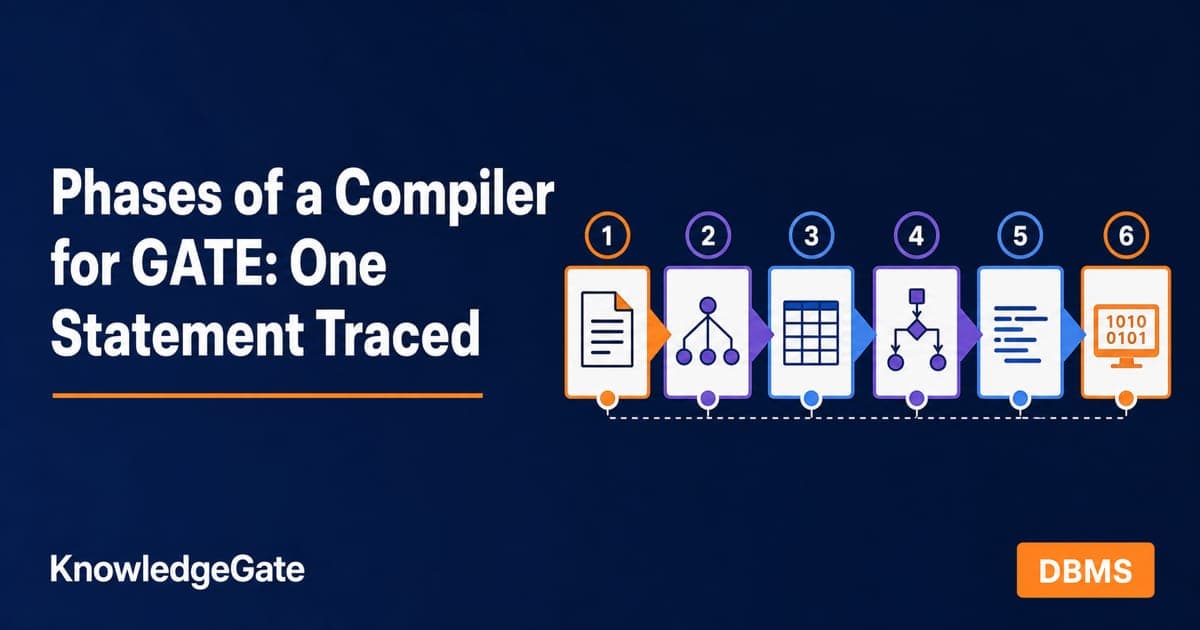
Phases of a Compiler for GATE: One Statement Traced Through Every Phase
Follow position = initial + rate * 60 through all six compiler phases. Each step shows the exact artifact, error class and hand-off that GATE can test.
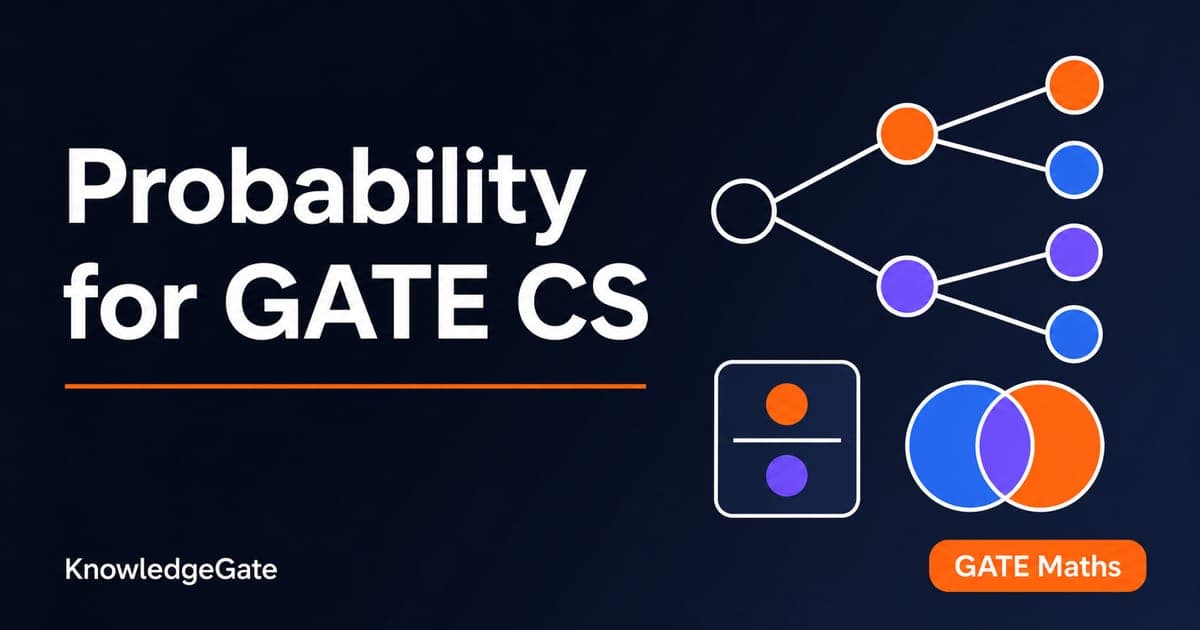
Probability for GATE CS
Translate the wording into events before calculating. Exact dice, Bayes and expectation examples show how to build the denominator and avoid the standard independence trap.
Final Year Placement Preparation Plan: A 90-Day Schedule for Aptitude, Coding and Interviews
Run aptitude, coding and interviews as three connected streams across 90 days. The schedule includes weekly hours, phase checkpoints and a rule for missed days.
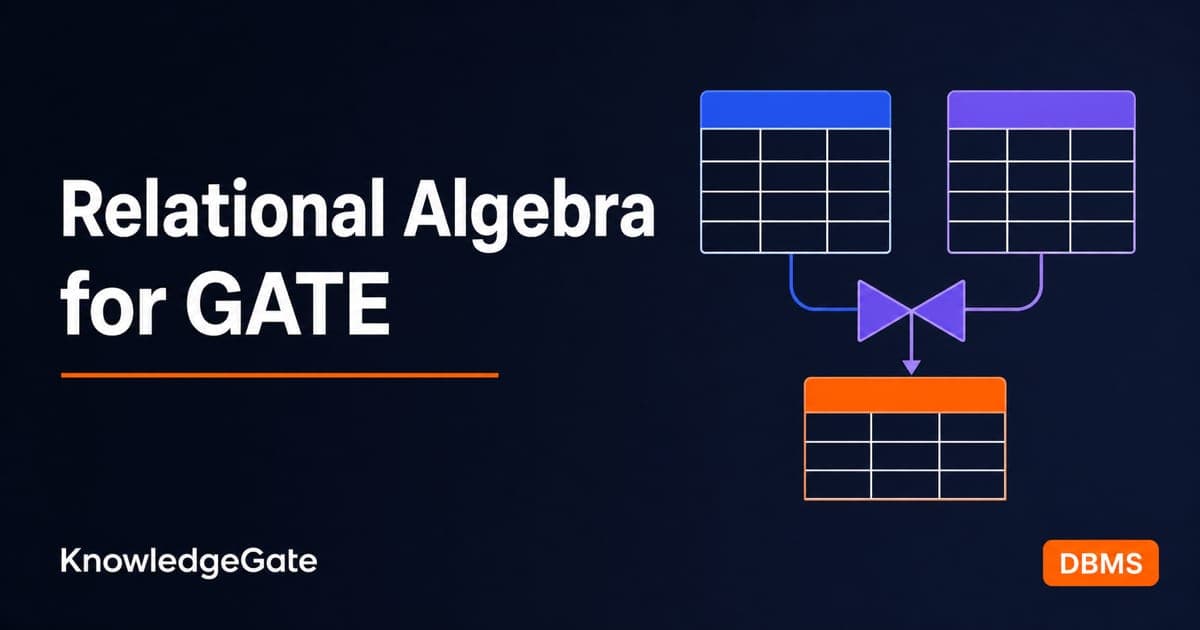
Relational Algebra for GATE: Operators, Tuple-Counting and Query Equivalence Drills
Calculate set, join, and outer-join cardinalities on concrete relations, then use selection and projection pushdown without changing query meaning.
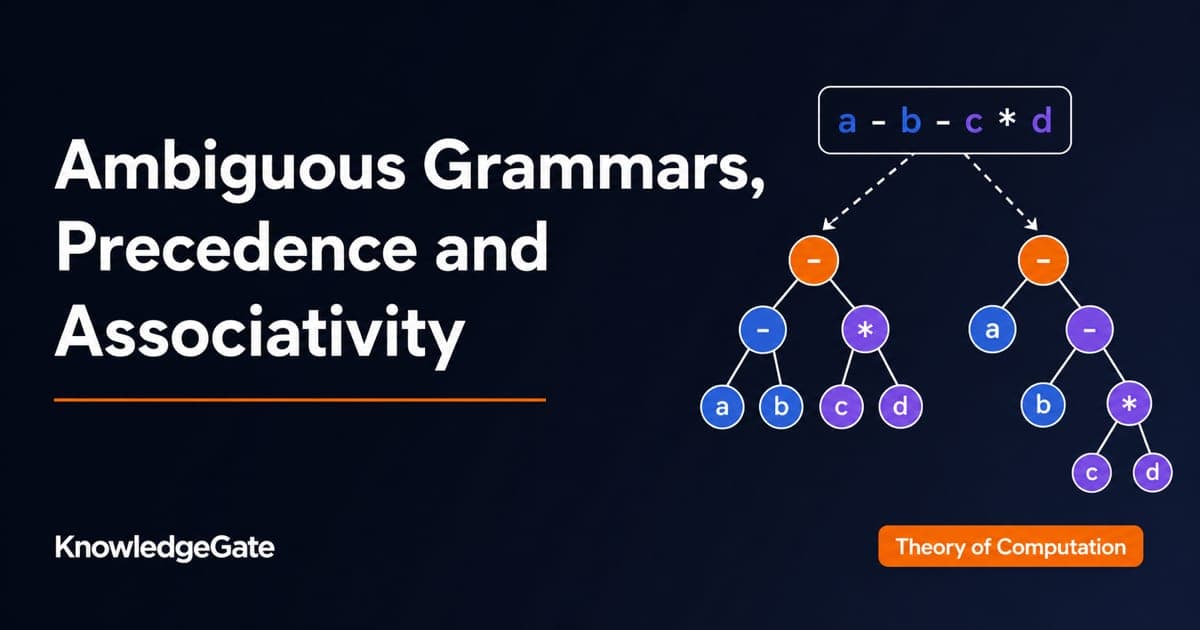
Ambiguous Grammars, Precedence and Associativity for GATE: Grammar Classification Questions Solved
Learn how to prove that a grammar is ambiguous, then remove expression ambiguity by encoding operator precedence and associativity into the grammar itself.
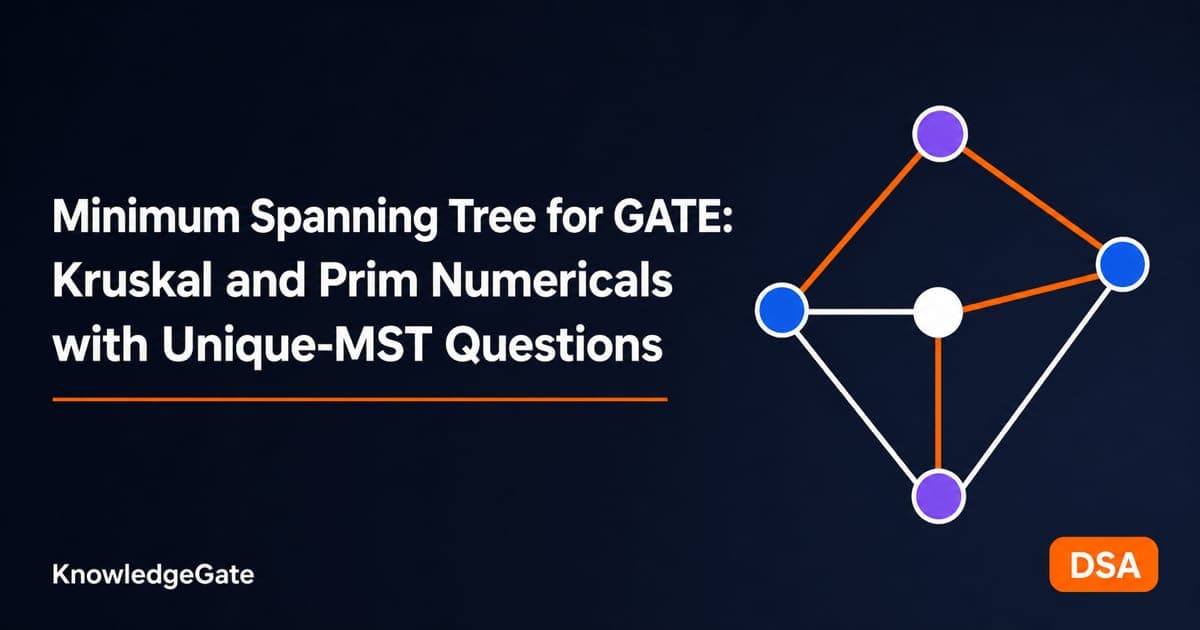
Minimum Spanning Tree for GATE: Kruskal and Prim Numericals with Unique-MST Questions
Run Kruskal and Prim on the same weighted graph, verify their common cost, and use cut, cycle, and equal-weight reasoning to answer uniqueness questions.
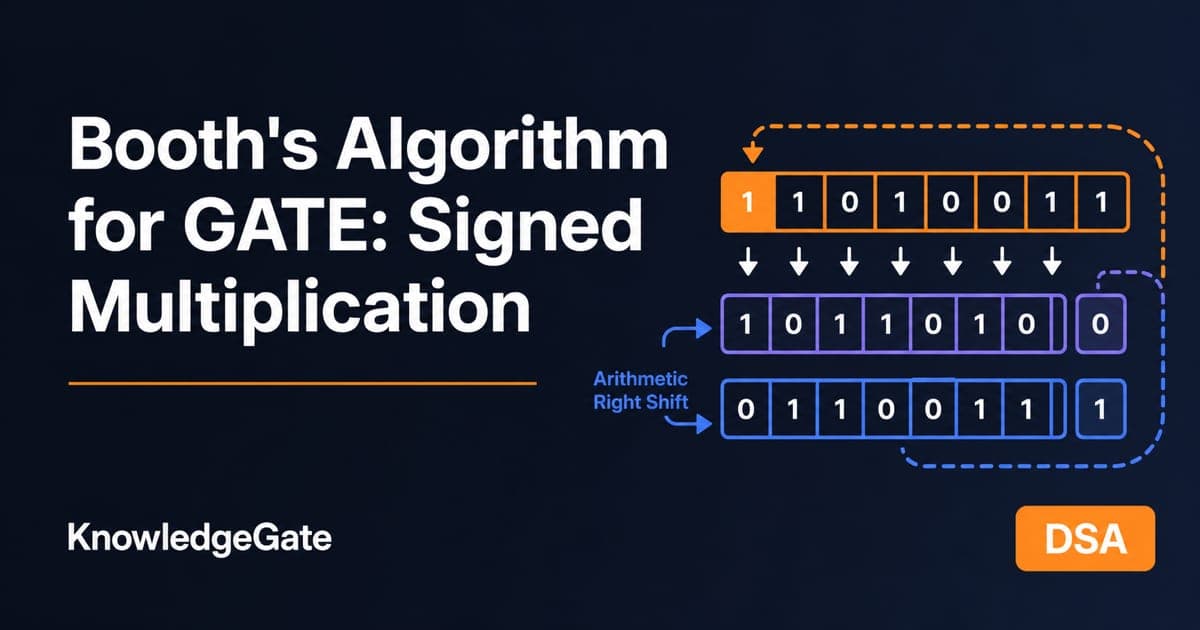
Booth's Algorithm for GATE: Signed Multiplication Traced Step by Step
Trace Booth multiplication through A, Q and Q-1, preserve the sign during every shift, and count additions and subtractions from bit transitions.
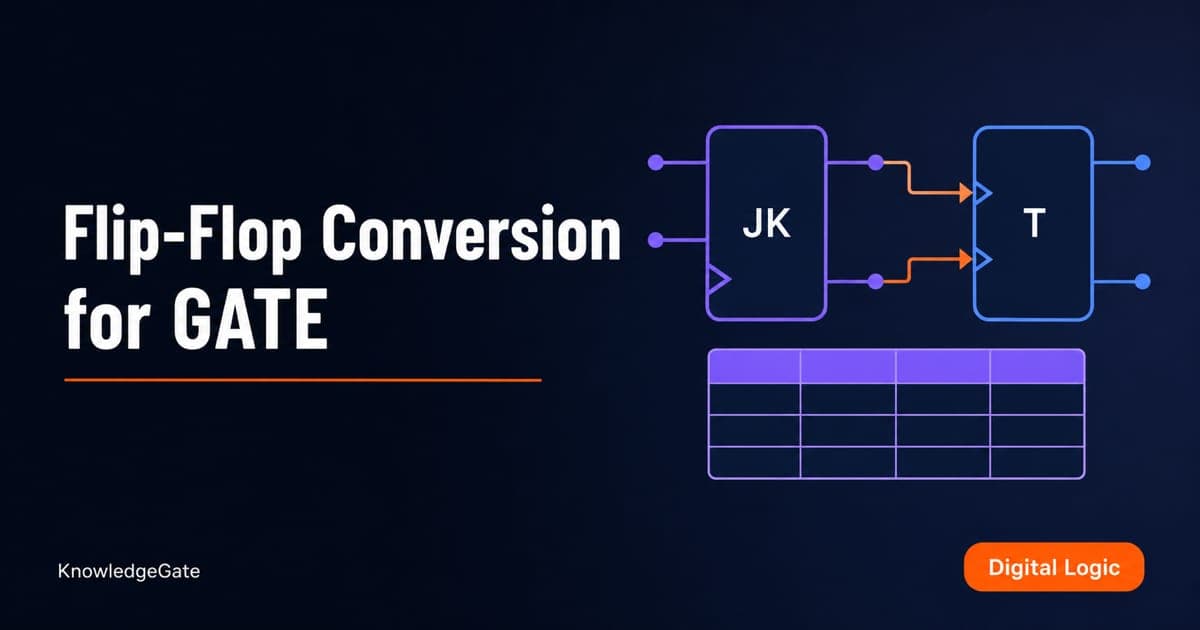
Flip-Flop Conversion for GATE: Excitation Tables and the SR, JK, D, T Conversion Recipe, Solved
Convert one flip-flop into another with the target transition, the available device's excitation table and a K-map. The solved JK-to-T case shows every row.
Pointers in C for GATE
Draw pointers as addresses in boxes, then trace double pointers, arrays, swaps and precedence without guessing. The worked outputs show the method GATE rewards.

TCP Congestion Control for GATE
Track cwnd at one fixed point in every round, apply the correct growth rule, and reset it according to the stated loss signal. This guide works through the full table.
Master Theorem for GATE: All Cases, Boundary Traps and Solved Recurrences
Classify divide-and-conquer recurrences through one comparison, verify the regularity condition, and recognise the log-gap recurrences that need another method.
LL(1) Parsing Table Construction for GATE
Build an LL(1) table cell by cell, test it for conflicts, and see how left recursion and common prefixes break predictive parsing.
Linear Algebra for GATE CS
Reduce matrices cleanly, classify Ax=b by ranks, and turn eigenvalue properties into fast calculations. Each result is checked against an independent property.
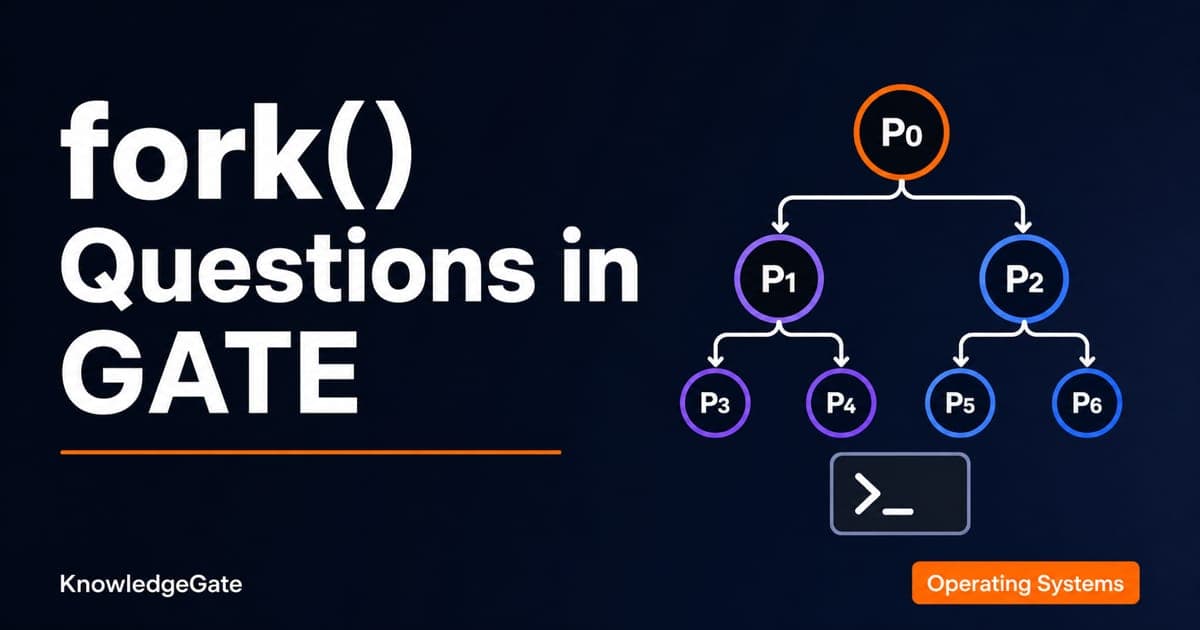
fork() Questions in GATE
Trace three common fork() patterns without the off-by-one error, then handle return values, loops, printed output, and inherited buffers.
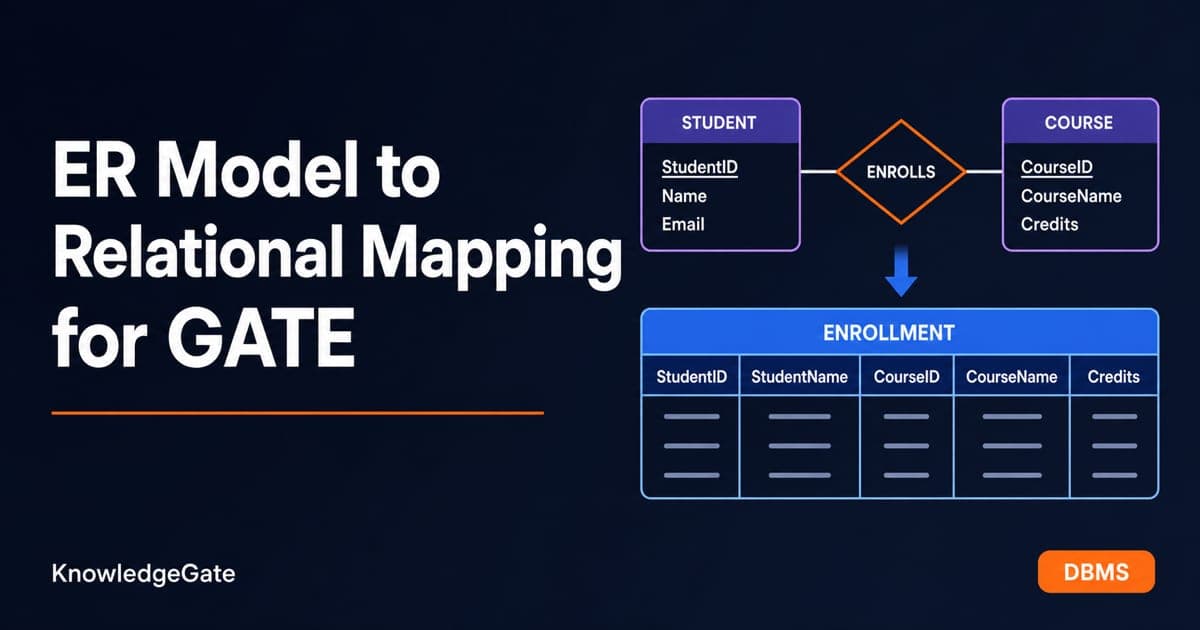
ER Model to Relational Mapping for GATE: Minimum Number of Tables Questions Solved
Count the minimum relations from cardinality and participation, then check the special rules for weak entities, relationship attributes, and multivalued attributes.
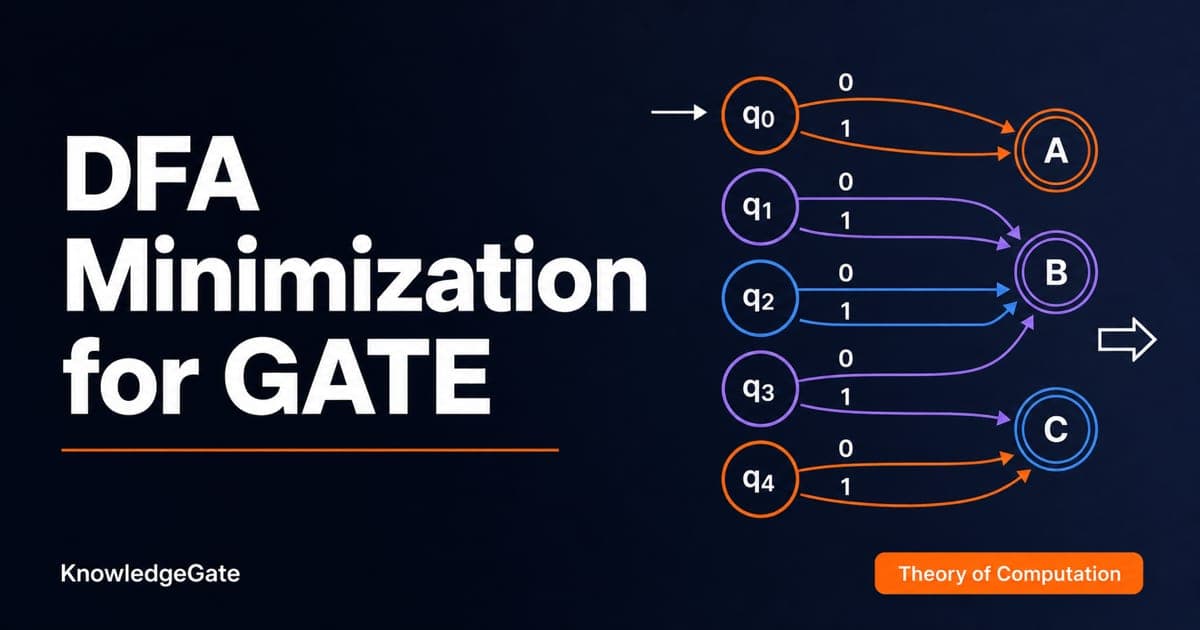
DFA Minimization for GATE
Remove unreachable states, split final from non-final states, and refine until every transition signature is stable. A complete six-state example shows each split.
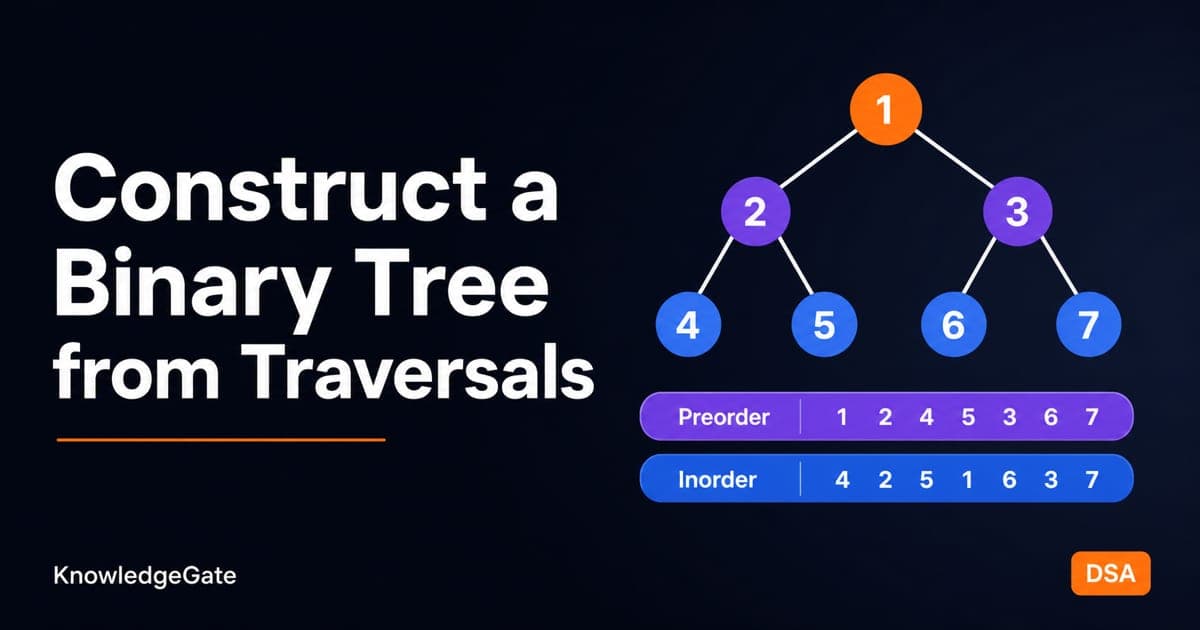
Construct a Binary Tree from Traversals
Use inorder splits and preorder roots to rebuild a binary tree, then learn the BST shortcut and the cases where traversal data is not unique.
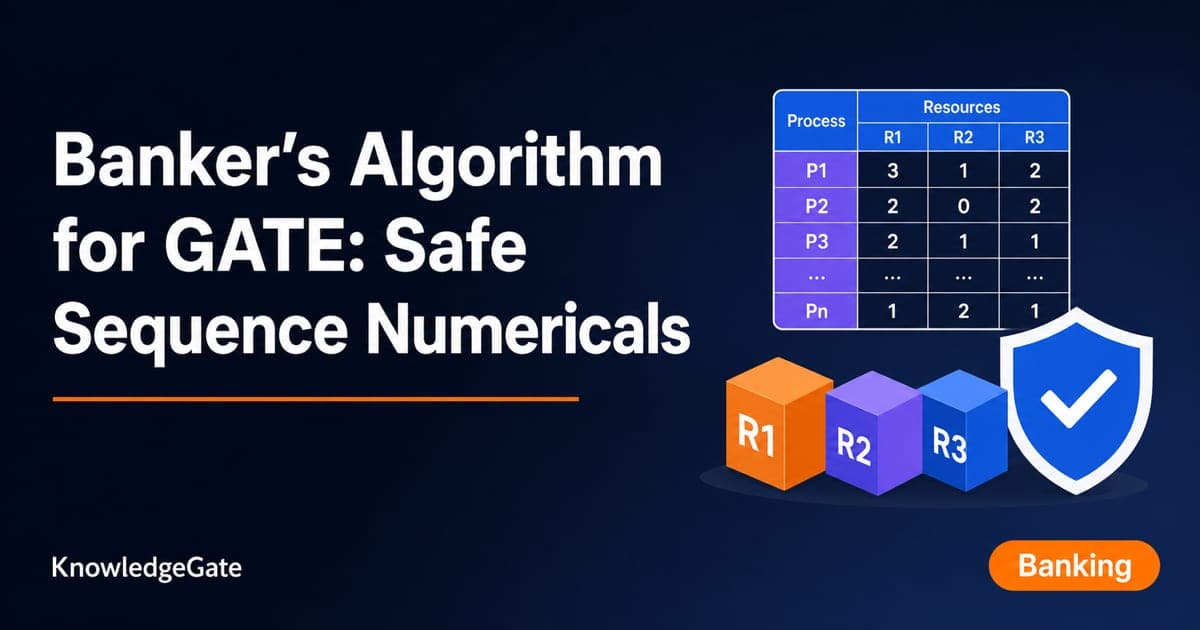
Banker's Algorithm for GATE: Safe Sequence Numericals with Full Allocation-Max-Need Matrices
Learn the safety algorithm through a five-process matrix, count every safe sequence, and repair an unsafe state with the smallest possible resource addition.
Attribute Closure and Candidate Keys for GATE
Compute closure to a fixed point, use RHS analysis to find every minimal key, and handle prime attributes and candidate-key counting without guessing.

SQL Queries for Placement Interviews: Second Highest Salary, Joins and GROUP BY Step by Step
SQL queries for placement interviews built step by step on one schema: second highest salary three approaches, joins with results shown, GROUP BY and HAVING.
Operating System Interview Questions for Freshers: Top 50 with Answers
50 operating system interview questions for freshers, organised as follow-up chains: whiteboard-depth answers for process vs thread, context-switch cost, paging to thrashing and deadlock handling, plus quick-fire stems and a two-week plan grounded in KnowledgeGate's OS question bank.
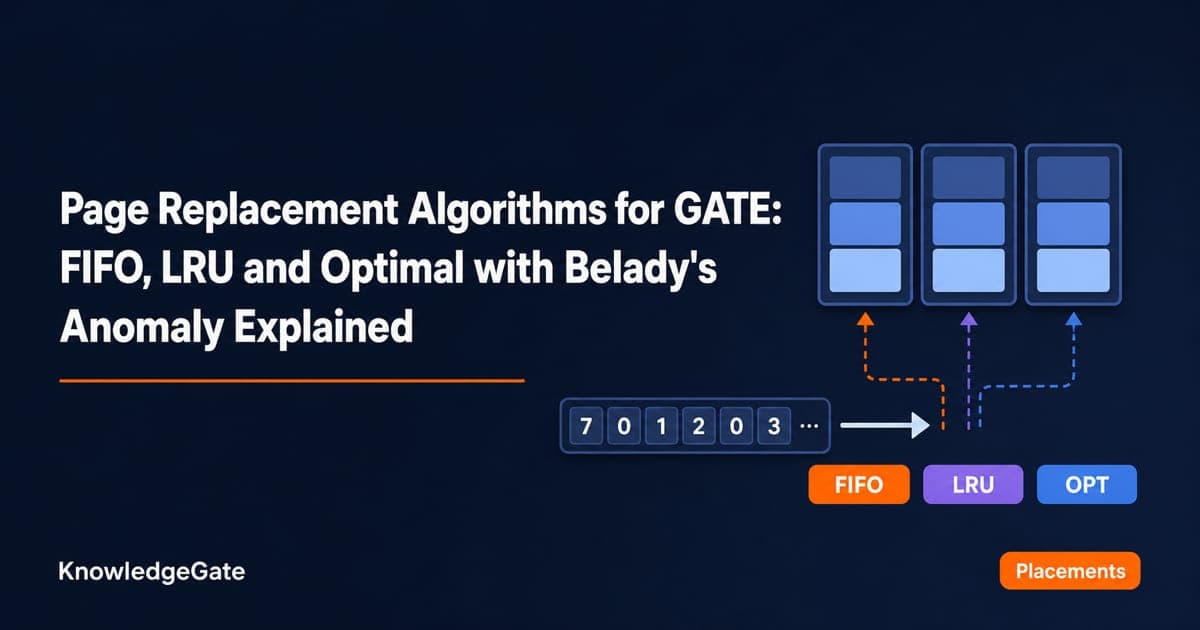
Page Replacement Algorithms for GATE: FIFO, LRU and Optimal with Belady's Anomaly Explained
One shared reference string traced fault by fault through FIFO, LRU and Optimal page replacement with 3 frames, then re-run under FIFO with 4 frames to demonstrate Belady's anomaly. Includes the counting rules GATE expects, why LRU beating FIFO is a tendency and not a theorem, and the stack-algorithm property that makes LRU and Optimal immune to the anomaly.
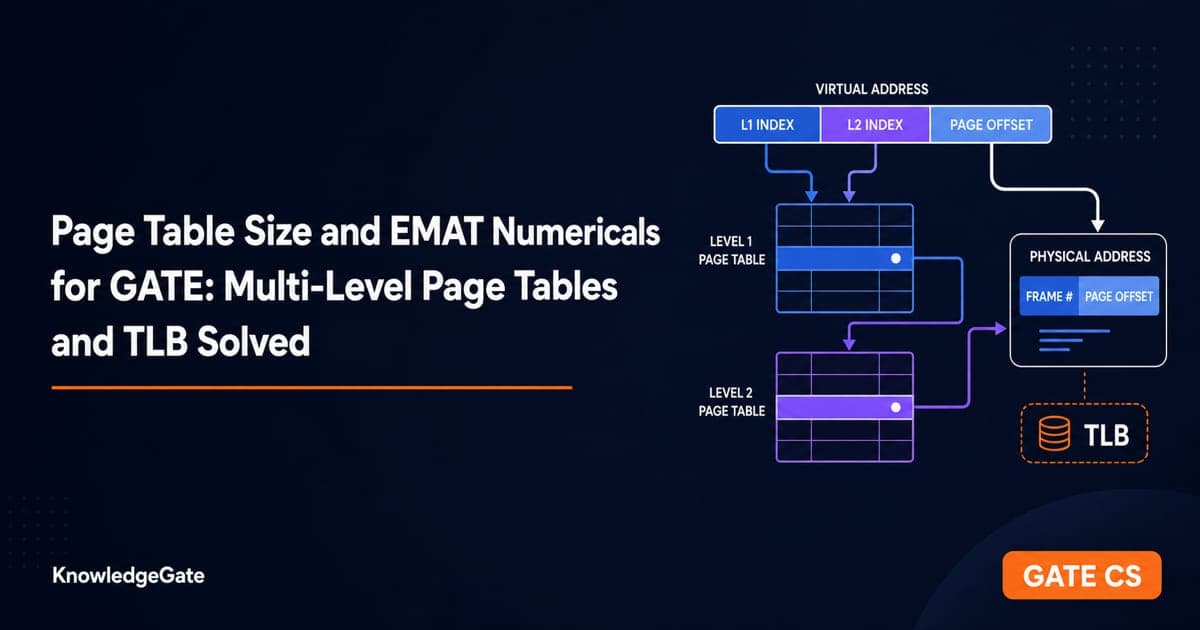
Page Table Size and EMAT Numericals for GATE: Multi-Level Page Tables and TLB Solved
Page table size and EMAT with TLB are the highest-repeat virtual memory numericals in GATE CS. Six worked examples cover single-level table size, PTE sizing, multi-level level counts, and hit ratio EMAT, with the NAT traps that cost marks.
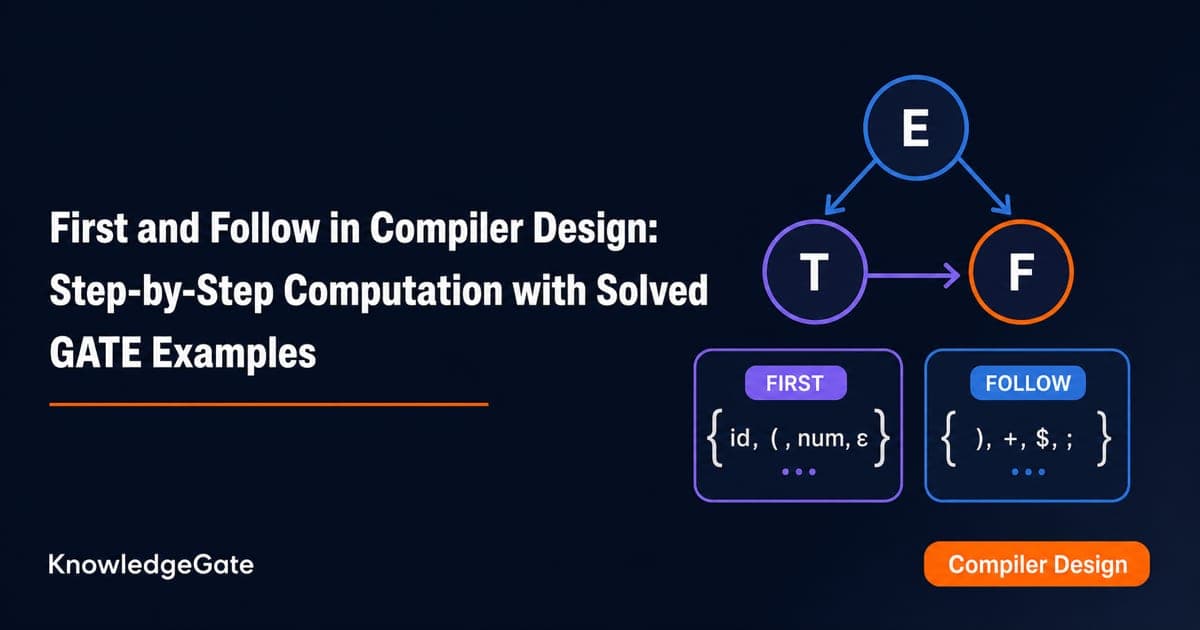
First and Follow in Compiler Design: Step-by-Step Computation with Solved GATE Examples
First and Follow sets computed as a fixed-point algorithm: the full rule set, two grammars solved pass by pass, the nullable-symbol trap, and how GATE tests them in LL(1) and SLR(1) questions.
DBMS Interview Questions for Freshers: Top 50 with Answers That Survive Follow-Ups
50 DBMS interview questions for freshers, grouped the way interviews actually run: keys, the normalization-to-BCNF-to-denormalization chain, SQL joins, transactions and ACID, and indexing, each answered with the natural follow-up so rote definitions become explanations.
Permutations and Combinations for GATE CS: Counting Questions Solved with a Repeatable Method
One repeatable method (choose, arrange, subtract) applied to 20 GATE-style counting problems, with the four-question decision procedure that replaces formula memorisation for permutations and combinations in GATE CS.
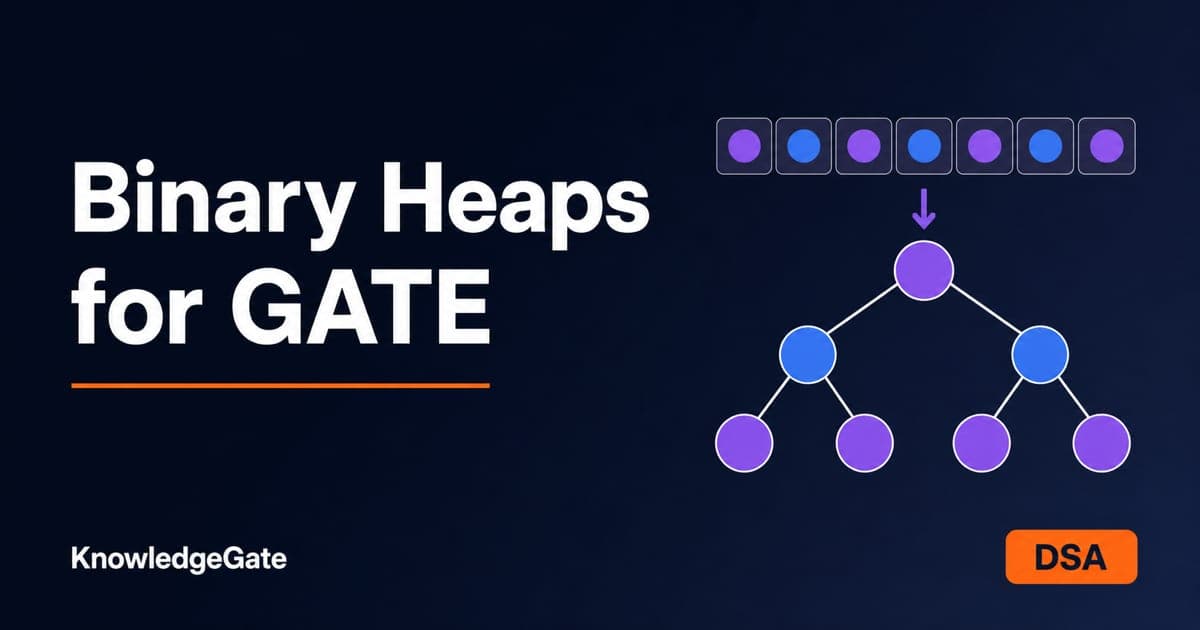
Binary Heaps for GATE: Build-Heap, Heapify and Deletion Numericals Solved
Heapify, build-heap and deletion are the three heap procedures GATE CS tests as numericals. This guide derives the O(n) build-heap bound properly, solves a full build and two deletions step by step, and maps the five question shapes heaps keep appearing in.

Producer-Consumer, Readers-Writers and Dining Philosophers for GATE: Semaphore Trace Tables
Counting semaphore values traced line by line through producer-consumer, readers-writers and dining philosophers: the trace tables, the negative-value rule, the swapped-wait deadlock, and how GATE multiple-select questions test each one.
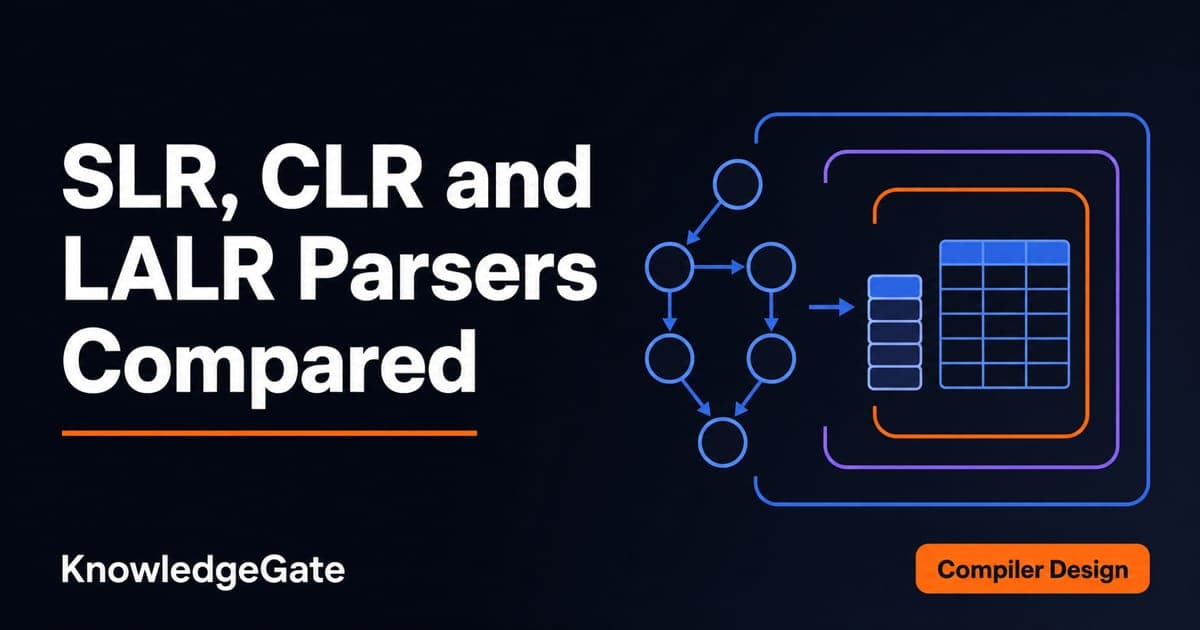
SLR, CLR and LALR Parsers Compared for GATE: LR Item Sets, Conflicts and Parser Power
All three LR parsers built on one shared grammar: canonical item sets, why SLR(1) hits a shift/reduce conflict that CLR(1) and LALR(1) survive, the 10-vs-14 state count, the reduce/reduce drill grammar, and the exact question patterns GATE uses to test parser power.

Cache Write Policies and Multi-Level Cache Numericals for GATE: AMAT Solved Step by Step
Write-through vs write-back traffic arithmetic and the hierarchical vs simultaneous AMAT formulas, derived once and drilled on L1/L2 GATE-pattern numericals solved step by step.
IBPS SO IT Officer Computer Organization: professional knowledge topics
IBPS SO IT Officer Computer Organization: number systems, Boolean logic, CPU and memory organization, addressing modes and I/O for the Mains PK paper.
IBPS SO IT Officer Data Structures and programming: professional knowledge topics
IBPS SO IT Officer Data Structures and programming: arrays, linked lists, stacks, trees, hashing, sorting, complexity and C basics for the Mains PK paper.
IBPS SO IT Officer Operating Systems: professional knowledge topics
IBPS SO IT Officer Operating Systems: master processes, CPU scheduling, memory management, deadlock and process synchronization for the Mains PK paper.
IBPS SO IT Officer Networking: professional knowledge topics to master
IBPS SO IT Officer Networking: master the OSI and TCP/IP models, IP addressing, key protocols and network security for the Professional Knowledge paper.
IBPS SO IT Officer DBMS: the professional knowledge topics that matter
The DBMS core of the IBPS SO IT Officer Mains Professional Knowledge paper: the ER model, keys, normalization with a worked example, SQL essentials and transactions, and how each is tested.
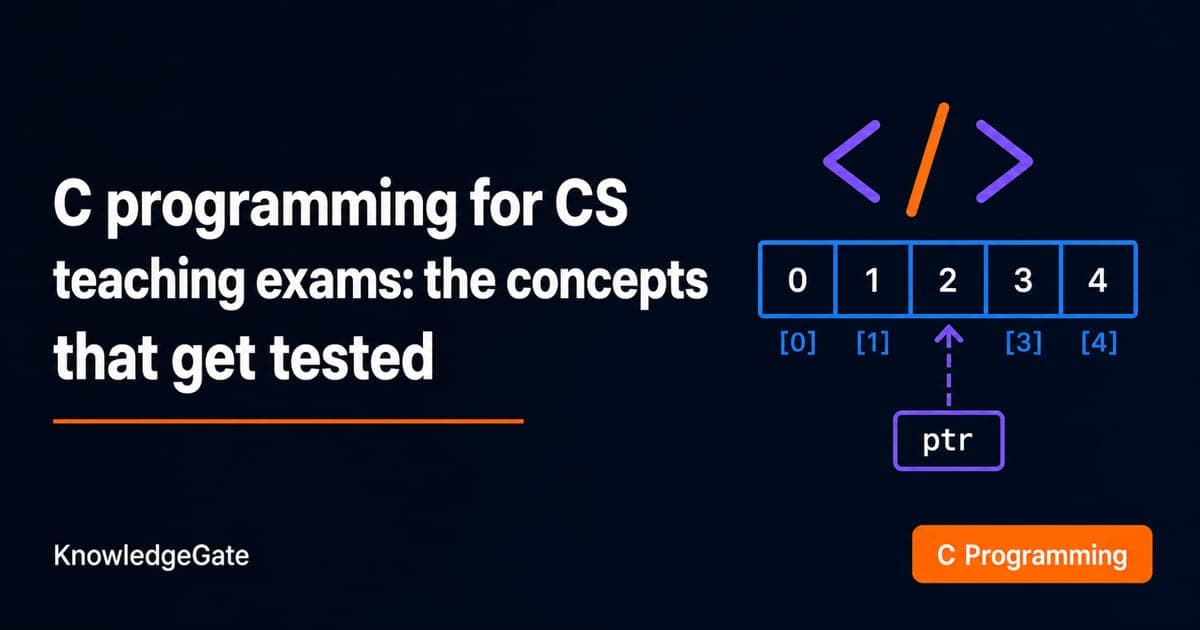
C programming for CS teaching exams: the concepts that get tested
C programming for teaching CS exams: data types, operators, control flow, functions and recursion, arrays, pointers and structures, with a worked example.
DSA interview questions for placements: the patterns freshers must know
Most DSA interview questions are not new. They are variations on a small set of recurring patterns, and once you can recognise the pattern behind a question, the solution follows almost mechanically. Freshers who memorise fifty specific problems stall on the fifty-first. Freshers who learn the seven or eight underlying patterns can attack a problem they have never seen.
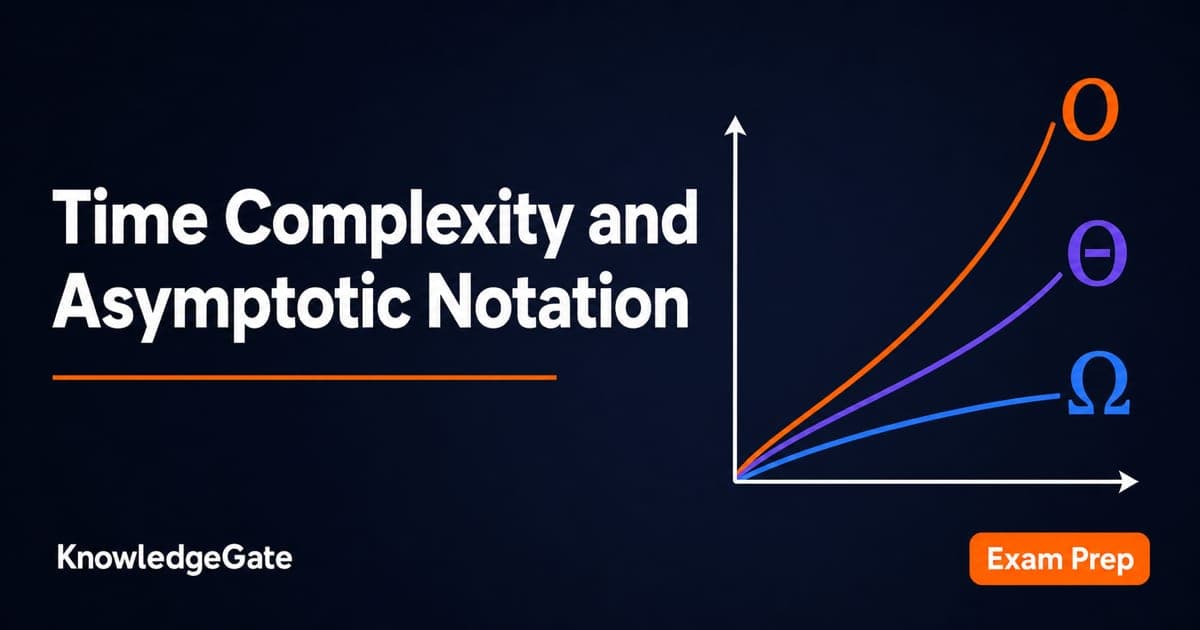
Time complexity and asymptotic notation: Big-O, Theta and Omega explained
Time complexity and asymptotic notation explained: Big-O, Theta and Omega, growth-rate ordering, analysing loops and recursion, and the Master Theorem.
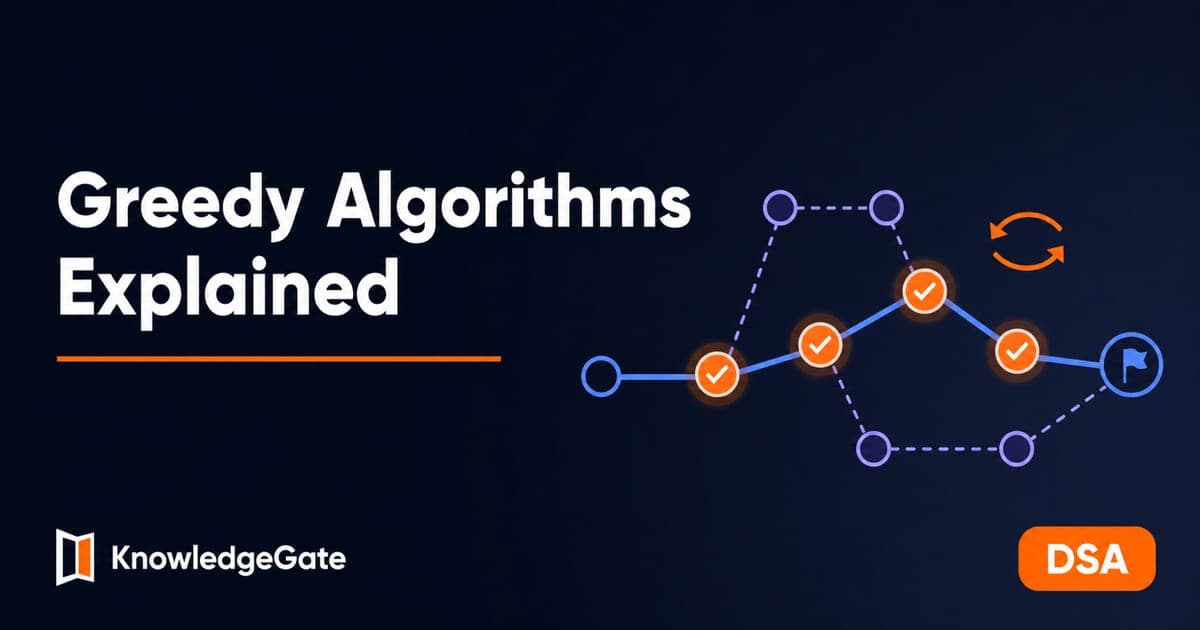
Greedy algorithms: strategy, exchange arguments and classic problems
Greedy algorithms explained: greedy-choice property, activity selection, a traced Huffman tree, fractional knapsack, and where greedy fails on 0/1 knapsack.
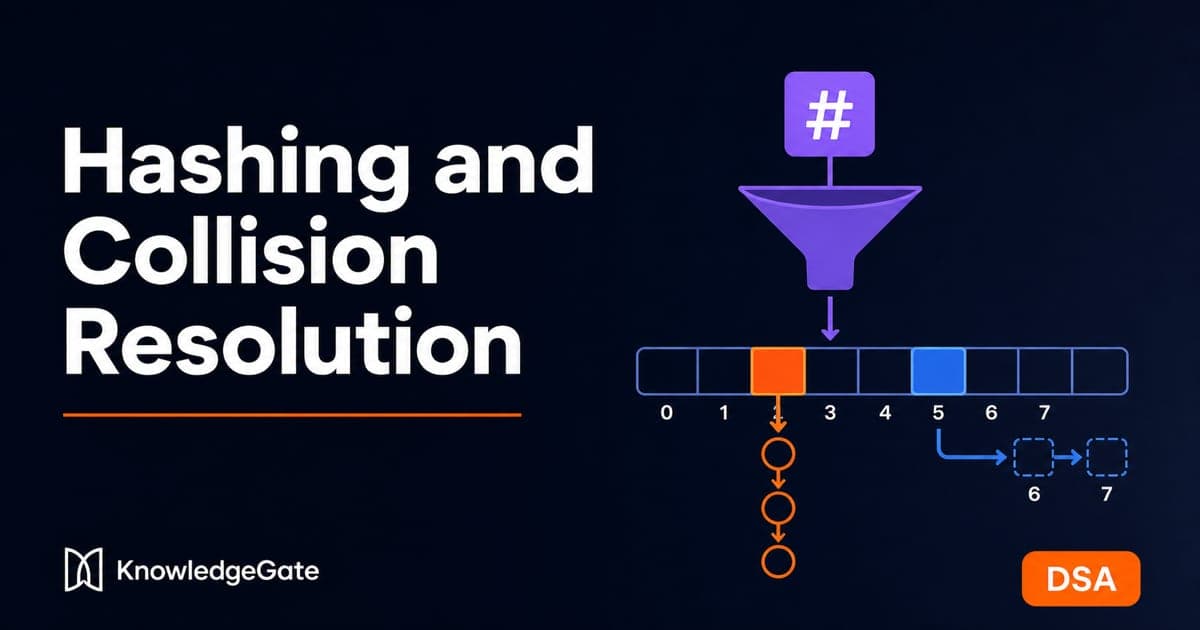
Hashing and collision resolution: hash functions, chaining and open addressing
Hashing and collision resolution explained: hash functions, load factor, separate chaining, and open addressing with linear, quadratic and double hashing.
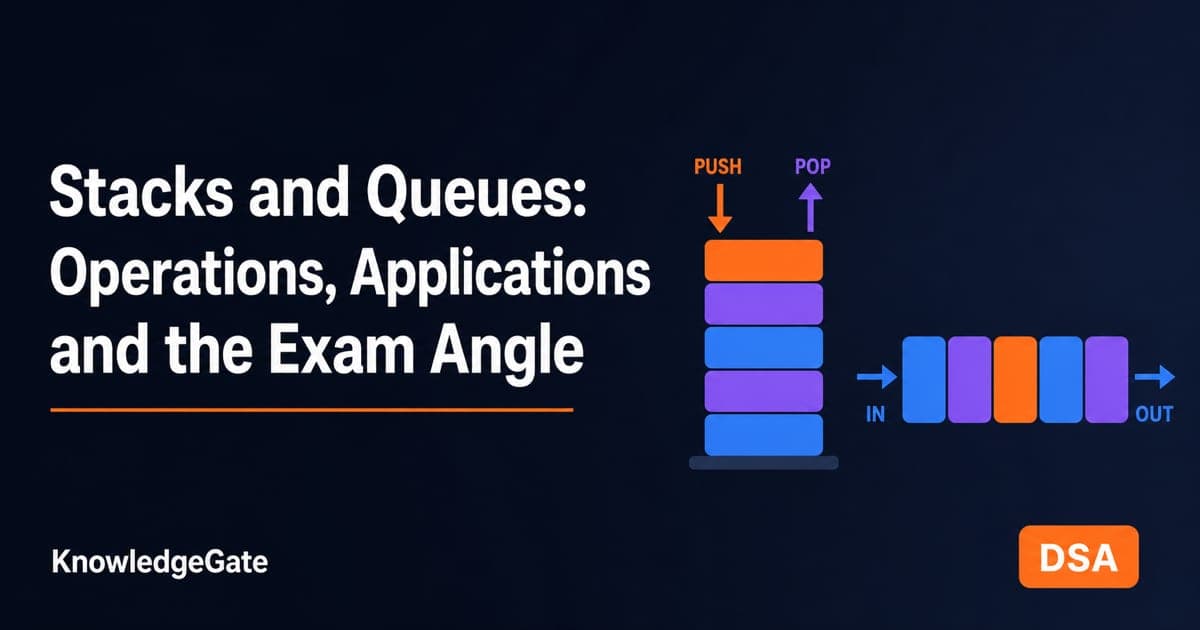
Stacks and queues: operations, applications and the exam angle
Stacks and queues explained: LIFO vs FIFO, array and linked implementations, a worked postfix evaluation, and the circular-queue full and empty conditions.
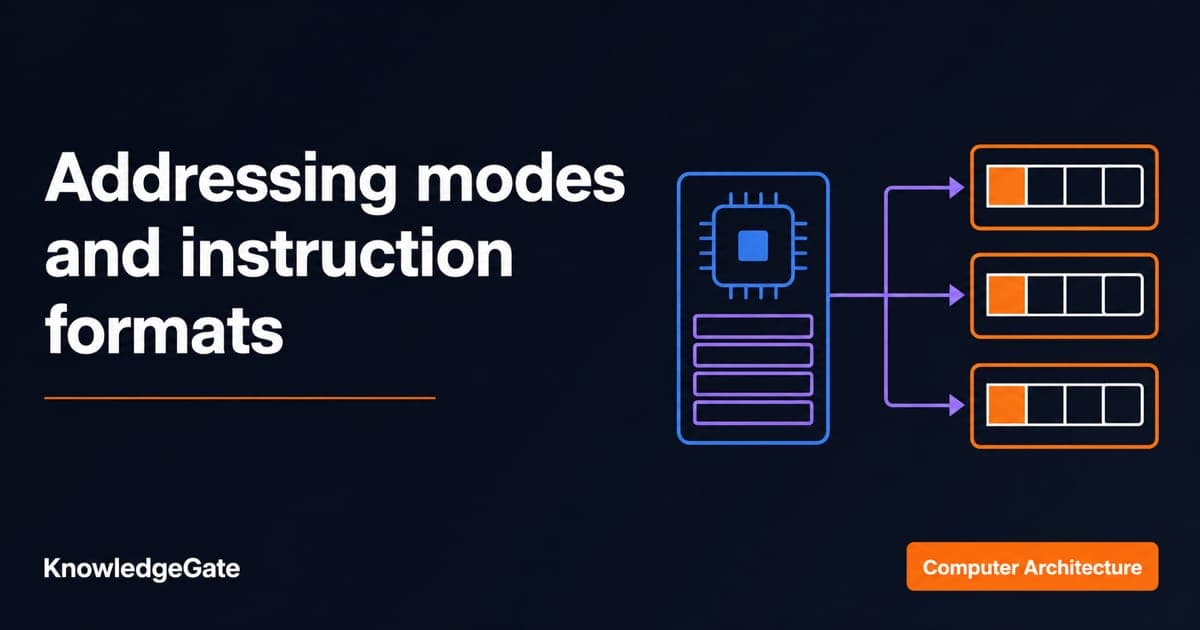
Addressing modes and instruction formats in computer architecture explained
Addressing modes and instruction formats explained: immediate, direct, indirect, indexed and PC-relative effective addresses, and 0/1/2/3-address machines.
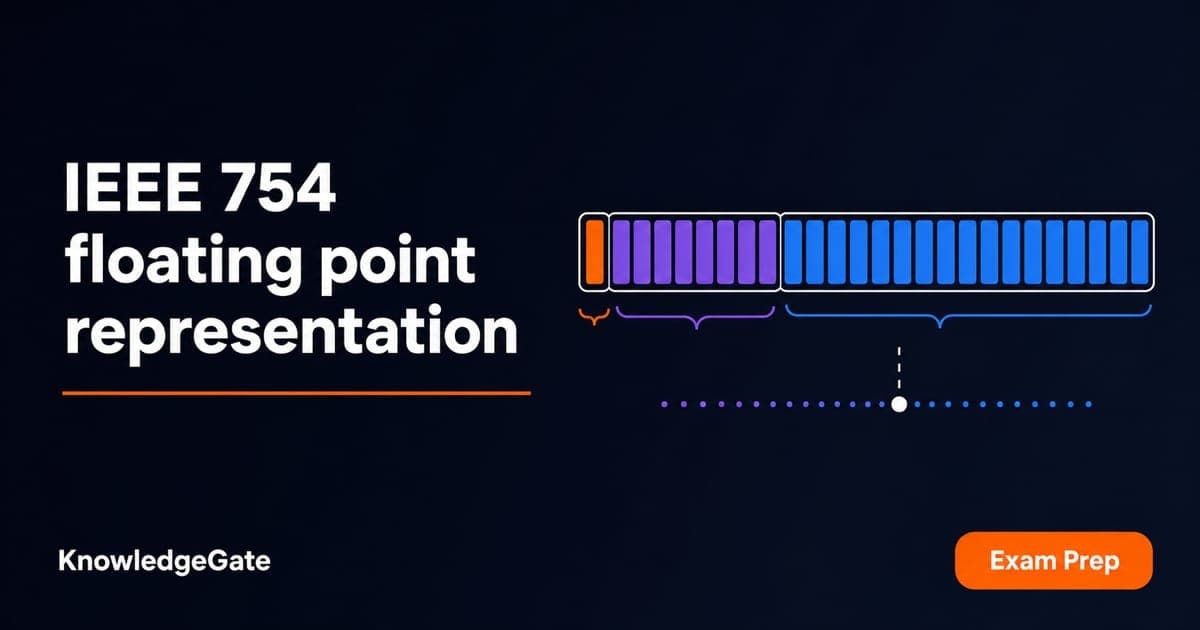
Floating point representation: IEEE 754 format and arithmetic explained
Computers store real numbers in a fixed number of bits, so they cannot store every real number exactly. Floating point is the scheme that packs a huge range of magnitudes into 32 or 64 bits by trading away some precision, and IEEE 754 is the standard almost every processor follows. This topic is a dependable source of encoding and precision questions, and every one of them rests on the same field layout and normalization rule. Let us encode a number by hand and see exactly wh
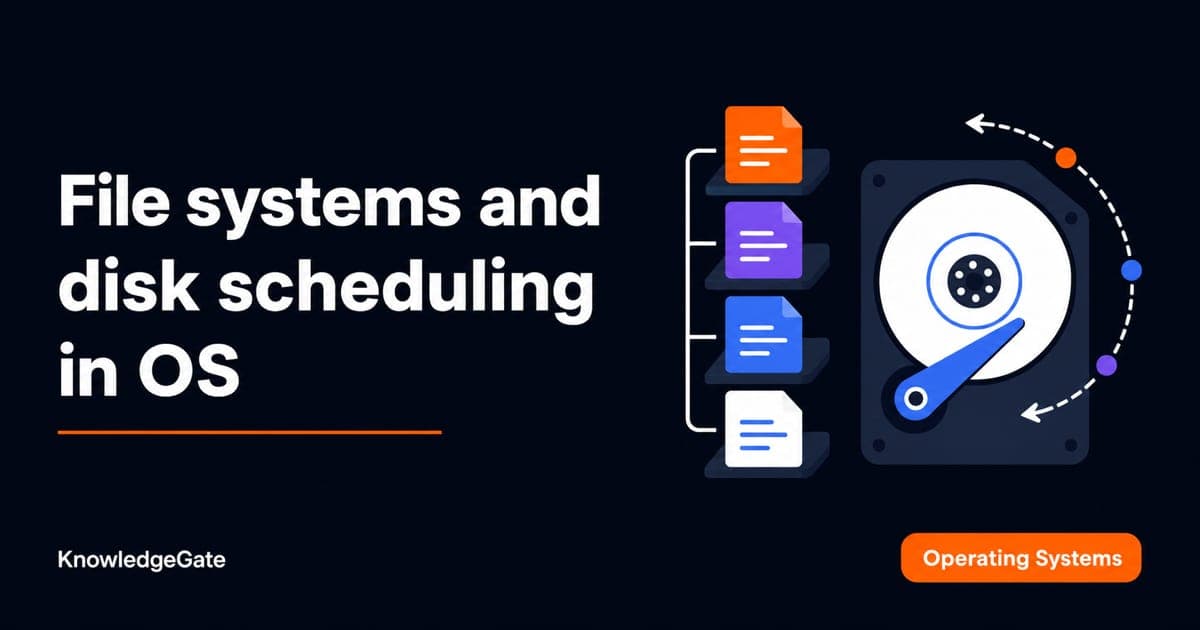
File systems and disk scheduling in OS: allocation, directories and seek time
A file system is the operating system's answer to a simple-sounding question: where on the disk does each file's data actually live, and how do we find it again quickly? Disk scheduling is the follow-up: when many read and write requests are queued, in what order should the head service them so the disk arm travels least? Both are mechanical once you know the rules, and both are steady exam scorers. Let us take the file system first, then the moving arm.
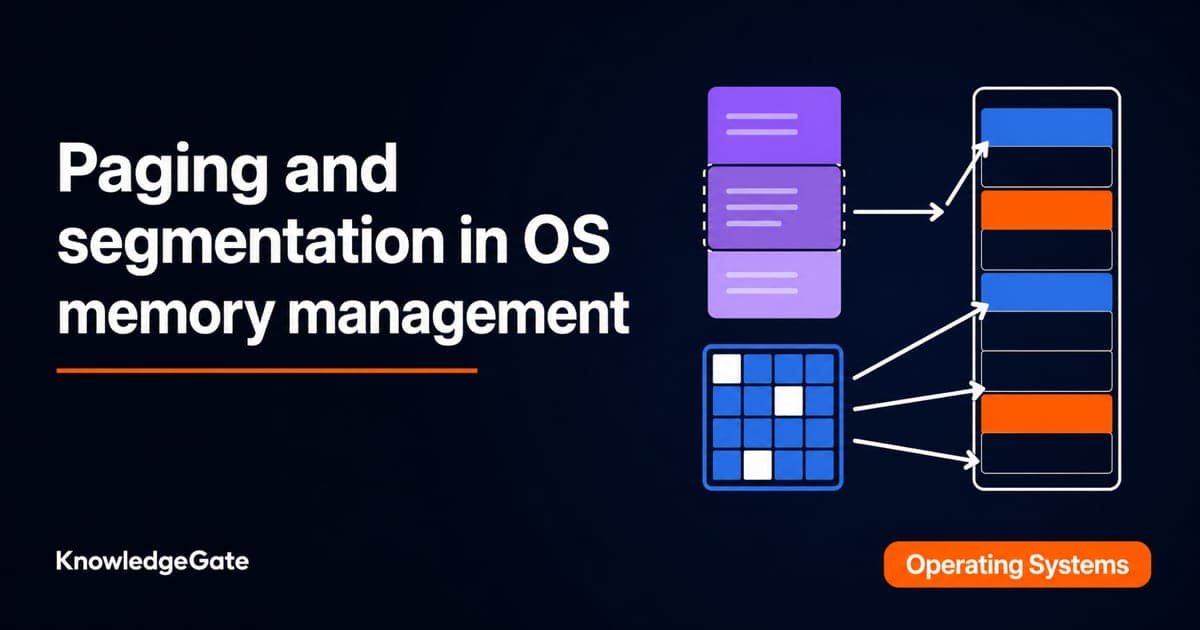
Memory management in OS: paging and segmentation explained
Memory management is how the operating system decides where each process lives in physical memory and how a program's addresses get mapped to real hardware locations. Get the mapping right and many processes share one memory safely; get it wrong and you waste memory to fragmentation or crash into another process. This topic is a reliable source of numerical questions, and almost all of them come down to one skill: translating a logical address into a physical one. Let us buil
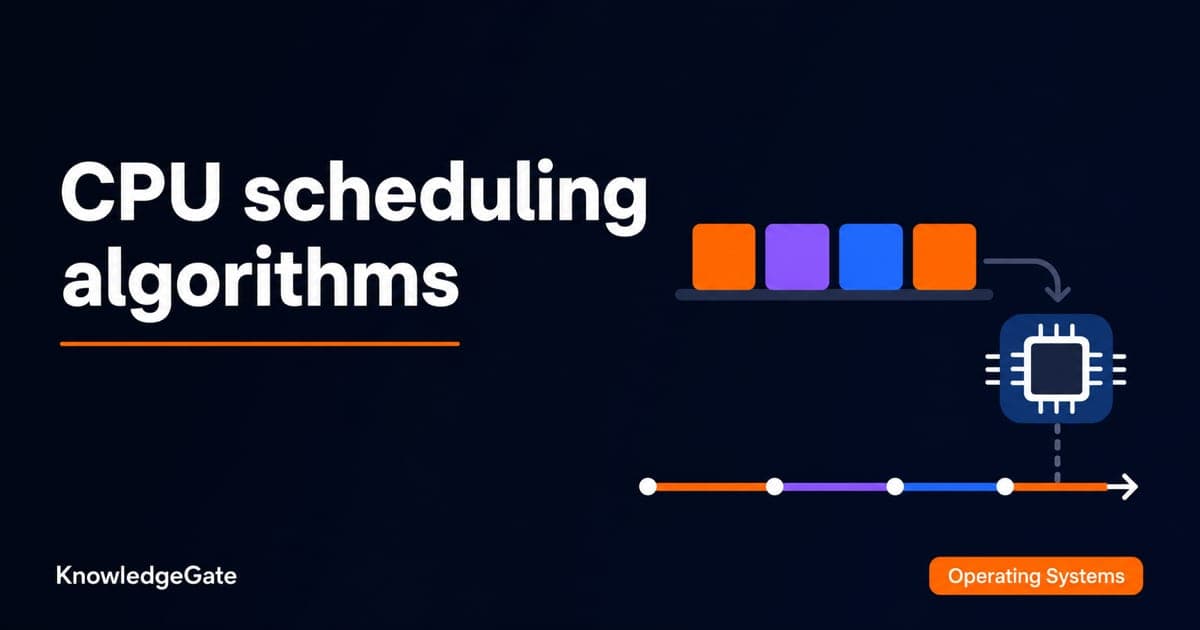
CPU scheduling algorithms: FCFS, SJF, Round Robin and priority explained
When several processes are ready to run and there is one CPU, the operating system has to choose who goes next. That choice is CPU scheduling, and the algorithm it uses decides how long each process waits and how responsive the system feels. This is the densest topic in Operating Systems for exams, and it is almost entirely mechanical once you can draw a Gantt chart and compute two numbers. Let us do exactly that, on one process set, across every algorithm you need.
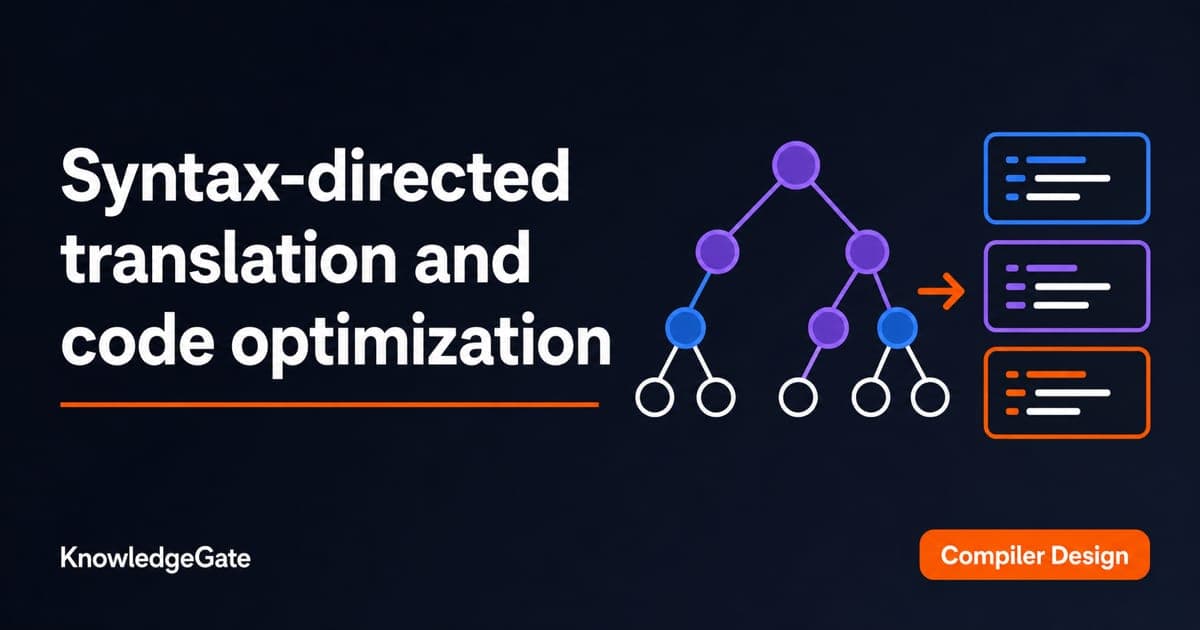
Syntax-directed translation and code optimization in compilers explained
The back end of a compiler is where a parse tree stops being a grammar exercise and starts becoming a program that runs fast. Two ideas carry most of the weight there: syntax-directed translation, which attaches meaning and code to the grammar, and code optimization, which rewrites that code to do the same work with fewer instructions. Both are heavily tested and both reward understanding the mechanics rather than memorising names. Let us build them up in order.
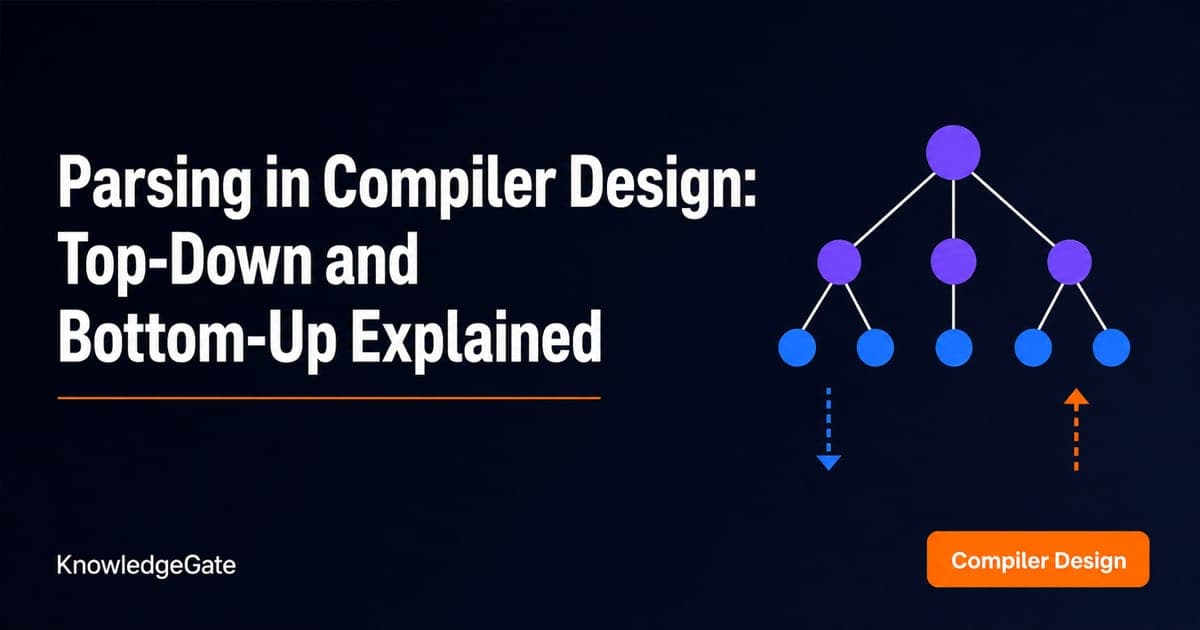
Parsing in Compiler Design: Top-Down and Bottom-Up Explained
Parsing in compiler design for GATE CS: FIRST and FOLLOW sets, LL(1) predictive parsing, LR and SLR shift-reduce, plus a worked parse table and trace.
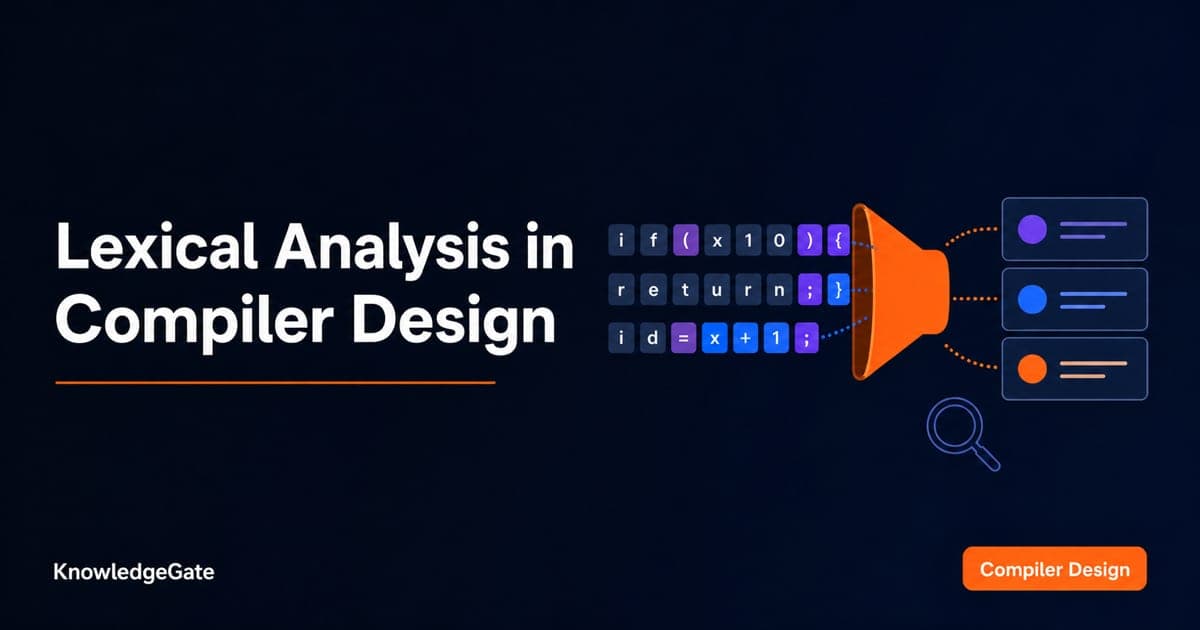
Lexical Analysis in Compiler Design: Tokens, Patterns and Lexemes Explained
Lexical analysis in compiler design for GATE CS: phases of a compiler, tokens, patterns and lexemes, regex to DFA scanners, input buffering and symbol tables.
Group Theory and Algebraic Structures: Groups, Rings and Fields Explained
Group theory for GATE CS: binary operations, group axioms, abelian and cyclic groups, subgroups, Lagrange's theorem, rings, fields and a worked Zn example.